OImpact - Osteogenesis Imperfecta organ-on-chip Models for Pre-Clinical Testing
Building a tiny bone-on-chip to unlock better treatments for brittle bones
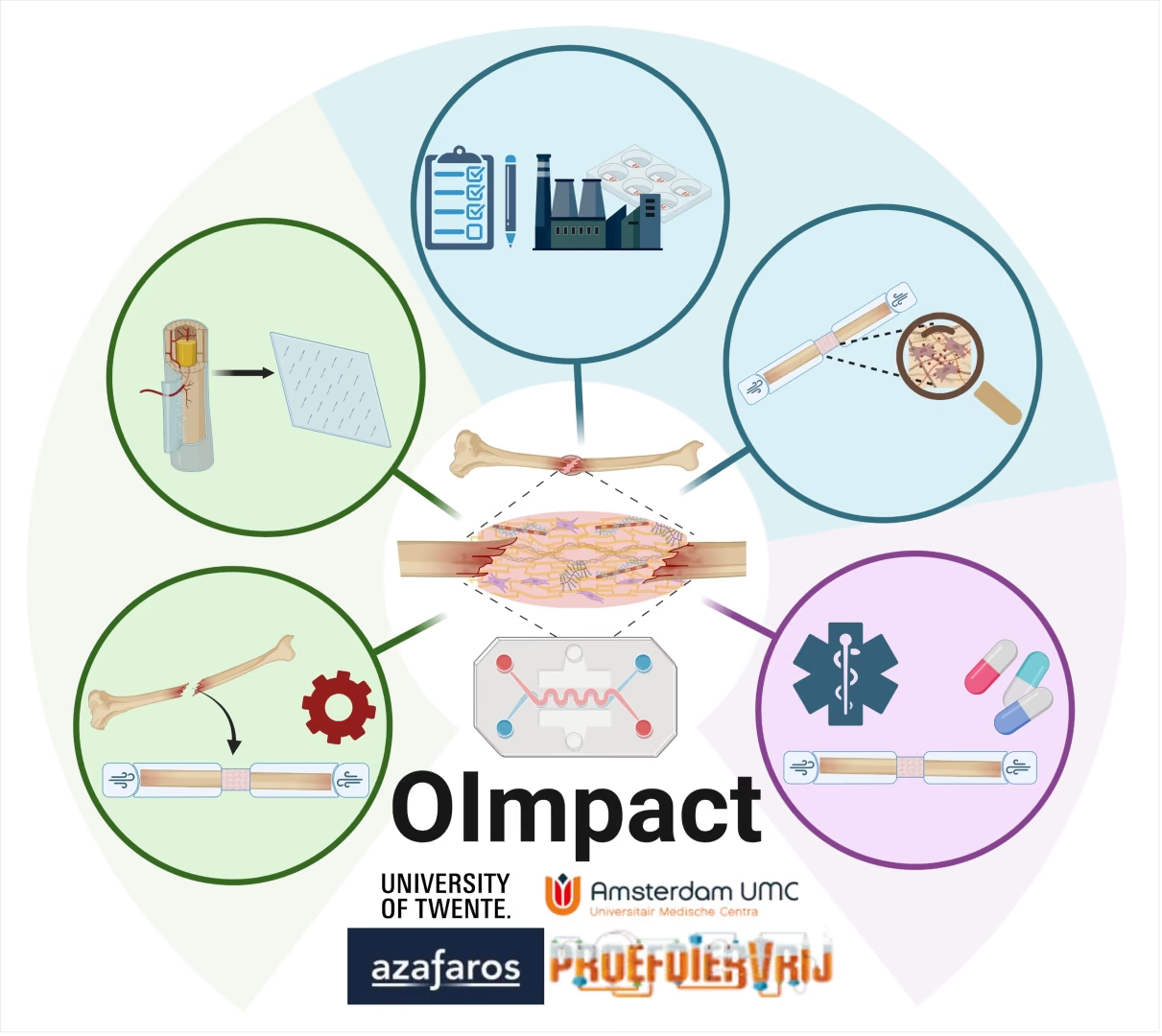
OImpact will develop an innovative tiny human-like bone model on a chip to study osteogenesis imperfecta (OI), a rare genetic disorder also known as brittle bone disease. The model recreates fragile human bone and will help us investigate how broken bones heal. By combining patient-derived bone tissue, advanced biomaterials, and controlled mechanical forces, the model closely mimics the natural bone environment. Key innovations include the use of real patient bone tissue, fully synthetic materials that guide bone cells, and dynamic stimulation that reproduces the forces experienced by bone in the body. OImpact is carried out through a public–private partnership between academic researchers and a pharmaceutical company, combining expertise in bone biology, biomaterials, and drug development.
OI causes bones to break very easily and often leads to repeated fractures, bone deformities, and chronic pain. Many patients experience dozens or even hundreds of fractures during their lifetime. Although treatments exist, they mainly aim to increase bone density and do not fully restore bone strength or improve fracture healing. Research also often relies on animal models, which do not always reflect how human bone diseases develop or respond to treatments. More realistic human-based research models are therefore urgently needed.
To address this challenge, we will build a miniature bone model that mimics the fragile bone environment found in OI. The model will include real patient bone tissue, supportive synthetic materials that imitate natural bone structures, and mechanical stimulation that reproduces forces experienced during daily movement. Using this system, we will study bone turnover and fracture healing and test potential treatments in a realistic laboratory setting.
OImpact will deliver a validated bone-on-chip platform for studying OI and testing new therapies. The model can also be adapted to investigate other bone diseases, such as osteoporosis, accelerating research while reducing the need for animal experiments.
Andere projecten
In elk PPS-project werken kennisinstellingen, bedrijven en zorgpartijen samen aan een concrete gezondheidsvraag. Bekijk het volledige projectoverzicht.
Bekijk de programma’s
Binnen onze programma’s werken bedrijven, kennisinstellingen en regionale partners samen aan innovaties die bijdragen aan betere gezondheid en zorg.
Bekijk de partnerschappen
Strategische publiek-private partnerschappen (PPP's) zijn meerjarige samenwerkingen tussen bedrijven, kennisinstellingen en andere partijen.
Hoe kunnen we je helpen?
Heb je een vraag of wil je meer weten over Health Holland? We brengen je graag in contact met de juiste mensen, kennis en mogelijkheden om gezondheidsinnovatie te versnellen.
We hebben uw bericht ontvangen
We nemen binnen 3 tot 4 werkdagen contact met je op. Is je vraag dringend? Neem dan gerust direct contact met ons op. Hieronder zie je de contactoptie die het beste past bij je onderwerp.
Opnieuw beginnen
Er ging iets mis bij het versturen van het formulier. Probeer het opnieuw.