Who wants to remain unconscious incompetent?
Blog by Carmen van Vilsteren, Chair Top Sector Life Sciences & Health (Health~Holland)
Two years ago, on March 6, 2023, I attended an International Women's Day event hosted by Organon. What I thought would be just another inspiring afternoon quickly became a turning point in my professional and personal journey. At that event, a colleague turned to me and asked me something that stopped me in my tracks: “We’ve established many strategic public-private partnerships (PPPs) over the past decade, why haven’t we done anything in the field of Women’s Health?”
Even though I’ve personally experienced my share of women’s health challenges, I had to acknowledge an uncomfortable truth: I was still in a phase of unconscious incompetence, unaware of just how much I didn’t know. Since then, I’ve encountered countless facts, figures, and stories that have revealed just how deeply underserved and misunderstood women’s health continues to be.
While the landscape has started to shift in recent years, in the Netherlands enforced by organizations like WOMEN Inc. and others, setbacks still remind us how far we have to go. Take, for example, the fact that even major players like Google have recently quietly removed references to International Women’s Day from their calendars. Diversity and inclusion remain under pressure, and the standard we should be striving for is still not a given.

Photo left: Launching the Women’s Health Research and Innovation Center. Photo right: Ingrid Thijssen (VNO-NCW) with t-shirt that says: Girls just wanna have funding for Women’s Health R&D.
Investing more in women’s health can significantly enhance the representation of women’s needs in research and policy, drive innovation in healthcare tailored to women, and promote the spread of vital knowledge. These advances not only improve health outcomes but also deliver substantial economic benefits by supporting a healthier, more productive workforce, as highlighted in a 2023 McKinsey report. In this blog, I’ll take you through some key highlights and recent developments, because this progress matters, and it’s only the beginning.
Highlights & Progress
Health~Holland officially launched together with UMC Utrecht, UMC Groningen and Erasmus UMC a Strategic public-private partnership in Women’s Health, aiming to bridge the gender gap in healthcare by addressing sex- and gender-specific health issues that affect women disproportionately. Momentum is building across the board: this year alone saw the publication of the new Women Inc book called Diagnose: vrouw presented to Queen Máxima at UMC Amsterdam alongside a petition initiated by Voices for Women and the National Day of Women’s Health held in Utrecht. In Rotterdam, the opening of the NL Women’s Health Research and Innovation Center marked a tangible shift from awareness to concrete action. Additionally, a dedicated mission on women’s health took place to Boston, fostering international collaboration and knowledge exchange to accelerate progress globally.

Photo left: The Voices for Women Foundation, advocating in Amsterdam for women with unexplained health issues. Photo right: Women Inc book called Diagnose: vrouw
As the conversation deepens, certain facts remain eye-opening, and sometimes even shocking. For instance, I recently learned that it has only been mandatory to include female animals in preclinical drug testing since 2016. And gender bias is already built into some of the most promising new technologies in life sciences and healthcare. Take Organ-on-a-Chip and AI: around 70% of organoids currently used in research and development worldwide are made from male cells, simply because they are easier to grow. The same bias appears in Digital Twins technology and AI, which is largely based on male datasets.
And here's a particularly staggering fact: globally, three times more funding is spent on researching erectile dysfunction than on all female-specific diseases combined. This sparked some witty yet cutting commentary from Dolf Jansen, humorous, yes, but also a stark reminder of why this work is so urgently needed.
Women’s health is also gaining visibility in culture and public dialogue. The Boerhaave Museum is currently hosting a compelling exhibition dedicated to women’s health. Looking ahead, the National Strategy for Women’s Health is planned to be officially presented by the Ministry of Health, Welfare and Sport (VWS), marking a key and positive moment in Dutch policy development.
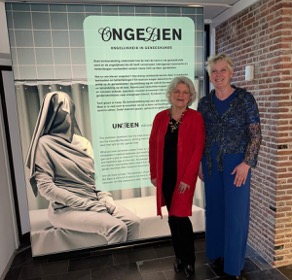
Opening women’s health exhibition at Boerhaave Museum.
Closing thoughts
What started with one simple question has grown into a personal mission: to make women’s health the standard, not the exception. I’m still learning every day, but now I recognize what I don’t know, and I’m actively working to change that. It’s a shift from being unconsciously incompetent to consciously advocating for women’s health in all health policies and practices.
This week, I’m continuing my personal mission by joining a panel discussion at HLTH Europe: Revolutionizing Women’s Health—The Power Struggle Between Innovation, Policy, and AI. It’s another step in pushing the conversation forward. I’d like to close this blog with an invitation to you: Where are you on this journey, and what’s your next step toward becoming a conscious advocate for health equity?
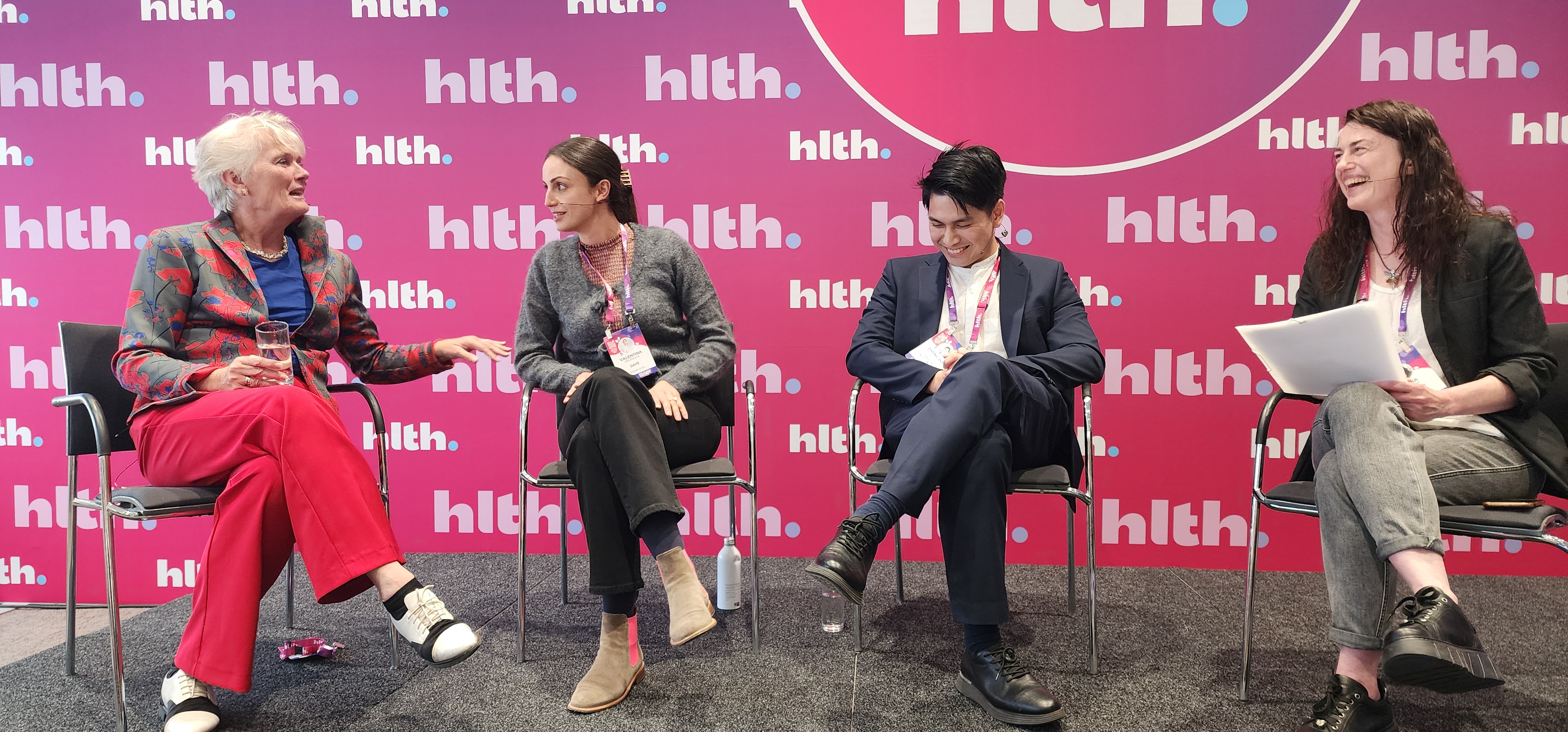
Panel discussion Women’s Health at HLTH Europe 2025
Stay up-to-date with the latest developments in women’s health by following the Health~Holland LinkedIn page!