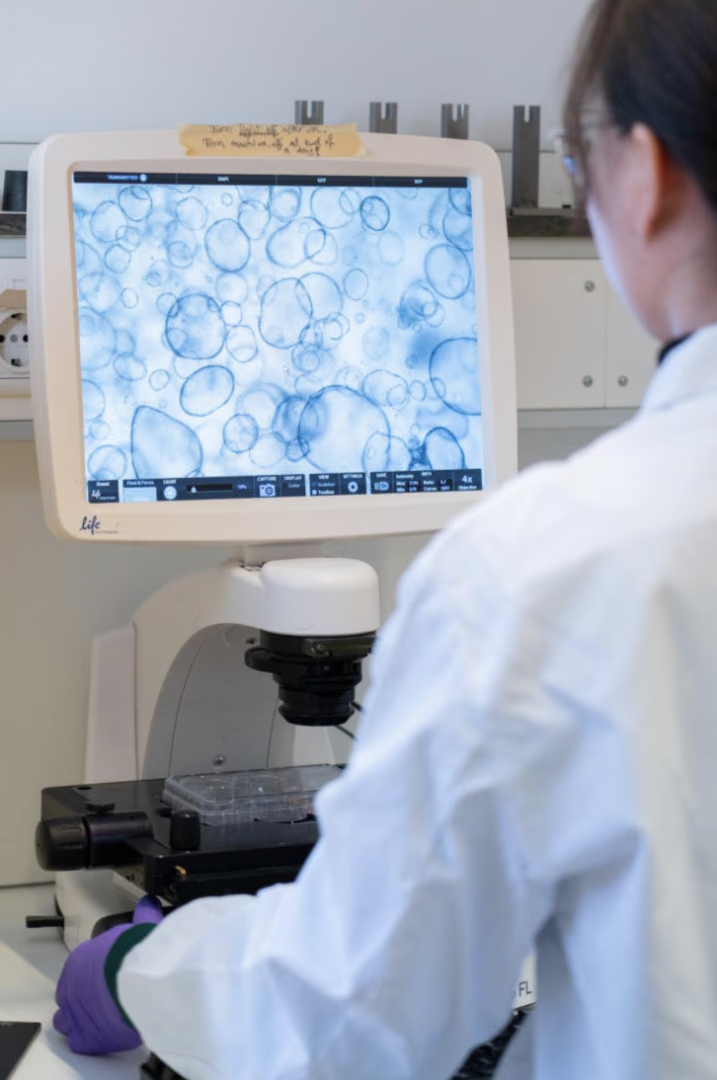
Translating Organoid technology towards a Clinical Application
Scalable Liver Organoid Therapy to Address the Global Donor Organ Shortage
Liver disease is a major global health problem, affecting millions of people worldwide and causing over two million deaths annually. Liver transplantation remains the only curative treatment, yet the severe shortage of donor organs means that only one in ten patients receives a transplant. The TOCA project, a collaboration between Utrecht University and Scinus Cell Expansion BV, was established to develop an innovative, cell-based alternative by growing patient-derived liver cells in a bioreactor system. This public-private partnership has made significant progress in scalable liver cell expansion, bringing regenerative liver therapy closer to clinical application.
Beyond its impact on patients, liver disease places a heavy financial burden on healthcare systems due to prolonged hospital stays, high treatment costs, and lifelong immunosuppressive therapy. As the prevalence of liver disease continues to rise, the demand for new treatment options becomes more urgent. The TOCA project addresses this global medical and economic challenge by developing a cell therapy approach that could reduce the need for donor organs, lower healthcare costs, and increase the number of transplantable livers through the regeneration of damaged bile ducts.
To achieve this, TOCA developed a closed-loop bioreactor system that enables the large-scale production of liver cells from a patient’s own tissue. This method ensures high cell yields while maintaining hepatic functionality, including albumin secretion and enzyme activity, proving their suitability for therapeutic applications.
TOCA successfully implemented standardized operating procedures (SOPs) for organoid expansion and differentiation, ensuring consistent quality, reproducibility, and GMP compliance. The project demonstrated an average cell yield of 189 million per batch, a threefold increase over spinner flask cultures and 63 times higher than static cultures. These validated workflows lay the foundation for further preclinical studies and clinical trials, marking an important step toward a scalable, patient-specific therapy for liver disease.
Other projects
In each PPP project, research institutions, businesses and healthcare organisations work together on a specific health challenge. Browse the full project overview.

Bekijk de programma’s
Binnen onze programma’s werken bedrijven, kennisinstellingen en regionale partners samen aan innovaties die bijdragen aan betere gezondheid en zorg.
Bekijk de partnerschappen
Strategische publiek-private partnerschappen (PPP's) zijn meerjarige samenwerkingen tussen bedrijven, kennisinstellingen en andere partijen.
Hoe kunnen we je helpen?
Heb je een vraag of wil je meer weten over Health Holland? We brengen je graag in contact met de juiste mensen, kennis en mogelijkheden om gezondheidsinnovatie te versnellen.
We have received your message
We will contact you within 3 to 4 working days. If your question is urgent, please contact us directly. Below is the contact option that best matches your subject.
Start again
Something went wrong while sending the form. Please try again.