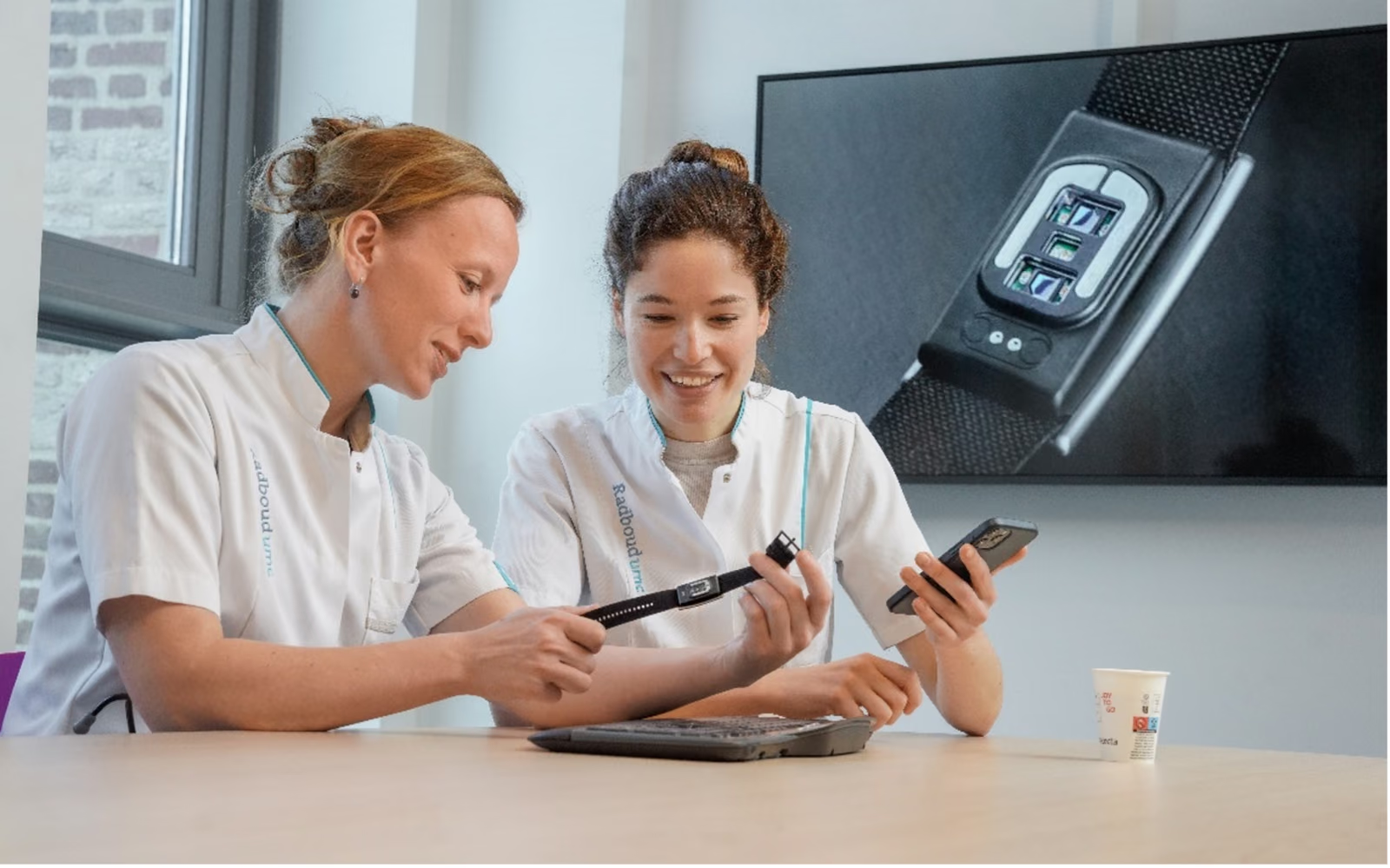
Development of a wristband for automated cardiac arrest DETECTion and alerting of the emergency medical services
Smart wristband detects cardiac arrest and alerts emergency services within seconds to save lives
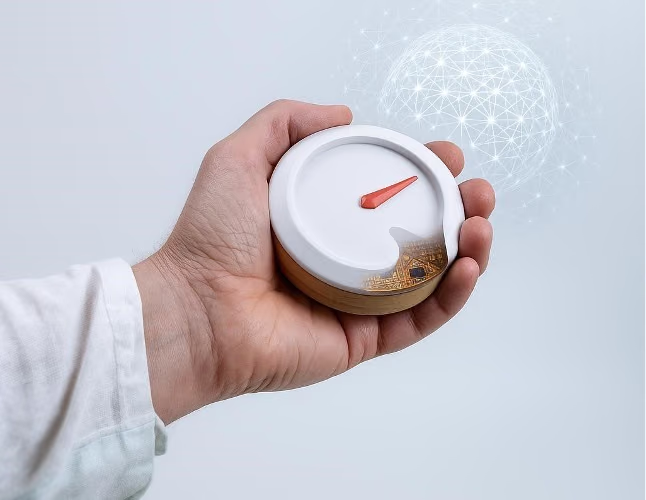
Each year, thousands of individuals experience an out-of-hospital cardiac arrest. Rapid emergency response is critical, yet about half of these arrests go unnoticed due to the absence of bystanders. The DETECT project, a collaboration between (academic) hospitals and an industry partner, aims to develop a wrist-worn device that automatically detects cardiac arrest and alerts emergency medical services. This public-private partnership brings together medical, technological, and implementation expertise to create a wristband that can save lives in everyday settings. The Cardiowatch (Corsano Health) will be further developed to fulfill this goal.
Sudden cardiac arrest is a major health concern, affecting approximately 15,000 people annually in the Netherlands alone. Survival rates remain low - on average, only 23% survive an out-of-hospital cardiac arrest, and even fewer if the event is unwitnessed. Time is critical: every minute without resuscitation reduces the chance of survival by 7 to 10%. Because many arrests occur at home or when individuals are alone, innovations that can bridge this time gap are urgently needed.
The Cardiowatch wristband uses photoplethysmography (PPG) - a light-based method that measures blood flow in the wrist - to recognize cardiac arrest. To develop the cardiac arrest detection algorithm, PPG data were collected from patients undergoing short-lasting, controlled cardiac arrests during routine hospital procedures, such as transcatheter aortic valve implantation (TAVI) (DETECT-1a study). The algorithm was then validated with data from both induced (DETECT-1b) and spontaneous (DETECT-1c) arrests, including shockable and non-shockable heart rhythms. To reduce false alarms, motion data from an integrated accelerometer will be added to the model (DETECT-2). The wristband is currently being tested in the home environment by healthy volunteers and individuals at increased risk of cardiac arrest (DETECT-3).
The deliverable is a wrist-worn cardiac arrest detection and emergency alerting system. If subsequent studies prove successful in real-world settings, this technology could significantly reduce time to treatment and increase out-of-hospital cardiac arrest survival rates.
Other projects
In each PPP project, research institutions, businesses and healthcare organisations work together on a specific health challenge. Browse the full project overview.

Bekijk de programma’s
Binnen onze programma’s werken bedrijven, kennisinstellingen en regionale partners samen aan innovaties die bijdragen aan betere gezondheid en zorg.
Bekijk de partnerschappen
Strategische publiek-private partnerschappen (PPP's) zijn meerjarige samenwerkingen tussen bedrijven, kennisinstellingen en andere partijen.
Hoe kunnen we je helpen?
Heb je een vraag of wil je meer weten over Health Holland? We brengen je graag in contact met de juiste mensen, kennis en mogelijkheden om gezondheidsinnovatie te versnellen.
We have received your message
We will contact you within 3 to 4 working days. If your question is urgent, please contact us directly. Below is the contact option that best matches your subject.
Start again
Something went wrong while sending the form. Please try again.