Development and effectiveness of intermittent HYPOxia as a nOvel intervention to imprOve clinical outcomes in healthcare
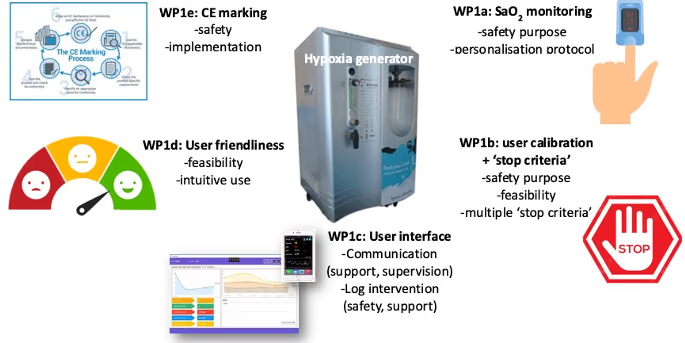
We develop a user-friendly device to simulate altitude to improve clinical status in Parkinson’s disease
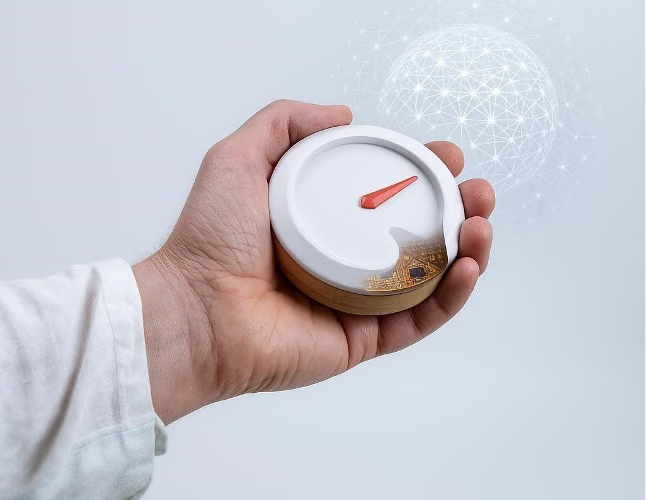
Pharmacological strategies fail to further improve outcomes in patients with Parkinson’s disease. HYPO-O2 is based on recent observations, where exposure to altitude can immediately improve clinical status in patients with Parkinson’s disease. Therefore, in close collaboration with b-CAT, we will develop a user-friendly device that ‘removes’ oxygen from the air. Lower levels of oxygen simulate altitude, and we have observed potential effects after sessions of 45-minutes of exposure to altitude. Through applying this approach in the home-environment on a regular basis (3 times/week), we expect that this will improve the clinical status of patients with Parkinson’s disease.
Parkinson’s disease affects 52.800 patients in the Netherlands and the number of patients is expected to increase exponentially. Parkinson’s disease is associated with a lower quality of life, and research is exploring alternative strategies to improve clinical status. Our innovative therapy may improve health and quality of life of individual patients. Subsequently, this leads to reduced burden on healthcare providers and caregivers, and consequently to lower socio-economic costs.
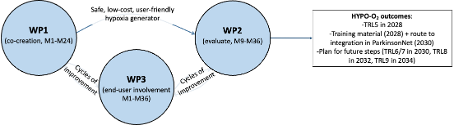
In our project we first, co-develop a device that can simulate altitude that is user-friendly and safe within the home environment. Second, we will evaluate the clinical effects of altitude-therapy for individuals with Parkinson’s disease. Finally, we will continuously ensure that patients, caregivers and clinicians are closely involved in the developmental process.
At the end of the project, we expect to have developed a safe, user-friendly device that can be used to simulate altitude within the patient’s home environment. Moreover, we expect that we have data to support the clinical benefits of using this device.
Other projects
In each PPP project, research institutions, businesses and healthcare organisations work together on a specific health challenge. Browse the full project overview.

Bekijk de programma’s
Binnen onze programma’s werken bedrijven, kennisinstellingen en regionale partners samen aan innovaties die bijdragen aan betere gezondheid en zorg.
Bekijk de partnerschappen
Strategische publiek-private partnerschappen (PPP's) zijn meerjarige samenwerkingen tussen bedrijven, kennisinstellingen en andere partijen.
Hoe kunnen we je helpen?
Heb je een vraag of wil je meer weten over Health Holland? We brengen je graag in contact met de juiste mensen, kennis en mogelijkheden om gezondheidsinnovatie te versnellen.
We have received your message
We will contact you within 3 to 4 working days. If your question is urgent, please contact us directly. Below is the contact option that best matches your subject.
Start again
Something went wrong while sending the form. Please try again.