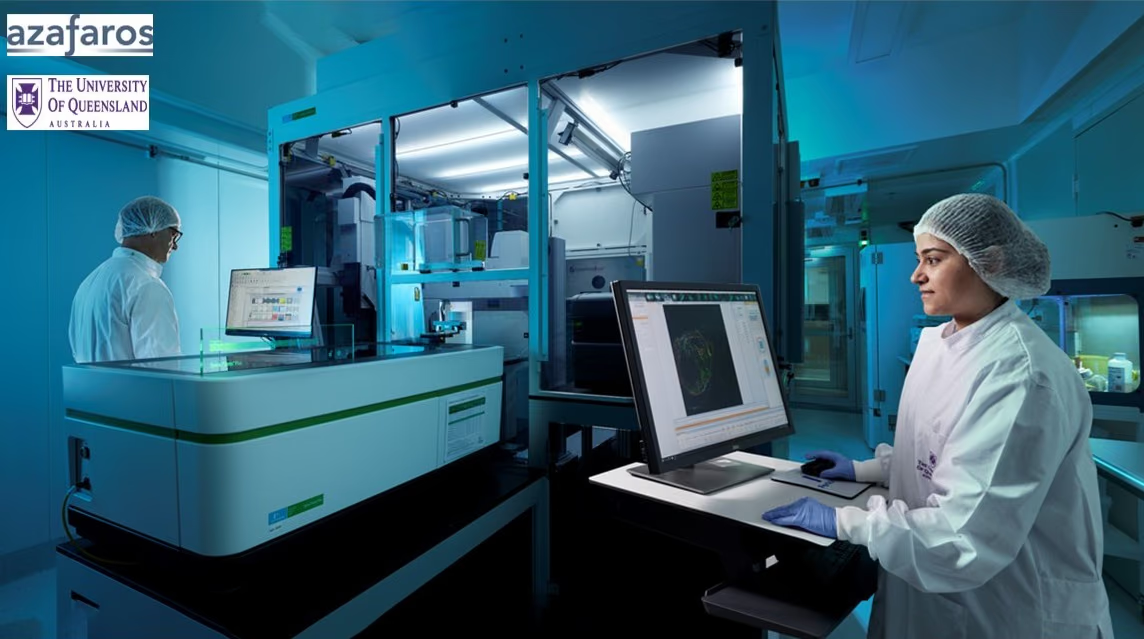
Creation of an osteoprotegerin knockout osteoclast cell line for screening potential therapeutics for the treatment of Juvenile Paget’s Disease
The project aims to create a cell line to test the drug candidate against a rare osteoclast-related bone disease
The project aims to create a cell line to test the drug candidate against a rare osteoclast-related bone disease. The consortium brings together a Dutch SME Azafaros, which specialises in drug development for rare diseases, and the University of Queensland, Australia, providing its expertise in genome engineering and disease modelling. This union will ensure high-profile fundamental research with a clear vision for future applications.
Juvenile Paget’s Disease (JPD) is a rare disease that affects bone growth and presents in infancy or early childhood. A genetic mutation leads to generalised, extremely rapid bone turnover manifesting in progressive skeletal deformity, regular fractures and extra-skeletal symptoms such as hearing loss, retinopathy and vascular calcification. Currently, there is no specific treatment for JPD, and the usage of bisphosphonates is limited. To the best of our knowledge, there are no drugs under development for this disease either.
Azafaros is developing a compound based on an inhibitor of cathepsin K licensed from Leiden University, targeting both bone resorption and formation. This project aims to develop a disease model based on a human cell line to test the compound and demonstrate a proof-of-concept which can then support the Orphan Drug Application.
The project will involve the generation of a gene-edited cell line, disease model validation and compound testing including dosage-dependent studies. Therefore, it will accelerate solution development, clinical approval and meeting patient needs. Moreover, it will catalyse the R&D cooperation between the Netherlands and Australia manifesting in added scientific knowledge, mutual publications and research data produced. A new drug will contribute significantly to Health & Care missions by ensuring people with chronic diseases live longer and better integrate into society.
Other projects
In each PPP project, research institutions, businesses and healthcare organisations work together on a specific health challenge. Browse the full project overview.

Bekijk de programma’s
Binnen onze programma’s werken bedrijven, kennisinstellingen en regionale partners samen aan innovaties die bijdragen aan betere gezondheid en zorg.
Bekijk de partnerschappen
Strategische publiek-private partnerschappen (PPP's) zijn meerjarige samenwerkingen tussen bedrijven, kennisinstellingen en andere partijen.
Hoe kunnen we je helpen?
Heb je een vraag of wil je meer weten over Health Holland? We brengen je graag in contact met de juiste mensen, kennis en mogelijkheden om gezondheidsinnovatie te versnellen.
We have received your message
We will contact you within 3 to 4 working days. If your question is urgent, please contact us directly. Below is the contact option that best matches your subject.
Start again
Something went wrong while sending the form. Please try again.