Non-invasive sepsis detection: development of a novel microcirculation monitoring technology to reduce newborn mortality
In this project dynamic light scattering technology will be investigated for sepsis detection in newborns
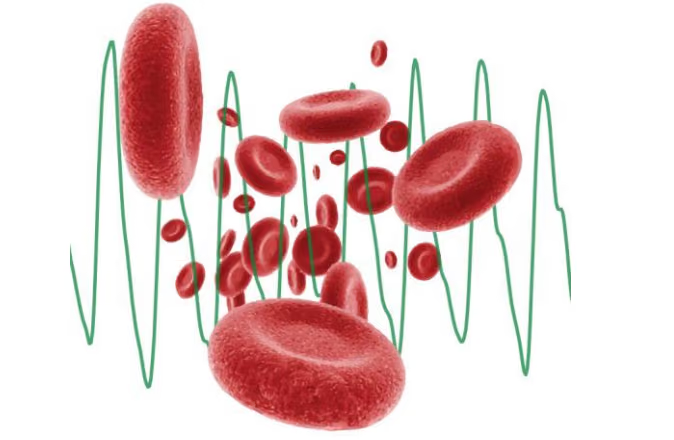
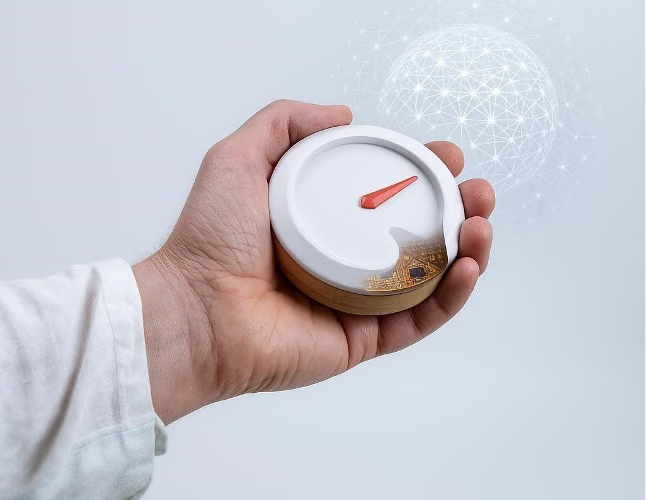
Blood stream infection, or sepsis, is the largest cause of mortality and morbidity for newborns admitted to the Neonatal Intensive Care Unit (NICU). Despite the fact that treatments for sepsis are available, the detection of sepsis is very difficult. As a consequence sepsis has often progressed into a life-threatening disease by the time treatment is started. There is evidence that the small blood vessels in our organs and skin (the microcirculation) are affected by sepsis at a very early stage of the disease process. Elfi-Tech Ltd. has recently developed a prototype sensor containing miniaturized dynamic light scattering technology that is able to measure movement of red blood cells in the skin microcirculation noninvasively. In a collaboration between Erasmus MC and Elfi-Tech Ltd., this project aims to develop a prototype system for the detection of sepsis in newborns using dynamic light scattering technology.
Worldwide 5% of all newborns are born prematurely, often requiring intensive care. Neonatal sepsis adds a long period of severe illness to a potentially uncomplicated postnatal hospital stay. The incidence of sepsis in the NICU population is between 20% and 25%, resulting in a mortality rate of 10% to 30% in septic neonates. Besides the increased hospitalization and mortality, neonatal sepsis causes significant comorbidities. The most prevalent co-morbidities are life-long, such as the negative influence on intellectual development and behavior.
By using information from measurements with dynamic light scattering in actual newborns with sepsis, a noninvasive detection system was created. A clinical data acquisition system suitable for the NICU was built to log the raw dynamic light scattering measurements continuously. In a prospective observational study at the NICU, 16 premature neonates of whom 8 suffered from sepsis were continuously measured with two dynamic light scattering sensors. Before the start of the clinical study, customized adhesive rings were developed to be able to secure the sensors to the fragile neonatal skin and to obtain a good signal quality. Nurses quantified the sensor as being solid, easy-to-use and safe and like its small size. Conventional blood flow and blood velocity measurements have been analyzed and new microcirculatory parameters have been developed to detect sepsis using dynamic light scattering measurements and distinguish healthy and septic neonates. The hemodynamic state before and after blood transfusion has been assessed using several dynamic light scattering parameters. The technology developed in this project allows for a low-cost and easily usable device with a high impact on healthcare and disease outcome. The end product of this project is a prototype system integrating dynamic light scattering measurements with a neonatal sepsis detection algorithm that is ready for further clinical evaluation in a validation study.
DisclaimerThis collaboration project is co-funded by the PPP Allowance made available by Health~Holland, Top Sector Life Sciences & Health, to EMC to stimulate public-private partnerships. For questions, please contact EMC directly via the following email address tki@erasmusmc.nl.
Other projects
In each PPP project, research institutions, businesses and healthcare organisations work together on a specific health challenge. Browse the full project overview.

Bekijk de programma’s
Binnen onze programma’s werken bedrijven, kennisinstellingen en regionale partners samen aan innovaties die bijdragen aan betere gezondheid en zorg.
Bekijk de partnerschappen
Strategische publiek-private partnerschappen (PPP's) zijn meerjarige samenwerkingen tussen bedrijven, kennisinstellingen en andere partijen.
Hoe kunnen we je helpen?
Heb je een vraag of wil je meer weten over Health Holland? We brengen je graag in contact met de juiste mensen, kennis en mogelijkheden om gezondheidsinnovatie te versnellen.
We have received your message
We will contact you within 3 to 4 working days. If your question is urgent, please contact us directly. Below is the contact option that best matches your subject.
Start again
Something went wrong while sending the form. Please try again.