Propulsion optimization through improved seated balance in wheelchairs
Optimizing seated balance, pressure and shear in wheelchairs, and with that propulsion biomechanics and efficiency
This project, a collaboration between UMCG and Vicair, aims to optimize seated balance and propulsion biomechanics in wheelchair users while reducing pressure distribution and shear forces. This public-private partnership brings research and development in the field of wheelchair seating together, leverages innovations in seated balance and its quantification.
Pressure injuries affect 20-30% of wheelchair users, particularly those with spinal cord injuries and the elderly. These injuries result from prolonged immobility, inadequate pressure distribution, shear forces and comorbid conditions. Effective prevention and management are crucial to improving quality of life and reducing healthcare costs. By optimizing seated pressure distribution, the project aims to reduce skin breakdown, improve circulation, and enhance overall health. Improved pressure distribution can come at the cost of seated balance. This project aims to simultaneously address balance and pressure distribution as proper balance in a manual wheelchair is essential for safety, maneuverability, and metabolic efficiency, ultimately promoting independence and reducing the risk of overuse injuries.
The project's approach involves integrating recent measurement innovations from UMCG with Vicair's in-house technologies. The goal is to develop a test set for seated balance on the one hand, and solutions that optimize seated balance, while pressure distribution and shear forces are not negatively affected on the other. This innovative approach is expected to significantly improve the quality of life for wheelchair users.
Key deliverables include wheelchair cushions optimized for balance and pressure distributions and a test set to quantify balance. After this development phase the innovative seating will be validated through research into pressure distribution, shear forces, propulsion biomechanics and seated balance.
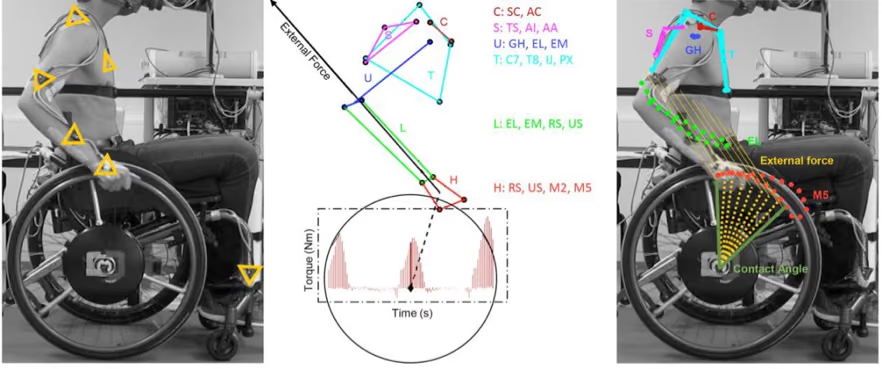
Example of detailed biomechanical analyses during manual wheelchair propulsion.
Copyright: © 2018 Leving et al. This is an open access article distributed under the terms of the Creative Commons Attribution License, which permits unrestricted use, distribution, and reproduction in any medium, provided the original author and source are credited.
Leving MT, Vegter RJ, de Groot S, van der Woude LH. Effects of variable practice on the motor learning outcomes in manual wheelchair propulsion. J Neuroeng Rehabil. 2016 Nov 23;13(1):100. doi: 10.1186/s12984-016-0209-7. PMID: 27881124; PMCID: PMC5120477.
Other projects
In each PPP project, research institutions, businesses and healthcare organisations work together on a specific health challenge. Browse the full project overview.

Bekijk de programma’s
Binnen onze programma’s werken bedrijven, kennisinstellingen en regionale partners samen aan innovaties die bijdragen aan betere gezondheid en zorg.
Bekijk de partnerschappen
Strategische publiek-private partnerschappen (PPP's) zijn meerjarige samenwerkingen tussen bedrijven, kennisinstellingen en andere partijen.
Hoe kunnen we je helpen?
Heb je een vraag of wil je meer weten over Health Holland? We brengen je graag in contact met de juiste mensen, kennis en mogelijkheden om gezondheidsinnovatie te versnellen.
We have received your message
We will contact you within 3 to 4 working days. If your question is urgent, please contact us directly. Below is the contact option that best matches your subject.
Start again
Something went wrong while sending the form. Please try again.