GENIUS and IN-CONTROL in transition; a novel ex-vivo based model system to study atherosclerosis
Reduce, replace, refine; a novel ex-vivo based model system to study atherosclerosis
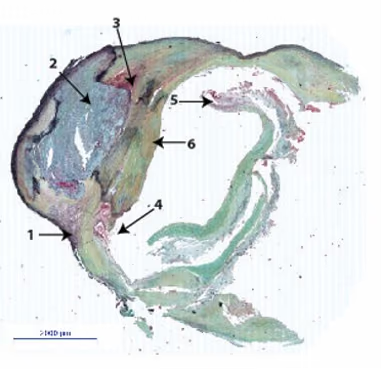
Atherosclerosis, the main cause of cardiovascular disease, is a chronic inflammatory disease caused by the accumulation of inflammatory cells and cholesterol in the vessel wall. The atherosclerotic plaque, which is caused by this inflammatory reaction, can grow to such an extent that it can completely block the artery. In addition, the plaque can rupture and cause a blood clot, possibly resulting in a heart attack or stroke. Various organs in the body play a role in the development of atherosclerosis, which is why the underlying mechanisms of this disease are often studied in laboratory animals. However, the data obtained from these studies cannot always be directly translated to humans. In this project, we therefore set the goal of developing a new ex vivo model based on atherosclerotic plaque from humans, in which candidate drugs that counteract atherosclerosis can be tested. For the development of this model, we used atherosclerotic plaque material from patients undergoing an endarterectomy. The patients undergo this surgery to remove an advanced atherosclerotic plaque from the carotid artery, often after these patients have had a stroke. This plaque is cut into precise slices of 2 mm thickness, after which these slices are placed in a culture dish. We managed to keep these slices alive for more than 10 days, so that we could test candidate drugs on them. Several anti-inflammatory drugs that are in development for use in cardiovascular disease have been tested in this new model system. In line with the goals set in the Transition to Animal-Free Innovation (TPI) initiative, this model will therefore be able to lead to a reduction in the number of laboratory animals used in cardiovascular research, and the results obtained from these studies will be directly translatable to the patient.
Other projects
In each PPP project, research institutions, businesses and healthcare organisations work together on a specific health challenge. Browse the full project overview.

Bekijk de programma’s
Binnen onze programma’s werken bedrijven, kennisinstellingen en regionale partners samen aan innovaties die bijdragen aan betere gezondheid en zorg.
Bekijk de partnerschappen
Strategische publiek-private partnerschappen (PPP's) zijn meerjarige samenwerkingen tussen bedrijven, kennisinstellingen en andere partijen.
Hoe kunnen we je helpen?
Heb je een vraag of wil je meer weten over Health Holland? We brengen je graag in contact met de juiste mensen, kennis en mogelijkheden om gezondheidsinnovatie te versnellen.
We have received your message
We will contact you within 3 to 4 working days. If your question is urgent, please contact us directly. Below is the contact option that best matches your subject.
Start again
Something went wrong while sending the form. Please try again.