Dissecting neuroinflammation using metabolomics and organ-on-a-chip (NEUROMET)
This project will identify the mechanisms underlying neuroinflammation in the brain of older adults
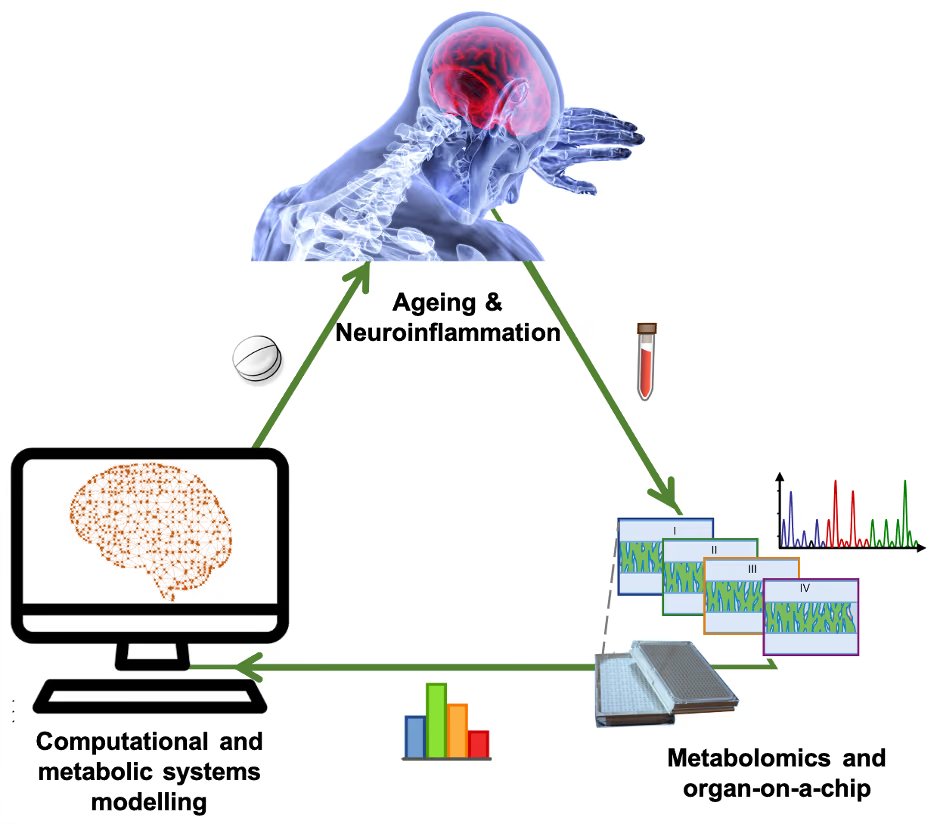
This project involves a multidisciplinary, public-private consortium between Leiden University and Khondrion that brings together two partners with expertise in technological developments of in-vitro neurovascular models and drug development to treat neuroinflammation. In NEUROMET, novel methods will be developed to identify neuroinflammation mechanisms in in-vitro models and humans.
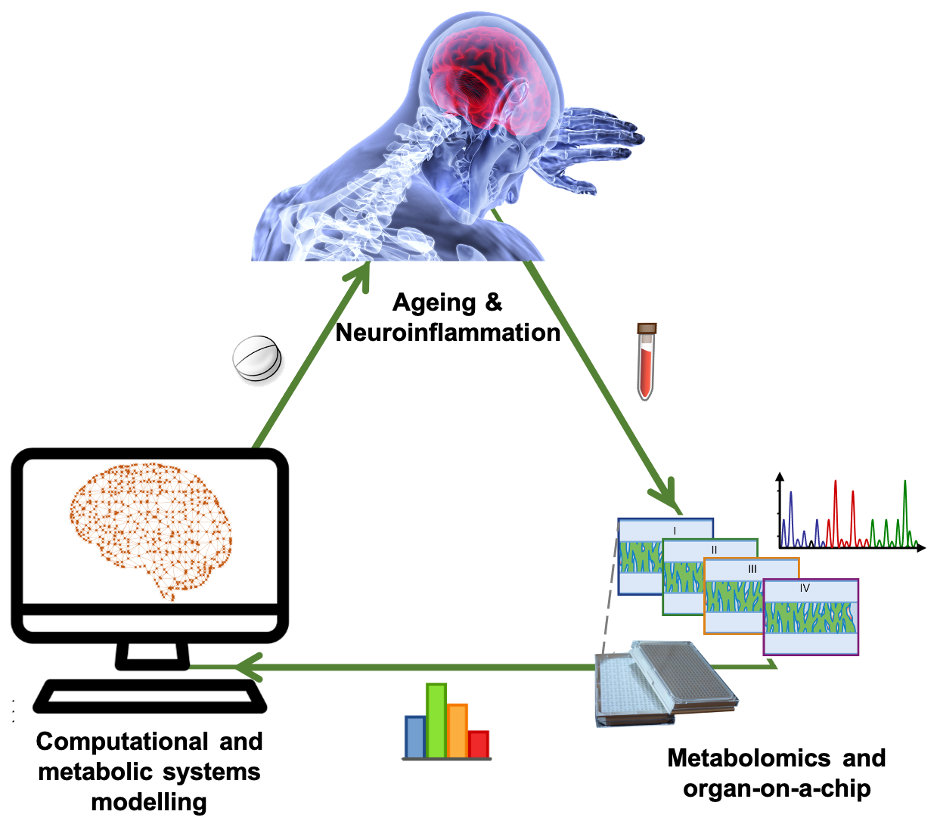
The effect of metabolic biomarkers using patients’ blood in a neurovascular in-vitro model is used and the impact on neurons/astrocytes is measured using a computational metabolic network model to evaluate interventions or changes due to lifestyle.
In NEUROMET we developed novel methods to identify the mechanisms underlying neuroinflammation in in-vitro models and in humans. We developed and applied metabolomics methods to study mitochondrial dysfunction and neuroinflammation. We built an experimental platform to study mitochondrial dysfunction and neuroinflammation in organ-on-chip models. We established a human neurovascular in-vitro model and measured the effect of chemical compounds or markers through the bloodvessel of the neurovascular unit on neurons. We induced mitochondrial dysfunction and/or neuroinflammation in the neurovascular unit, and we then studied whether a drug or drug candidate can modulate (or compensate) the effect initiated by such a circulatory marker or a chemical compound introduced via the bloodvessel of the neurovascular unit.
We used metabolomics and tracer-based metabolomics combined with a computational reconstructed metabolic network model of neurons to understand neuroinflammation. This experimental and computational strategy allowed to identify the changes in fluxes through metabolic pathways induced by circulatory metabolic factors causing brain dysfunction. This was especially interesting as metabolites are not only useful as diagnostic markers but also in their role as causal factors since they can guide towards potential intervention strategies.
The developed platform helped to address (future) question such as (i) which metabolic or immune signals cross the neurovascular unit of the brain, (ii) do these signals influence brain metabolism and neuronal functioning, and (iii) can we modify or compensate for such changes in brain metabolism? The experimental and technological setting and results were useful for several clinical, biomedical and drug research applications, and we have already engaged with clinical researchers and pharma companies to exploit this developed platform. NEUROMET was also strengthening the VOILA consortium because it contributed in the biological/biochemical understanding of metabolic biomarkers and because it added the component of brain health and well-being to the knowledge that VOILA generated for the older adult population segment.
Other projects
In each PPP project, research institutions, businesses and healthcare organisations work together on a specific health challenge. Browse the full project overview.

Bekijk de programma’s
Binnen onze programma’s werken bedrijven, kennisinstellingen en regionale partners samen aan innovaties die bijdragen aan betere gezondheid en zorg.
Bekijk de partnerschappen
Strategische publiek-private partnerschappen (PPP's) zijn meerjarige samenwerkingen tussen bedrijven, kennisinstellingen en andere partijen.
Hoe kunnen we je helpen?
Heb je een vraag of wil je meer weten over Health Holland? We brengen je graag in contact met de juiste mensen, kennis en mogelijkheden om gezondheidsinnovatie te versnellen.
We have received your message
We will contact you within 3 to 4 working days. If your question is urgent, please contact us directly. Below is the contact option that best matches your subject.
Start again
Something went wrong while sending the form. Please try again.