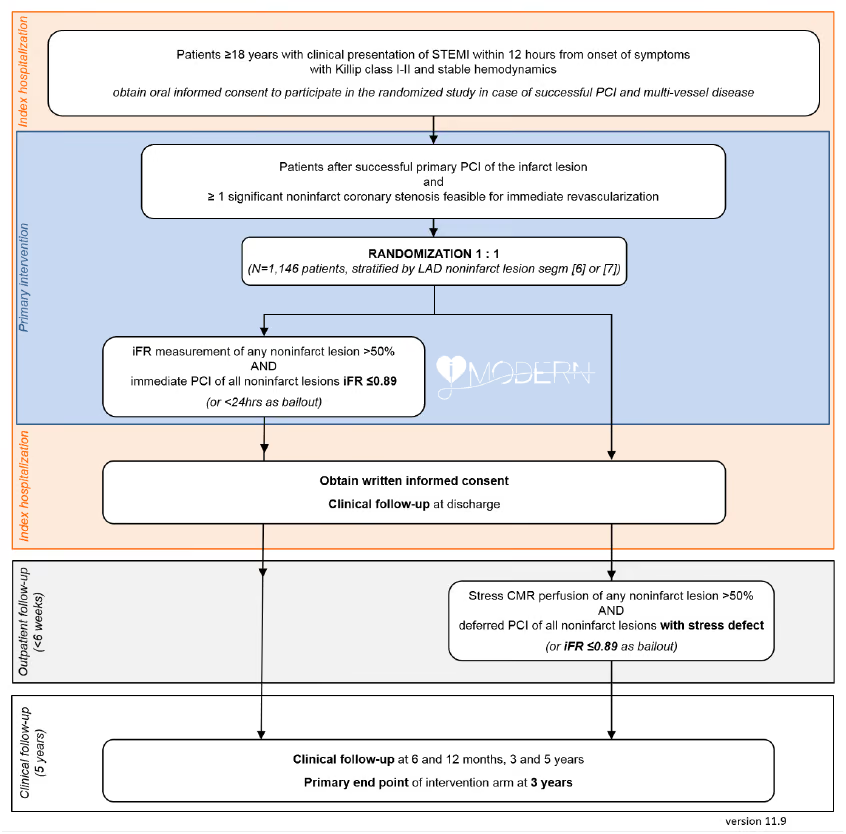
Instantaneous wave-free ratio guided multivessel revascularisation during percutaneous coronary intervention for acute myocardial infarction
Radboudumc cardiologists investigate the optimal treatment for myocardial infarction patients with multiple coronary narrowings
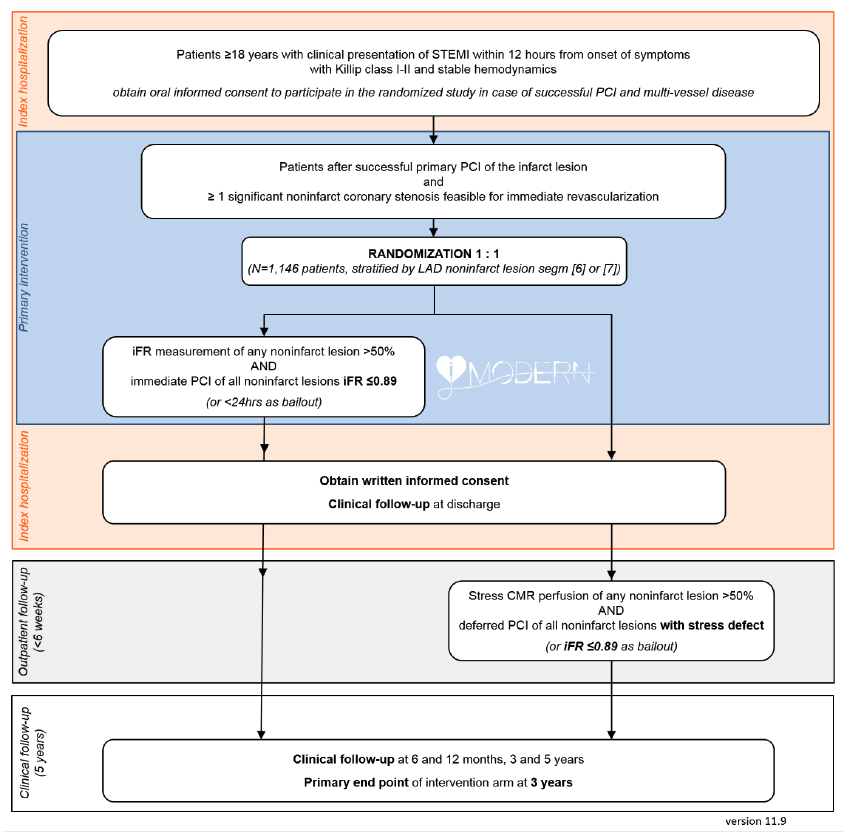
The iMODERN study will compare immediate treatment of all noninfarct lesions, during the acute procedure, to a control group. The control group arm has their noninfarct lesions treated within 6 weeks after the myocardial infarction. Of course, the myocardial infarction was treated directly in all patients.
In patients with an acute myocardial infarction, 40-60% have multivessel disease. This leads to an increased chance of mortality and disability. It is not recommended to revascularise noninfarct narrowings during the acute intervention. However, recent investigations suggest the opposite and show improved outcome after direct revascularisation of all noninfarct narrowings. An additional advantage of a direct approach is that only one catherisation procedure is needed for the treatment of the coronary artery disease, instead of two. In this way, it is expected that patients can begin with cardiac rehab, and return to their regular work and activities, earlier.
To see which study arm fares better, the rates of mortality, 2nd myocardial infarctions, and heart failure will be assessed at 3 years of follow-up. As such, the results are expected by autumn 2025. This study was performed with grants from Health Holland, Philips Volcano, and Biotronik.
Other projects
In each PPP project, research institutions, businesses and healthcare organisations work together on a specific health challenge. Browse the full project overview.

Bekijk de programma’s
Binnen onze programma’s werken bedrijven, kennisinstellingen en regionale partners samen aan innovaties die bijdragen aan betere gezondheid en zorg.
Bekijk de partnerschappen
Strategische publiek-private partnerschappen (PPP's) zijn meerjarige samenwerkingen tussen bedrijven, kennisinstellingen en andere partijen.
Hoe kunnen we je helpen?
Heb je een vraag of wil je meer weten over Health Holland? We brengen je graag in contact met de juiste mensen, kennis en mogelijkheden om gezondheidsinnovatie te versnellen.
We have received your message
We will contact you within 3 to 4 working days. If your question is urgent, please contact us directly. Below is the contact option that best matches your subject.
Start again
Something went wrong while sending the form. Please try again.