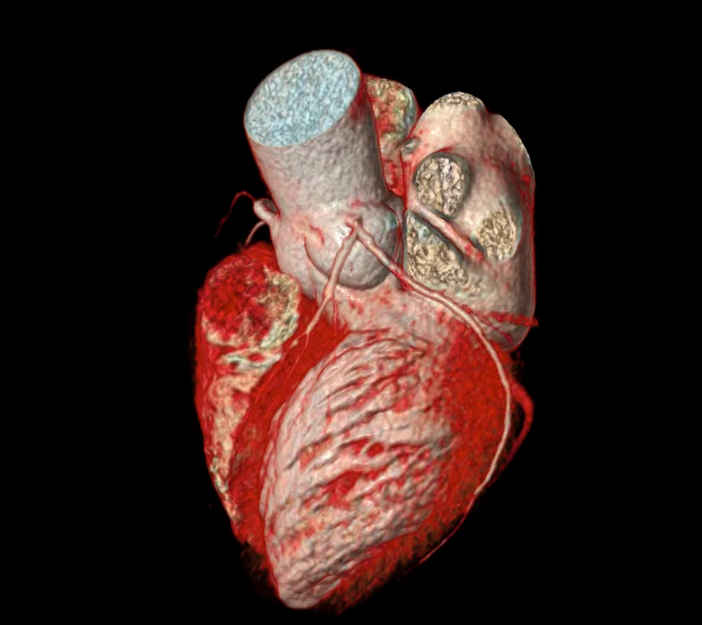
Coronary arterial tree and vascular wall characteristics as markers of coronary vasomotor dysfunction
Working towards a more personalized diagnosis for angina pectoris (chest pain due to oxygen deprivation)
In collaboration with Medis, a company that develops software for imaging the heart, the researchers want to find out which characteristics in the vascular wall can help predict poor vascular function (coronary dysfunction). The researchers hope that this will lead to a more personalized diagnosis for angina pectoris (chest pain due to oxygen deprivation).
Angina pectoris affects 3-5% of the population and is characterised by disabling chest pain, chest tightness, or shortness of breath. Initial diagnostics focus on detecting obstructive coronary artery disease (CAD) using coronary computed tomography angiography (CCTA). If CCTA results are unclear or suggest CAD, patients undergo invasive coronary angiography (ICA) to assess the extent of CAD and, if needed, receive coronary revascularisation. This approach, centered on CAD, assumes revascularisation will relieve symptoms. However, 50% of patients continue to experience disabling angina after successful revascularisation, which is more frequent in women than in men. Further investigation reveals that two-third of these patients suffer from a form of coronary vasomotor dysfunction. Identification of such non-obstructive origins of angina pectoris requires additional invasive coronary function testing (CFT), which carries high cost, patient burden, and is associated with potential risks related to coronary instrumentation.
In this project it is hypothesized that advanced imaging characteristics can identify patients with coronary vasomotor disorders. To test this, they will analyse CCTA and ICA data using Medis software of patients undergoing revascularisation. Given known sex-differences in vascular wall characteristics and coronary vasomotor dysfunction, we will stratify all analyses by sex. This collaborative project between UMCU and Medis will provide insight into the value of software-based detection of coronary vasomotor dysfunction.
The deliverables are: imaging data analysis plan complete (month 1), interim report (month 24), CCTA and ICA data analysed (month 44) Final report submitted (month 48).
Other projects
In each PPP project, research institutions, businesses and healthcare organisations work together on a specific health challenge. Browse the full project overview.


Bekijk de programma’s
Binnen onze programma’s werken bedrijven, kennisinstellingen en regionale partners samen aan innovaties die bijdragen aan betere gezondheid en zorg.
Bekijk de partnerschappen
Strategische publiek-private partnerschappen (PPP's) zijn meerjarige samenwerkingen tussen bedrijven, kennisinstellingen en andere partijen.
Hoe kunnen we je helpen?
Heb je een vraag of wil je meer weten over Health Holland? We brengen je graag in contact met de juiste mensen, kennis en mogelijkheden om gezondheidsinnovatie te versnellen.
We have received your message
We will contact you within 3 to 4 working days. If your question is urgent, please contact us directly. Below is the contact option that best matches your subject.
Start again
Something went wrong while sending the form. Please try again.