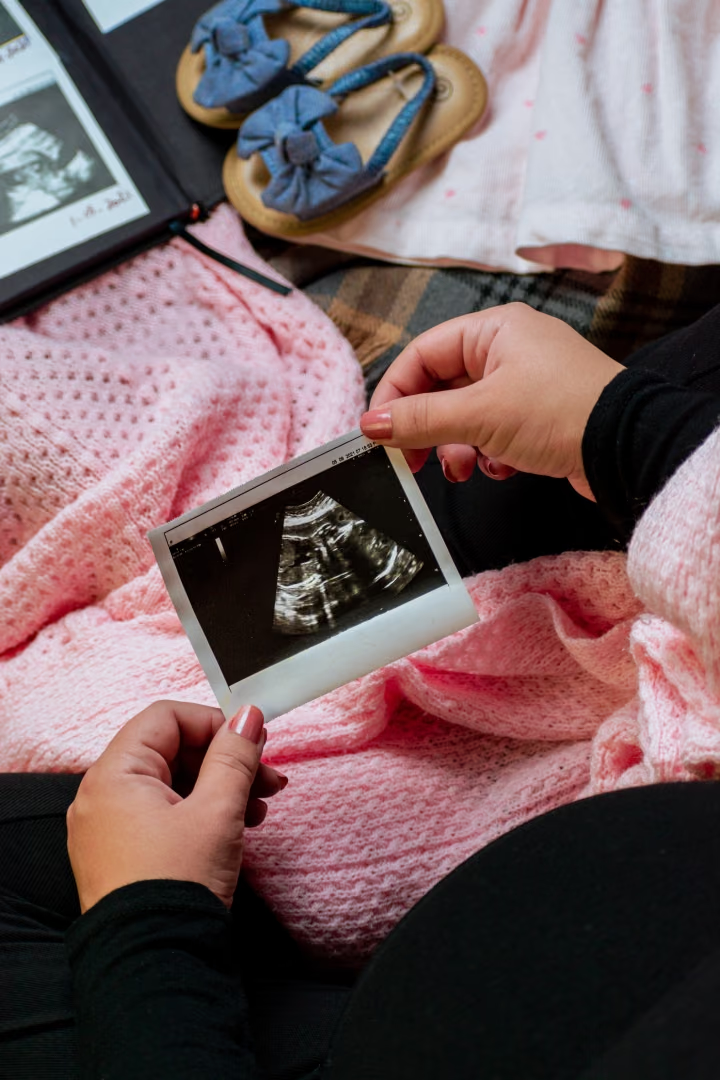
Consequences of maternal diabetes during pregnancy for maternal and offspring health
Preclinical studies to investigate metabolic disease risk and -development in mothers and offspring exposed to diabetic pregnancies
Maternal diabetes during pregnancy poses major long-term health risks for both mother and child. This collaborative project between UMCG and Danone Nutricia Research will evaluate the consequences of gestational diabetes (GDM) for offspring development and -health. Research within the so-called Developmental Origins of Health and Disease (DOHaD) field support the notion that healthy ageing starts in the womb.
Infants born from obese mothers and mothers with GDM are at an increased risk for pregnancy and birth complications as well as later non-communicable disease. The worldwide incidence of GDM is currently estimated to be 14% of all pregnancies, but much higher (>20%) in women having one or more risk factors. On the long term, GDM children have an increased risk to develop obesity and impaired glucose tolerance, two features of metabolic syndrome. Additionally, there are indications that intrauterine exposure to hyperglycemia sensitizes female offspring to also develop GDM when pregnant, suggesting transgenerational effects on glucose metabolism. However, the mechanisms in mother, placenta and child by which GDM induces metabolic programming and subsequently increases later MetS risk are poorly understood.
In this study, they will implement a GDM mouse model that adequately captures the maternal and fetal phenotype of human GDM. This model will subsequently allow to study the specific adaptations in maternal physiology, offspring organ function, the contribution of different organ adaptations to later disease risk, as well as the underlying mechanisms that potentially contribute to maternal and offspring disease risk. Moreover, potential impact of interventions during different windows of opportunity, i.e. during pregnancy (current treatment window), lactation and/or after weaning can be studied in detail. The proposed project will hence contribute to further mechanistic understanding and provide insights to develop intervention strategies that potentially reduce the incidence of GDM and obesity/insulin resistance, thereby contributing to healthy aging in humans.
Results:
This project examined the effects of gestational diabetes on the health of the mother and offspring during pregnancy and lactation. For this purpose, a mouse model was used that reflects the human situation better than previously developed animal models.
The impact of maternal diabetes on the health of the female mice after pregnancy was then examined, and it was found that these females were not only at increased risk of remaining diabetic, but also had an increased risk of developing non-alcoholic fatty liver disease. to develop (NAFLD). The risk correlated with the level of blood sugar levels during pregnancy.
In addition to the effects on the mother, the effects on the placenta and the fetal and postnatal development of the offspring have also been investigated. This showed that changes in both placental structure and nutrient transport occurred, especially in the placentas of male fetuses. In addition, accumulation of glucose as lipids was found in placentas of both male and female fetuses. These results show that elevated blood sugar levels in the mother affect the function of the placenta and the intrauterine nutrient supply to the fetus.
The results of this project may help to develop integrated health solutions to prevention pregnancy complications and their consequences for mother and offspring. Results have been presented at both clinically and fundamentally-oriented scientific conferences and will be communicated via publications in peer-reviewed scientific journals.
Other projects
In each PPP project, research institutions, businesses and healthcare organisations work together on a specific health challenge. Browse the full project overview.

Bekijk de programma’s
Binnen onze programma’s werken bedrijven, kennisinstellingen en regionale partners samen aan innovaties die bijdragen aan betere gezondheid en zorg.
Bekijk de partnerschappen
Strategische publiek-private partnerschappen (PPP's) zijn meerjarige samenwerkingen tussen bedrijven, kennisinstellingen en andere partijen.
Hoe kunnen we je helpen?
Heb je een vraag of wil je meer weten over Health Holland? We brengen je graag in contact met de juiste mensen, kennis en mogelijkheden om gezondheidsinnovatie te versnellen.
We have received your message
We will contact you within 3 to 4 working days. If your question is urgent, please contact us directly. Below is the contact option that best matches your subject.
Start again
Something went wrong while sending the form. Please try again.