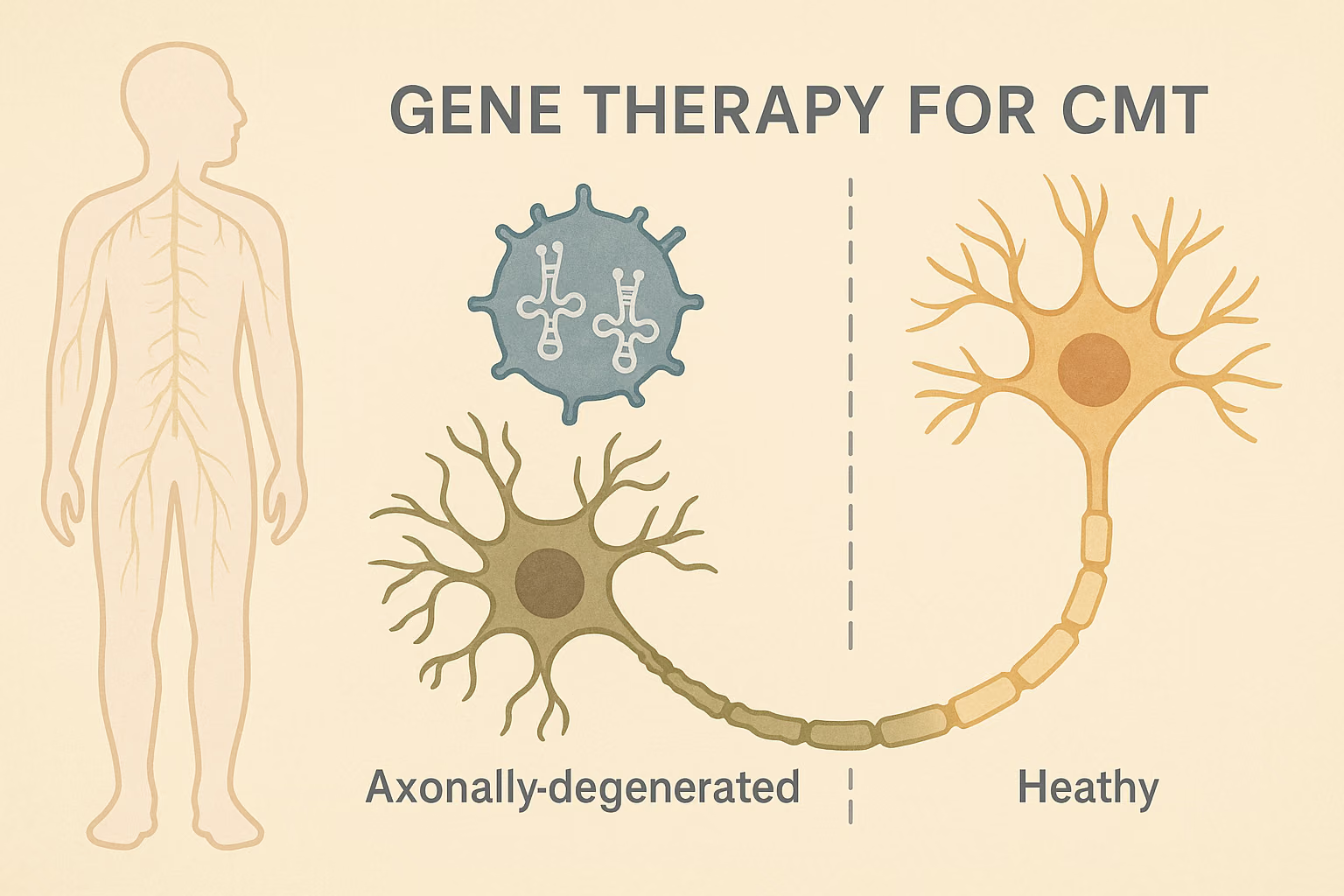
Restoring nerve function in Charcot-Marie-Tooth disease through a gene therapy that rebalances protein production
A new gene therapy aims to protect nerves and stop disease progression in people with CMT
Charcot-Marie-Tooth disease (CMT) is a genetic disorder that affects the nerves in the arms and legs, causing muscle weakness, walking problems, and disability. One rare form of this disease, called CMT type 2D (CMT2D), is caused by a genetic mutation that disrupts the normal process of protein formation in nerve cells. XtRNA Bio and Radboud University are working together in this partnership to develop a gene therapy that can restore this process and protect the nerves from damage.
The mutation in CMT2D interferes with the balance of transfer RNA molecules - key components that help cells produce proteins. When this balance is disturbed, nerve cells become stressed and eventually stop working properly. Patients may gradually lose the ability to walk or work. Current treatments only manage symptoms, but do not stop the disease.
This project delivers extra tRNAGly - the missing key components - directly to the affected nerves using gene therapy. In earlier studies in mice, this approach prevented disease symptoms and protected the nerves. In this project, we will optimise how the gene therapy is delivered, ensure that it meets safety standards, and prepare for future clinical trials by developing a scalable production method.
By the end of the project, we expect to have a safe and effective gene therapy ready for the next steps toward patient testing.
Other projects
In each PPP project, research institutions, businesses and healthcare organisations work together on a specific health challenge. Browse the full project overview.

Bekijk de programma’s
Binnen onze programma’s werken bedrijven, kennisinstellingen en regionale partners samen aan innovaties die bijdragen aan betere gezondheid en zorg.
Bekijk de partnerschappen
Strategische publiek-private partnerschappen (PPP's) zijn meerjarige samenwerkingen tussen bedrijven, kennisinstellingen en andere partijen.
Hoe kunnen we je helpen?
Heb je een vraag of wil je meer weten over Health Holland? We brengen je graag in contact met de juiste mensen, kennis en mogelijkheden om gezondheidsinnovatie te versnellen.
We have received your message
We will contact you within 3 to 4 working days. If your question is urgent, please contact us directly. Below is the contact option that best matches your subject.
Start again
Something went wrong while sending the form. Please try again.