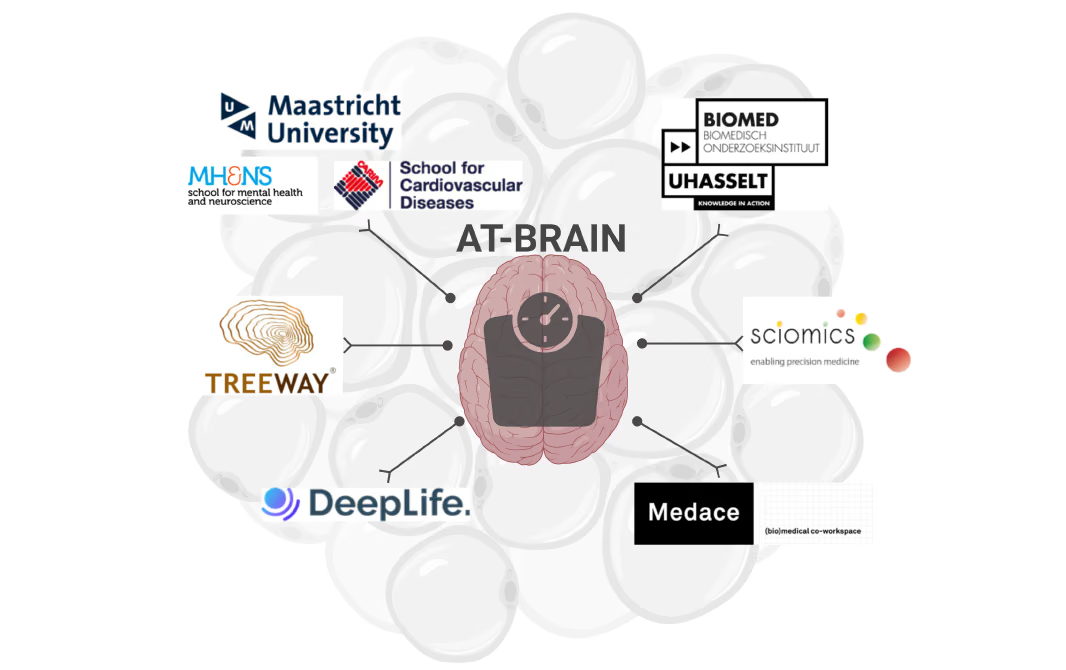
AT-BRAIN: The adipose tissue – brain axis as an inflammatory link between obesity and Alzheimer’s Disease
Does adipose tissue inflammation contribute to cognitive decline in Alzheimer’s disease?
Obesity is a risk factor for Alzheimer’s disease (AD), which leads to cognitive decline and reduced quality of life. By 2040, AD will pose the highest disease-burden in the Netherlands, showing an urgent need for cognitionimproving treatments and risk stratification. Pinpointing the mechanisms of obesity-associated AD is crucial.
Obesity induces adipose tissue (AT)-inflammation. Our data show that in an animal model of AD, the AT contains immune cells that are also present in the AD brain. We also showed that immune cells in AT mediate inter-organ crosstalk to promote disease, and that dietary intervention improves cognition. Whether AT-brain crosstalk via immune cells occurs in the context of AD in obese individuals, is unknown. Answering this knowledge gap is essential to develop long-awaited biomarkers for risk stratification, and novel therapeutics for this ever-growing condition.
We hypothesize that the immune cell mediated AT-brain axis causes brain inflammation in obese individuals, thereby promoting cognitive decline, and development of AD. With assistance of Sciomics and Deeplife we will perform in-depth analyses of immune cells in blood and AT of obese and lean individuals to identify an obesityspecific AT-signature. Cohorts undergoing weight interventions are assessed for correlations between immune cells and changes in BMI and cognition. This establishes mediators of the AT-brain axis promoting cognitive decline, providing valuable leads for new biomarkers and therapeutics. In parallel, animal studies will provide causal evidence of the involvement of the identified AT-signature in cognitive decline in AD-like mice. This new mouse model serves as a preclinical model to evaluate leads found from human studies, of which the selection will be done with Treeway and Medace.
AT-BRAIN identifies new therapeutic targets for cognitive decline and develops novel biomarkers for obesity-linked risk for AD development. The consortium partners benefit from this project for development of their services, and use identified leads to further them into clinical trials.
Other projects
In each PPP project, research institutions, businesses and healthcare organisations work together on a specific health challenge. Browse the full project overview.



Bekijk de programma’s
Binnen onze programma’s werken bedrijven, kennisinstellingen en regionale partners samen aan innovaties die bijdragen aan betere gezondheid en zorg.
Bekijk de partnerschappen
Strategische publiek-private partnerschappen (PPP's) zijn meerjarige samenwerkingen tussen bedrijven, kennisinstellingen en andere partijen.
Hoe kunnen we je helpen?
Heb je een vraag of wil je meer weten over Health Holland? We brengen je graag in contact met de juiste mensen, kennis en mogelijkheden om gezondheidsinnovatie te versnellen.
We have received your message
We will contact you within 3 to 4 working days. If your question is urgent, please contact us directly. Below is the contact option that best matches your subject.
Start again
Something went wrong while sending the form. Please try again.