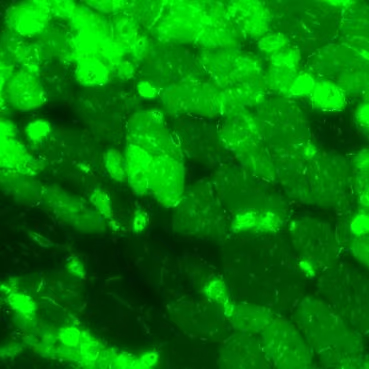
Eccentric contraction of 3-dimensional tissue engineered skeletal muscle-on-chip: next generation tool for therapy development
We will study effects of eccentric contraction on human muscle performance in health and disease
In this project, Erasmus MC, LUMC, and the company Optics11 Life collaborate on development of technology that involves the generation of a module that enables elongation and contraction (i.e. eccentric contraction) of patient-derived, cultured skeletal muscles on a chip. With this new technology, we will address biological questions such as how can we culture matured muscles from stem cells, how can eccentric contraction stimulate maturation, and to what extent can eccentric contraction beneficial or detrimental in muscle disease. We will test this for the muscle disorders Pompe disease and FSHD.
There are >600 muscle disorders, but only a handful of therapies. With our human, patient-derived muscle on a chip model, we will be able to closely mimic muscle disease and the response to new therapies. This is expected to increase the success rate of clinical trials, thereby increasing treatment options for patients, which has a large societal and economic impact.
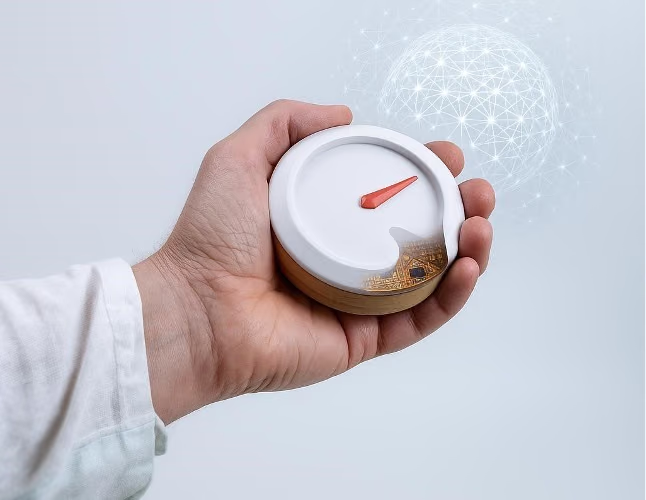
Our approach is to generate a module for a device termed Cuore that can both elongate, stimulate, and measure forces of tissue engineered skeletal muscles. The Cuore enables measurement of multiple muscles in real time simultaneously, enabling semi-high throughput testing of therapeutics, leading to faster and more reliable therapy development.
To this end, we will first develop an actuation module, followed by a combination with contraction, which we will test on healthy muscles, and then on diseased muscles
Other projects
In each PPP project, research institutions, businesses and healthcare organisations work together on a specific health challenge. Browse the full project overview.

Bekijk de programma’s
Binnen onze programma’s werken bedrijven, kennisinstellingen en regionale partners samen aan innovaties die bijdragen aan betere gezondheid en zorg.
Bekijk de partnerschappen
Strategische publiek-private partnerschappen (PPP's) zijn meerjarige samenwerkingen tussen bedrijven, kennisinstellingen en andere partijen.
Hoe kunnen we je helpen?
Heb je een vraag of wil je meer weten over Health Holland? We brengen je graag in contact met de juiste mensen, kennis en mogelijkheden om gezondheidsinnovatie te versnellen.
We have received your message
We will contact you within 3 to 4 working days. If your question is urgent, please contact us directly. Below is the contact option that best matches your subject.
Start again
Something went wrong while sending the form. Please try again.