SPECTURI: the development of an innovative, non-invasive, patient- and user friendly and valid urine collection device for newborns enables identification of novel urinary candidate biomarkers for detecting and monitoring kidney injury
SPECTURI: sampling urine from newborns in a reliable and safe way, to early screen and diagnose kidney diseases
In daily clinical care many (premature) neonates and toddlers are studied for urinary biochemical abnormalities. Preterm neonates are particularly susceptible to kidney damage, encountering many nephrotoxic problems perinatally. They are not only at risk for acute electrolyte and metabolic disturbances as a result of tubulopathy of the prematurity but particularly at risk for acute kidney injury (AKI).
However, obtaining urine from these pre-continent children is difficult and time consuming. In the past, a variety of collection methods (urine collection bag, cotton gauzes, PeeSpot, clean catch, catheterisation or suprapubic aspiration) have been tried and all showed critical limitations.
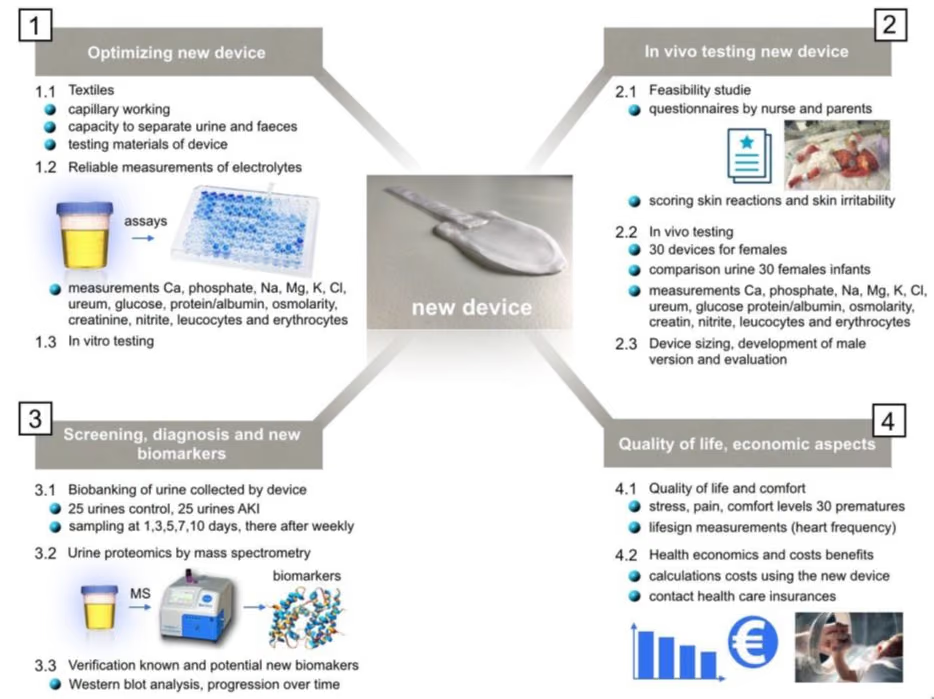
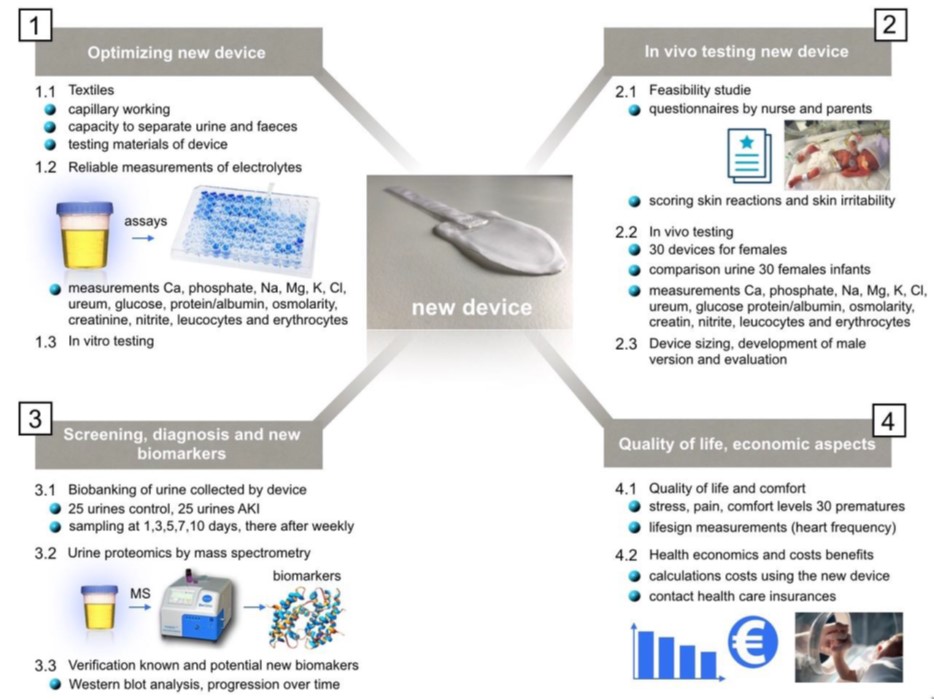
The principal aim of this study is to develop an innovative urine collection device that enables pediatricians to easily sample urine in a patient- and user friendly, non-invasive and valid way. Moreover, urine is a valuable resource for early screening, diagnose and treat a variety of kidney diseases. Urinary and renal proteomics may result in considerable progress in kidney-based disease diagnosis through biomarker discovery (such as tubulopathy of the premature, AKI, chronic kidney disease (CKD)).
During the project they will optimise, validate and test the new device by in vitro and in vivo experiments. To measure the effects of using the innovative device standardised questionnaires among parents and nurses will be used. In addition, an activity- based costing method will be applied to evaluate the costs consumed during the period of interest for both usual care and the care process including the innovative device. Interviews will be held with all stakeholders to evaluate the advantages and disadvantages of the new sampling method. Urine from prematures will be sampled and analysed in detail in the search for new biomarkers for early detection of AKI.
Anticipated social and economic impact: this project anticipates a significant impact on quality of life and health (care) of children. Many children undergo urine sampling on a daily base, they will specifically benefit from such a device. The close collaboration with the MKB partner and their network will ensure rapid translation to daily practice and open up new economic perspectives.
Other projects
In each PPP project, research institutions, businesses and healthcare organisations work together on a specific health challenge. Browse the full project overview.

Bekijk de programma’s
Binnen onze programma’s werken bedrijven, kennisinstellingen en regionale partners samen aan innovaties die bijdragen aan betere gezondheid en zorg.
Bekijk de partnerschappen
Strategische publiek-private partnerschappen (PPP's) zijn meerjarige samenwerkingen tussen bedrijven, kennisinstellingen en andere partijen.
Hoe kunnen we je helpen?
Heb je een vraag of wil je meer weten over Health Holland? We brengen je graag in contact met de juiste mensen, kennis en mogelijkheden om gezondheidsinnovatie te versnellen.
We have received your message
We will contact you within 3 to 4 working days. If your question is urgent, please contact us directly. Below is the contact option that best matches your subject.
Start again
Something went wrong while sending the form. Please try again.