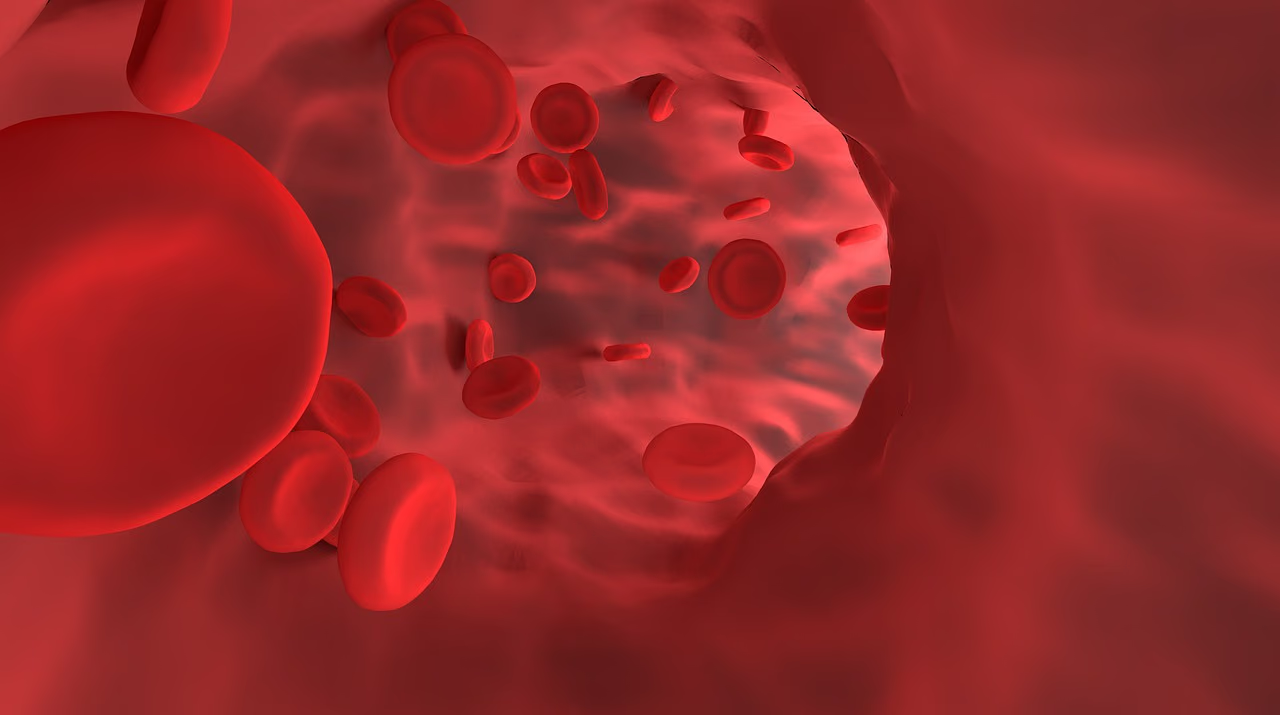
Closing the gap between in-vitro and in-vivo blood flow quantification using vector flow imaging in stents promoting swirling flow
How blood flow and stents interact, helical stents the future in peripheral artery stenting
Peripheral arterial disease (PAD) leads to the development of atherosclerotic plaques in the arteries. These may eventually cause stenosis or occlusion of the vessel, leading to intermittent claudication or critical limb ischemia, which can severely impact the quality of life and survival. Veryan has developed innovative technology to improve the performance of vascular stents by adopting the principle of biomimicry; developing structures that imitate those occurring naturally. The Veryan stent has a unique 3D helical geometry which imparts a gentle helical shape to the stented artery, thereby inducing swirling blood flow within the stented segment.
The aim of the current project is to perform in-vivo blood flow quantification in patients, using high frame rate contrast-enhanced ultrasound vector flow imaging (VFI) techniques. Prior to the in-vivo measurements the consortium will determine the accuracy of and optimise the VFI technique for capturing swirling flow using in-vitro models. Ultimately, this knowledge will be used to design stents for other peripheral vascular beds with the potential to enable endovascular techniques, thereby providing new treatment options to improve the quality of life, limb salvage and survival for PAD patients.
Other projects
In each PPP project, research institutions, businesses and healthcare organisations work together on a specific health challenge. Browse the full project overview.

Bekijk de programma’s
Binnen onze programma’s werken bedrijven, kennisinstellingen en regionale partners samen aan innovaties die bijdragen aan betere gezondheid en zorg.
Bekijk de partnerschappen
Strategische publiek-private partnerschappen (PPP's) zijn meerjarige samenwerkingen tussen bedrijven, kennisinstellingen en andere partijen.
Hoe kunnen we je helpen?
Heb je een vraag of wil je meer weten over Health Holland? We brengen je graag in contact met de juiste mensen, kennis en mogelijkheden om gezondheidsinnovatie te versnellen.
We have received your message
We will contact you within 3 to 4 working days. If your question is urgent, please contact us directly. Below is the contact option that best matches your subject.
Start again
Something went wrong while sending the form. Please try again.