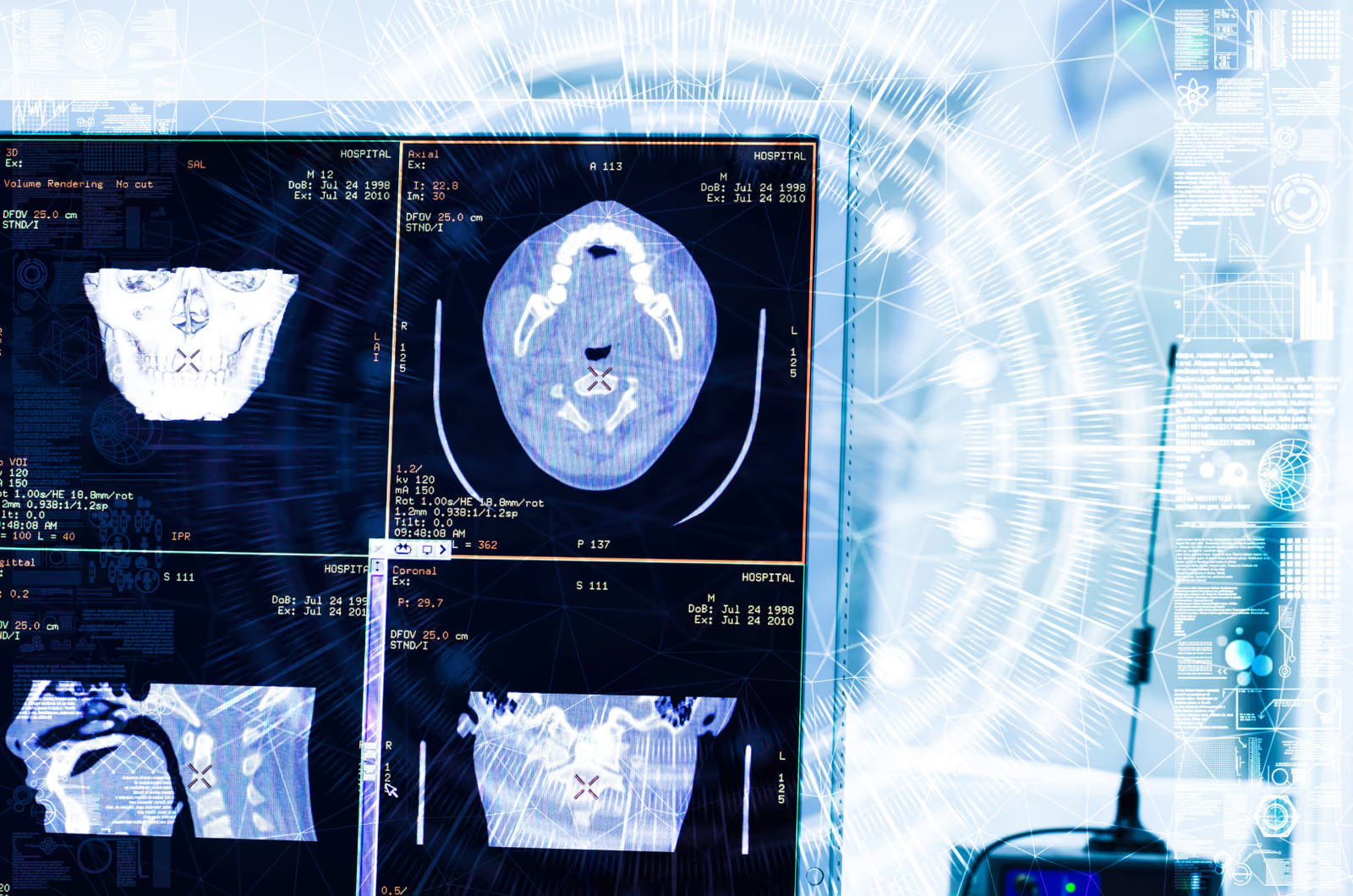
Using artificial intelligence to train computers to analyse PET/CT scans of bone and joint abnormalities in spondyloarthritis.
Development of automated PET/CT scan analysis for fast and accurate diagnosis and monitoring of spondyloarthritis
In this project, we will develop automated F18-Fluoride PET/CT analysis by training computers using artificial intelligence to detect bone and joint abnormalities in chronic rheumatic diseases with a primary focus on spondyloarthritis.
Chronic Rheumatic and Musculoskeletal Diseases (RMDs) are impacting 2 million patients in the Netherlands associated with over 650 million euro annually (in)direct health care costs. Late diagnosis and/or ineffective treatment of RMD can lead to irreversible bone damage and lifelong disability. Nowadays, with X-rays it can take up to several years to correctly diagnose and monitor treatment efficacy of an RMD. Whole body F-18-Fluoride PET/CT scans are promising for early detection and monitoring of bone and joint abnormalities in RMDs, but the reading of the scans can be difficult and takes a lot of time. Artificial intelligence (AI) methodology (training of computers) is more frequently used to improve speed and accuracy of analysis of the scans.
In two workpackages (each 18 months) we will develop automated F18-Fluoride PET/CT scan analysis of prototype RMD spondyloarthritis (SpA), using over 200 scans:
- An AI based automated method to delineate rheumatic bone and joint pathology.
- Machine and deep learning methods to classify rheumatic bone and joint pathology using radiomics features extracted from delineated bones/joints and clinical data.
Automated, accurate and health care applicable PET/CT detection of rheumatic skeletal abnormalities would enable earlier correct diagnosis and evaluation of treatment efficacy, leading to improved treatment selection and outcome, disability prevention and avoiding ineffective treatment with potential side effects. As a result, patients’ societal participation will improve and health care costs will decrease.
Main deliverables:
- Most optimal AI model for automated delineation of SpA bone and joint pathology
- A deep learning AI pipeline to classify SpA on F-18-Fluoride PET/CT that can serve as a blueprint to classify other chronic inflammatory RMDs.
Other projects
In each PPP project, research institutions, businesses and healthcare organisations work together on a specific health challenge. Browse the full project overview.



Bekijk de programma’s
Binnen onze programma’s werken bedrijven, kennisinstellingen en regionale partners samen aan innovaties die bijdragen aan betere gezondheid en zorg.
Bekijk de partnerschappen
Strategische publiek-private partnerschappen (PPP's) zijn meerjarige samenwerkingen tussen bedrijven, kennisinstellingen en andere partijen.
Hoe kunnen we je helpen?
Heb je een vraag of wil je meer weten over Health Holland? We brengen je graag in contact met de juiste mensen, kennis en mogelijkheden om gezondheidsinnovatie te versnellen.
We have received your message
We will contact you within 3 to 4 working days. If your question is urgent, please contact us directly. Below is the contact option that best matches your subject.
Start again
Something went wrong while sending the form. Please try again.