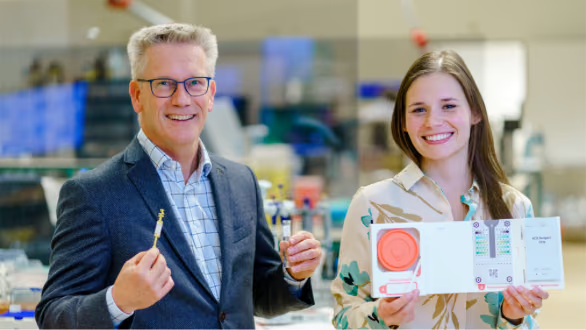
CASCADE-CKD: Towards population screening for chronic kidney disease by integrating screening for albuminuria and other urinary biomarkers into the existing Dutch colorectal cancer screening program
Investigating the effectiveness of the combination of screening for colorectal cancer and chronic kidney disease in the general population
CASCADE-CKD aims to investigate improvements in the population-based screening for early CKD and the effectiveness of combining this screening with the existing colorectal cancer screening program. This public-private partnership brings together unique expertise from the University Medical Center Groningen, Erasmus Medical Center, Amsterdam University Medical Center, University of Twente, Renalytix, Bio Preventive Medicine Corp., and AstraZeneca.
It is estimated that in the Netherlands, 1.8 million individuals have chronic kidney disease (CKD), a condition that, in later stages, significantly impacts quality of life, mortality and morbidity. Early diagnosis and treatment are therefore crucial. Currently, CKD screening is mostly opportunistic, targeting people with known risk factors such as type 2 diabetes or hypertension, which means many cases remain undiagnosed. Previous studies (such as NierCheck and Check@Home) have shown that population-based screening for albumin in urine (albuminuria) can improve early CKD detection.
The CASCADE-CKD project hypothesizes that participation in a home-based albuminuria screening program will be higher when combined with the Dutch colorectal cancer screening program. Integrating these screenings can also improve cost-effectiveness by sharing infrastructure and postage costs. Furthermore, the project will explore new biomarkers to personalize CKD screening.
The study will invite 10,000 individuals aged 50-75 to participate, divided into three groups:
(1) colorectal cancer screening followed by albuminuria screening at a later stage;
(2) combined colorectal cancer and albuminuria screening;
(3) albuminuria screening followed by colorectal cancer screening at a later stage.
The project’s innovative combined-screening approach could reduce public "screening fatigue," improve accessibility, and increase healthcare efficiency, ultimately benefiting patients and the healthcare system by identifying high-risk individuals earlier and enabling timely treatment.
Other projects
In each PPP project, research institutions, businesses and healthcare organisations work together on a specific health challenge. Browse the full project overview.


Bekijk de programma’s
Binnen onze programma’s werken bedrijven, kennisinstellingen en regionale partners samen aan innovaties die bijdragen aan betere gezondheid en zorg.
Bekijk de partnerschappen
Strategische publiek-private partnerschappen (PPP's) zijn meerjarige samenwerkingen tussen bedrijven, kennisinstellingen en andere partijen.
Hoe kunnen we je helpen?
Heb je een vraag of wil je meer weten over Health Holland? We brengen je graag in contact met de juiste mensen, kennis en mogelijkheden om gezondheidsinnovatie te versnellen.
We have received your message
We will contact you within 3 to 4 working days. If your question is urgent, please contact us directly. Below is the contact option that best matches your subject.
Start again
Something went wrong while sending the form. Please try again.