![Capturing the complexity of the leukemic bone marrow microenvironment [acronym: BM-LIME]](https://cdn.prod.website-files.com/6a72d3824b93a65025d38466/6aa3f2d746b7fcda87a4baaf_6aa3e3f8b80a99865a9ec49d_bone-marrow-leukemia-and-immuno-microenvironment-3d3a19.avif)
Capturing the complexity of the leukemic bone marrow microenvironment [acronym: BM-LIME]
To build a bone marrow-on-a-chip microfluidics model to study the leukemia-induced changes in the immuno-microenvironment
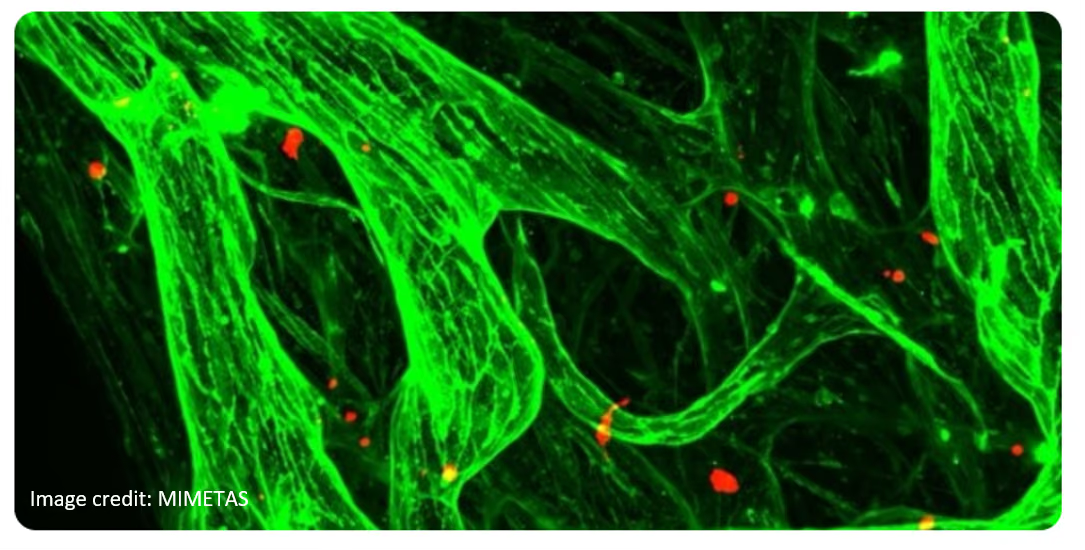
This project is aimed to develop a 3D-model that captures the complexity of the human bone marrow (BM) including supportive tissues and immune cells. A representative model is essential to elucidate leukemia-induced changes in the bone marrow microenvironment that suppress immune cell function and in that way jeopardizes the efficacy of immunotherapy. In this public-private partnership, we combine expertise in the pathobiology of pediatric acute leukemia (Den Boer group – Princess Máxima Center for Pediatric Oncology) and organ-on-a-chip technology (MIMETAS BV) to build such a human bone marrow-reflecting 3D model.
Unmet need: Cell-based immunotherapies are currently only ‘effective’ if the leukemic burden in the bone marrow (BM) is below 5%.
Why: the BM-microenvironment created by leukemic cells is immunosuppressive. Immune cell migration to leukemic cells is obstructed and/or effector function of immune cells is inhibited.
What is needed: Representative BM-models that capture the complexity of the BM at disease and allows to study immune cell recruitment to BM and ways to sensitize to immunotherapy.
Approach and deliverables: We will generate a 3D BM-model including the supportive cell types and immune cells in a ratio observed in leukemic patients, and build a mini-vein mimicking a blood vessel to study migration dynamics of immune cells to the leukemia-containing compartment. This model will be used to functionally elucidate causes of immunosuppression and allows the testing of new (immunomodulatory-)agents, bispecific antibodies, and CAR-products that may enhance patients’ response to cell-based immunotherapies.
Other projects
In each PPP project, research institutions, businesses and healthcare organisations work together on a specific health challenge. Browse the full project overview.

Bekijk de programma’s
Binnen onze programma’s werken bedrijven, kennisinstellingen en regionale partners samen aan innovaties die bijdragen aan betere gezondheid en zorg.
Bekijk de partnerschappen
Strategische publiek-private partnerschappen (PPP's) zijn meerjarige samenwerkingen tussen bedrijven, kennisinstellingen en andere partijen.
Hoe kunnen we je helpen?
Heb je een vraag of wil je meer weten over Health Holland? We brengen je graag in contact met de juiste mensen, kennis en mogelijkheden om gezondheidsinnovatie te versnellen.
We have received your message
We will contact you within 3 to 4 working days. If your question is urgent, please contact us directly. Below is the contact option that best matches your subject.
Start again
Something went wrong while sending the form. Please try again.