ReconVac: Elucidating Immune Responses to Glycoconjugate Vaccines
Multi-omics characterization of antibody responses to improve design of bacterial vaccines and alleviate antibiotic resistance
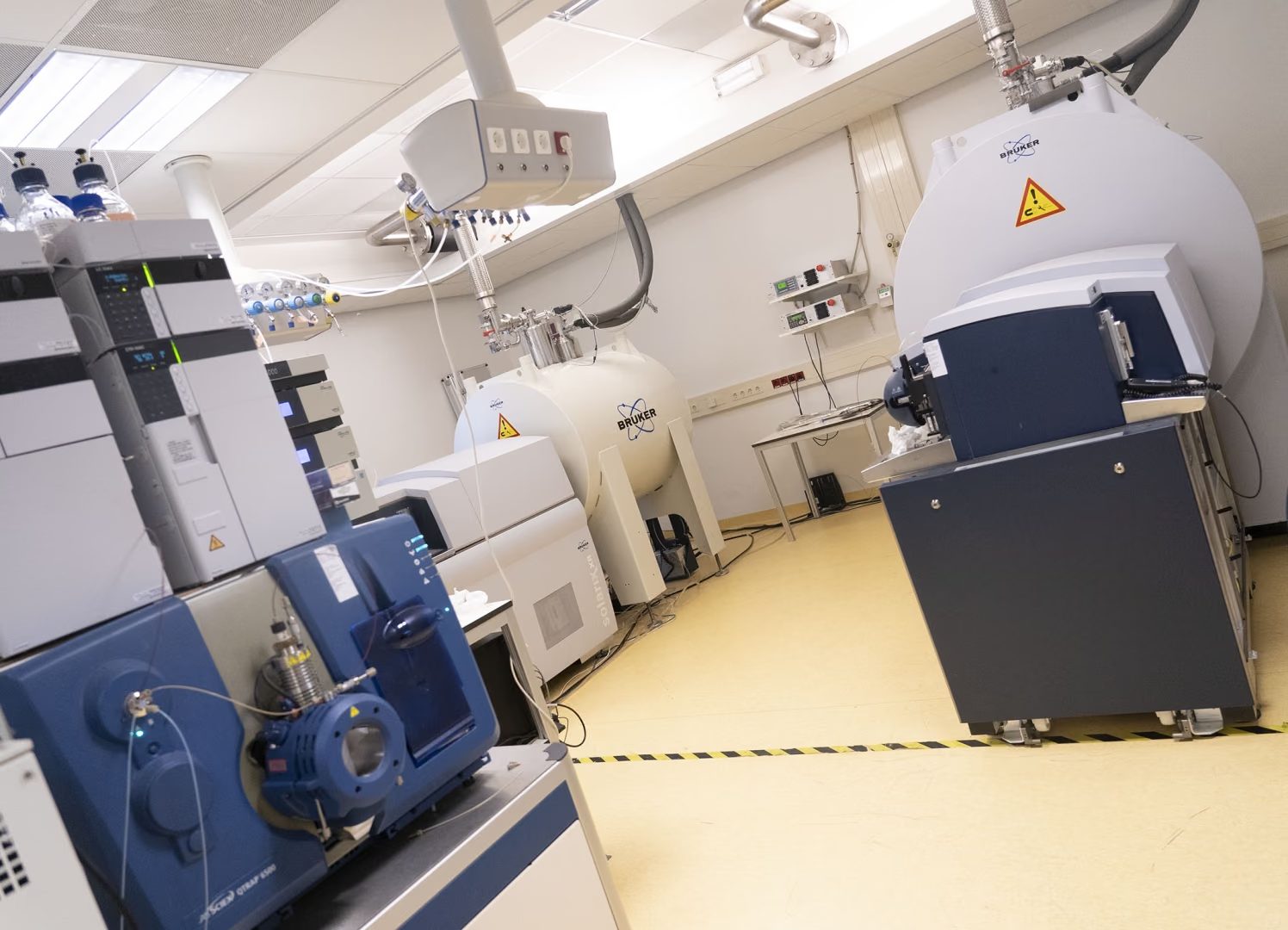
Janssen Vaccines & Prevention B.V. (Janssen) and the Leiden University Medical Center (LUMC) combined their expertise to understand the specifics of a protective antibody response to bacterial infection. Janssen developed numerous anti-bacterial vaccines and thus has a strong background in vaccination models and pre-clinical prediction of efficacy. LUMC contributed its unique ability to perform deep structural characterization of antibodies and their membrane-bound siblings, the B cell receptors (BCRs).
Antibiotic resistance threatens the effective treatment of serious bacterial infections. 50% to 90% of current Escherichia coli (E.coli) strains show antibiotic resistance, contributing to a rise in serious and lethal infections. Anti-bacterial vaccines could be an efficient tool to prevent millions of E.coli infections and hundreds of thousands of resulting deaths. Especially, their efficiency is not impacted by antibiotic resistance. However, the efficacy of an anti-bacterial vaccine remains hard to predict.
Our project will contributed to a better rational design of anti-bacterial vaccines. We mapped the qualities of antibody responses that are key to the protection against bacterial infections. These protective responses could be linked to the types of vaccines and adjuvants, which most efficiently triggered them; focusing on glycoconjugate vaccines. Importantly, through the use of innovative multi-omics approaches for structural characterization and integration of functional data from well-established in vitro assays, we will achieved an unprecedented depth and comprehensiveness in the characterization of antibody responses.
After immunization with various combinations of vaccines and adjuvants in pre-clinical models, we purified antibodies against E.coli and investigated the BCRs of memory B cells. This allowed us to characterize key determinants of the activation of effector functions, such as isotype, subclass and glycosylation, of the antibody response as well as to map the epitopes targeted. Computational integration of the structural data with functional data from epitope binding yielded an advanced understanding of antibody responses in anti-bacterial vaccination. For example, we observed that antibody titers and subclasses correlated with epitope binding and could be directed by the use of adjuvants.
Other projects
In each PPP project, research institutions, businesses and healthcare organisations work together on a specific health challenge. Browse the full project overview.

Bekijk de programma’s
Binnen onze programma’s werken bedrijven, kennisinstellingen en regionale partners samen aan innovaties die bijdragen aan betere gezondheid en zorg.
Bekijk de partnerschappen
Strategische publiek-private partnerschappen (PPP's) zijn meerjarige samenwerkingen tussen bedrijven, kennisinstellingen en andere partijen.
Hoe kunnen we je helpen?
Heb je een vraag of wil je meer weten over Health Holland? We brengen je graag in contact met de juiste mensen, kennis en mogelijkheden om gezondheidsinnovatie te versnellen.
We have received your message
We will contact you within 3 to 4 working days. If your question is urgent, please contact us directly. Below is the contact option that best matches your subject.
Start again
Something went wrong while sending the form. Please try again.