
Automated Lung Ultrasound for Early Recognition of Pneumonia (ALERT)
AI-powered lung ultrasound that detects pneumonia early — faster, smarter, and at the bedside
Amsterdam UMC and Delft AI have established a public-private partnership to develop ALERT, an AI-powered lung ultrasound tool designed to help non-specialist healthcare workers diagnose pneumonia rapidly and accurately. Together, they are advancing this technology toward real-world clinical application in a range of healthcare settings.
Pneumonia is a serious and widespread disease, causing 3.3 million infections, 1 million hospitalisations, 200,000 ICU admissions, and approximately 100,000 deaths in Europe every year. Diagnosing it correctly and quickly is essential, yet difficult in settings like GP practices, nursing homes, and emergency services where specialist knowledge is often lacking. With healthcare costs continuing to rise, there is an urgent need for affordable, easy-to-use diagnostic tools that work outside of hospitals.
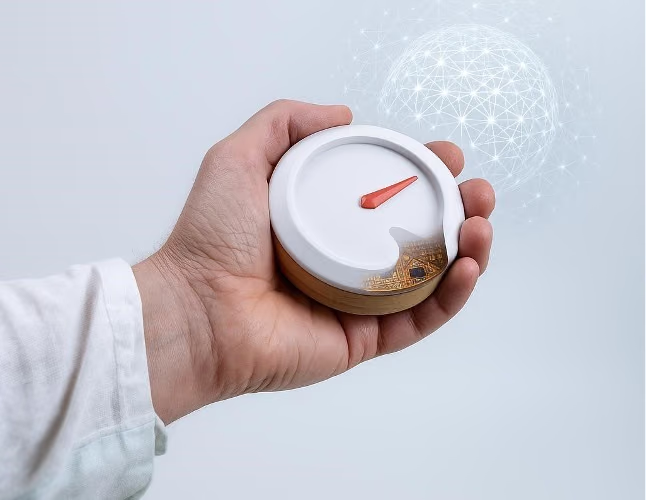
ALERT will use a handheld ultrasound device and a straightforward chest scanning protocol that non-specialist clinicians can perform. An AI system will analyse the images and determine whether pneumonia can be safely ruled out or whether the patient needs urgent hospital referral. The AI model will be built using more than 5,000 annotated ultrasound recordings and will be further refined and validated using prospectively collected patient data. Healthcare workers and patients will be involved throughout the process to ensure the tool is practical, acceptable, and effective in real clinical settings.
The project will deliver two validated AI models, one to safely exclude pneumonia and one to identify high-risk patients, tested in a prospective clinical study. The tool is specifically designed for low-resource environments, including GP practices, nursing homes, emergency services, and healthcare facilities in developing countries. If successful, ALERT could reduce unnecessary antibiotic use, improve referral decisions, and make reliable pneumonia diagnosis accessible worldwide.
Other projects
In each PPP project, research institutions, businesses and healthcare organisations work together on a specific health challenge. Browse the full project overview.

Bekijk de programma’s
Binnen onze programma’s werken bedrijven, kennisinstellingen en regionale partners samen aan innovaties die bijdragen aan betere gezondheid en zorg.
Bekijk de partnerschappen
Strategische publiek-private partnerschappen (PPP's) zijn meerjarige samenwerkingen tussen bedrijven, kennisinstellingen en andere partijen.
Hoe kunnen we je helpen?
Heb je een vraag of wil je meer weten over Health Holland? We brengen je graag in contact met de juiste mensen, kennis en mogelijkheden om gezondheidsinnovatie te versnellen.
We have received your message
We will contact you within 3 to 4 working days. If your question is urgent, please contact us directly. Below is the contact option that best matches your subject.
Start again
Something went wrong while sending the form. Please try again.