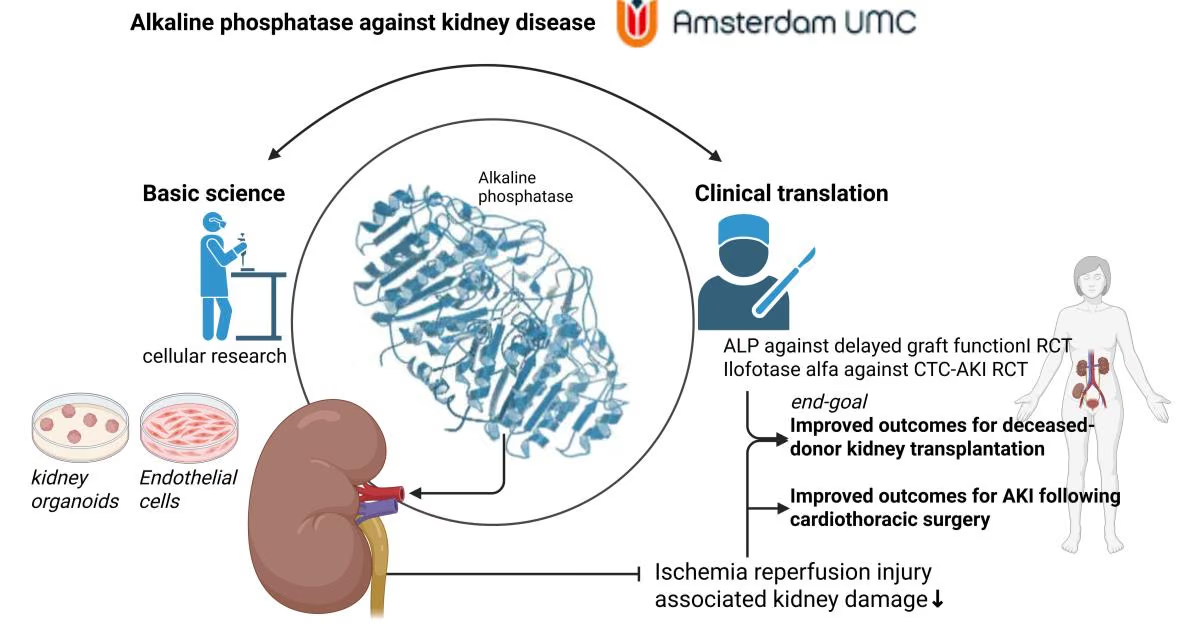
Alkaline Phosphatase and Ischaemia-reperfusion injury after Kidney Transplantations and beyond. Report of the Renal Alkaline Phosphatase reducing Ischaemic Damage studies (RAPhID)
Protecting kidneys from damage during illness and transplantation with a promising new enzyme treatment
The RAPhID studies bring together Amsterdam UMC and UMCG Groningen researchers and private partner Alloksys in a public-private partnership to explore a new treatment for acute kidney injury (AKI) using the enzyme alkaline phosphatase (ALP). Together, the partners aim to reduce kidney damage during and after kidney transplantation or serious illness by protection of blood vessels and improved kidney metabolism. The collaboration combined laboratory research, clinical trials, and large data analysis to investigate how ALP can be safely and effectively used in both donor kidneys and hospital patients.
Kidney disease is a major health challenge. Each year, thousands of patients suffer from AKI, a condition that can lead to lasting kidney damage or failure. In the Netherlands alone, around 30,000 people are hospitalized annually with AKI, and the number is rising due to ageing and complex diseases. Better treatments are urgently needed, especially as existing therapies often fail to prevent long-term kidney damage. New approaches that focus on preserving kidney function and improving recovery could significantly reduce healthcare costs and improve quality of life.
Our research studied how ALP can protect kidney cells and reduce the damage caused by absence of blood flow (ischemia) followed by restoration (reperfusion)—a common problem during transplantation and severe illness. In lab models, ALP helped restore the barrier function of blood vessel cells. In donor pig kidneys, ALP improved energy levels and reduced cell damage during machine perfusion. A clinical pilot in kidney transplant patients showed ALP was safe and may reduce inflammation. Although one hospital trial could not proceed due to strict criteria, ALP is now being tested in a new ICU trial in surgical patients. These results support the use of ALP as a promising protective treatment for kidneys, with real potential for future clinical application.
Other projects
In each PPP project, research institutions, businesses and healthcare organisations work together on a specific health challenge. Browse the full project overview.

Bekijk de programma’s
Binnen onze programma’s werken bedrijven, kennisinstellingen en regionale partners samen aan innovaties die bijdragen aan betere gezondheid en zorg.
Bekijk de partnerschappen
Strategische publiek-private partnerschappen (PPP's) zijn meerjarige samenwerkingen tussen bedrijven, kennisinstellingen en andere partijen.
Hoe kunnen we je helpen?
Heb je een vraag of wil je meer weten over Health Holland? We brengen je graag in contact met de juiste mensen, kennis en mogelijkheden om gezondheidsinnovatie te versnellen.
We have received your message
We will contact you within 3 to 4 working days. If your question is urgent, please contact us directly. Below is the contact option that best matches your subject.
Start again
Something went wrong while sending the form. Please try again.