Algorithm development through artificial intelligence for the triage of stroke patients in the ambulance with electroencephalography (AI-STROKE)
Algorithm development through artificial intelligence for the stroke triage in the ambulance with electroencephalography.
In the AI-STROKE project, we are developing an electroencephalography (EEG) algorithm using artificial intelligence (AI) that will enable ambulance personnel to detect a large vessel occlusion stroke within two minutes.
Using an AI-based EEG algorithm, we anticipate that ambulance personnel can correctly identify large vessel occlusion stroke with a specificity and sensitivity of 80% and 60%, respectively. This would result in an additional 40% of patients who can be directly brought to a comprehensive stroke center for treatment. With 180,000 patients with a large vessel occlusion stroke yearly in Europe alone, this would mean an extra 72,000 patients would be brought directly to the right hospital, which will save €36 million per year in direct costs of unnecessary ambulance rides. More importantly, these patients will have a 16% higher chance of returning home instead of going to a nursing home. This would result in savings of approximately €575 million in the first year alone. Moreover, AI-STROKE would save €173 million in lost salary in the first year alone as patients can go back to work.
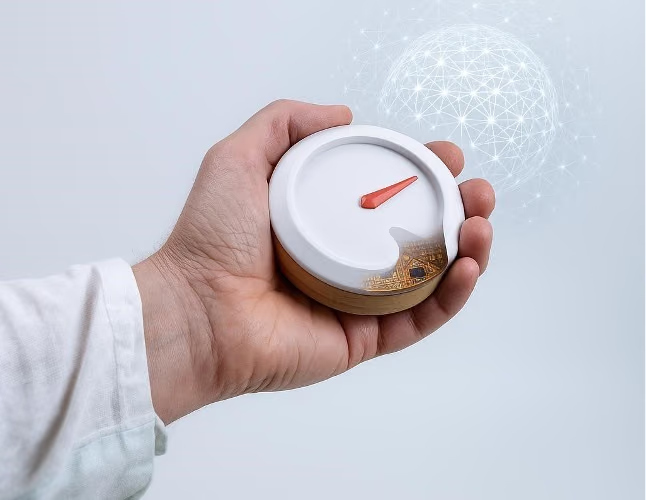
First, Eemagine will improve the dry electrode EEG cap for use in the acute stroke setting. Amsterdam UMC will then collect EEG data in patients with a suspected stroke, together with ambulance services in the Netherlands. Finally, Nicolab and Amsterdam UMC will jointly develop the EEG algorithm.
The end result of the project is an improved EEG setup with a channel reliability of >90% in the acute stroke setting and an AI-based EEG algorithm for the detection of large vessel occlusion stroke in the ambulance which can route stroke patients directly to the right hospital for the right treatment.
More information:
Amsterdam UMC Locatie AMC - AI-STROKE studie
The AI-STROKE project: From dry EEG data to a robust prehospital stroke triage method | ANT Neuro
Other projects
In each PPP project, research institutions, businesses and healthcare organisations work together on a specific health challenge. Browse the full project overview.

Bekijk de programma’s
Binnen onze programma’s werken bedrijven, kennisinstellingen en regionale partners samen aan innovaties die bijdragen aan betere gezondheid en zorg.
Bekijk de partnerschappen
Strategische publiek-private partnerschappen (PPP's) zijn meerjarige samenwerkingen tussen bedrijven, kennisinstellingen en andere partijen.
Hoe kunnen we je helpen?
Heb je een vraag of wil je meer weten over Health Holland? We brengen je graag in contact met de juiste mensen, kennis en mogelijkheden om gezondheidsinnovatie te versnellen.
We have received your message
We will contact you within 3 to 4 working days. If your question is urgent, please contact us directly. Below is the contact option that best matches your subject.
Start again
Something went wrong while sending the form. Please try again.