Design and Development of Antimicrobial-Osteoinductive Bone Graft Substitutes (DABONES)
Next-generation bone implants that prevent infection and stimulate regeneration
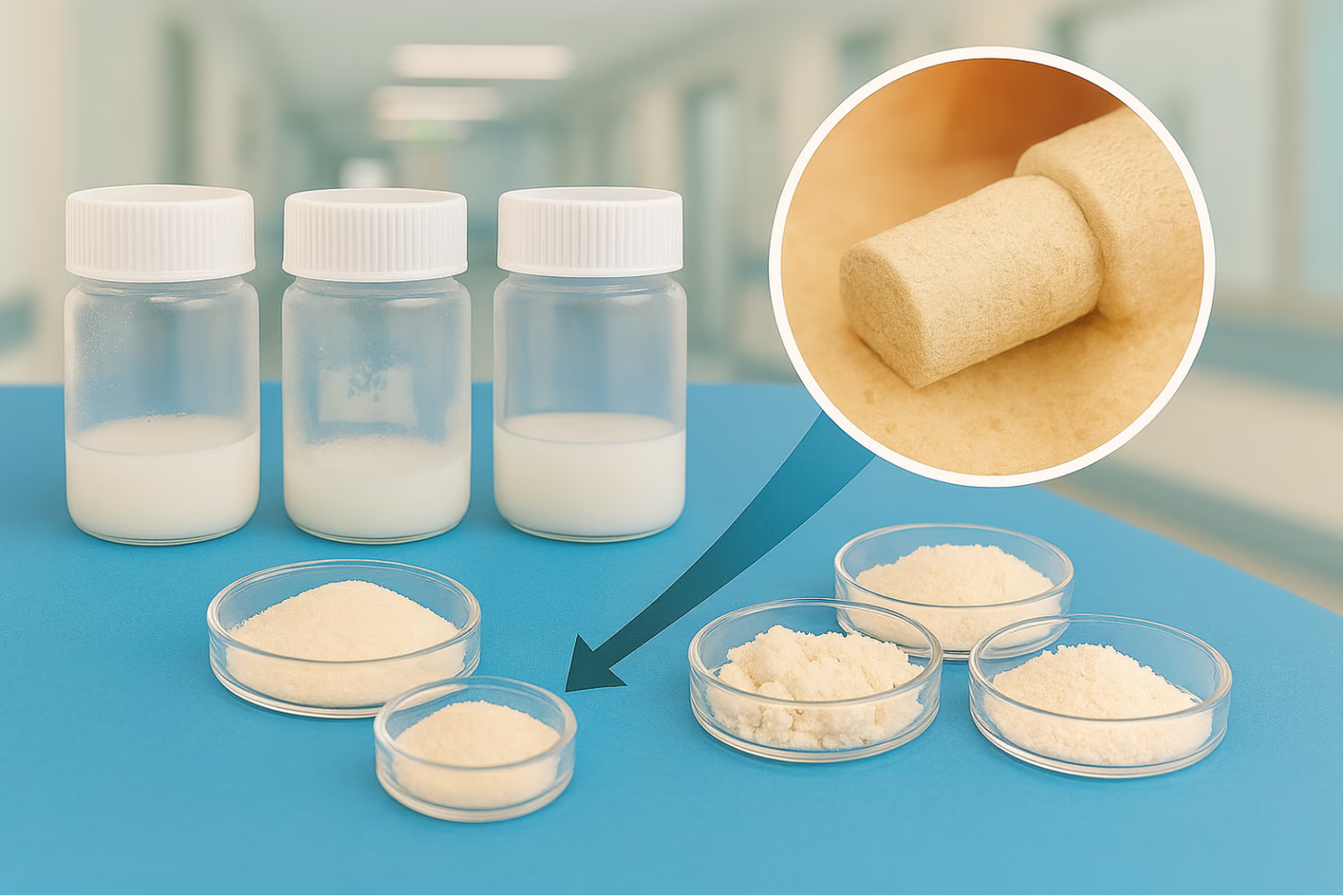
Bone fractures and bone defects are a growing medical and societal challenge, particularly in ageing populations. In this project, a new public-private partnership between CAM Bioceramics and the University Medical Center Groningen combines industrial expertise in calcium phosphate biomaterials with advanced biofabrication and tissue engineering technologies. Together, the partners will develop next-generation bone graft substitutes that both prevent infection and actively stimulate bone formation, offering a safer and more effective solution for bone repair.
Bone infections and impaired healing can lead to prolonged hospital stays, repeated surgeries, and long-term disability. Infections, including those caused by bacteria resistant to antibiotics, are responsible for approximately 7.7 million deaths worldwide each year and are predicted to rise to 10 million annually by 2050. Elderly patients are especially vulnerable, and fracture-related complications create a significant socioeconomic burden due to healthcare costs and loss of independence. Current bone graft materials support bone growth but do not sufficiently prevent infection, highlighting the urgent need for innovative, antibiotic-free solutions.
This project addresses these challenges by designing advanced calcium phosphate materials with built-in antimicrobial and bone-stimulating properties. By incorporating specific metal ions, the materials can prevent bacterial growth without relying on antibiotics. These powders will be combined with living cells and used in three-dimensional printing technologies to create patient-specific implants. This approach enables personalized bone repair while reducing the risk of infection and helping to combat antibiotic resistance. The project will deliver scalable antimicrobial bone graft granules for filling bone defects, resorbable fixation materials, and bioinks for three-dimensional printing of customized implants. These clinically relevant biomaterials aim to improve healing outcomes and reduce infection-related complications in orthopedic surgery.
Other projects
In each PPP project, research institutions, businesses and healthcare organisations work together on a specific health challenge. Browse the full project overview.

Bekijk de programma’s
Binnen onze programma’s werken bedrijven, kennisinstellingen en regionale partners samen aan innovaties die bijdragen aan betere gezondheid en zorg.
Bekijk de partnerschappen
Strategische publiek-private partnerschappen (PPP's) zijn meerjarige samenwerkingen tussen bedrijven, kennisinstellingen en andere partijen.
Hoe kunnen we je helpen?
Heb je een vraag of wil je meer weten over Health Holland? We brengen je graag in contact met de juiste mensen, kennis en mogelijkheden om gezondheidsinnovatie te versnellen.
We have received your message
We will contact you within 3 to 4 working days. If your question is urgent, please contact us directly. Below is the contact option that best matches your subject.
Start again
Something went wrong while sending the form. Please try again.