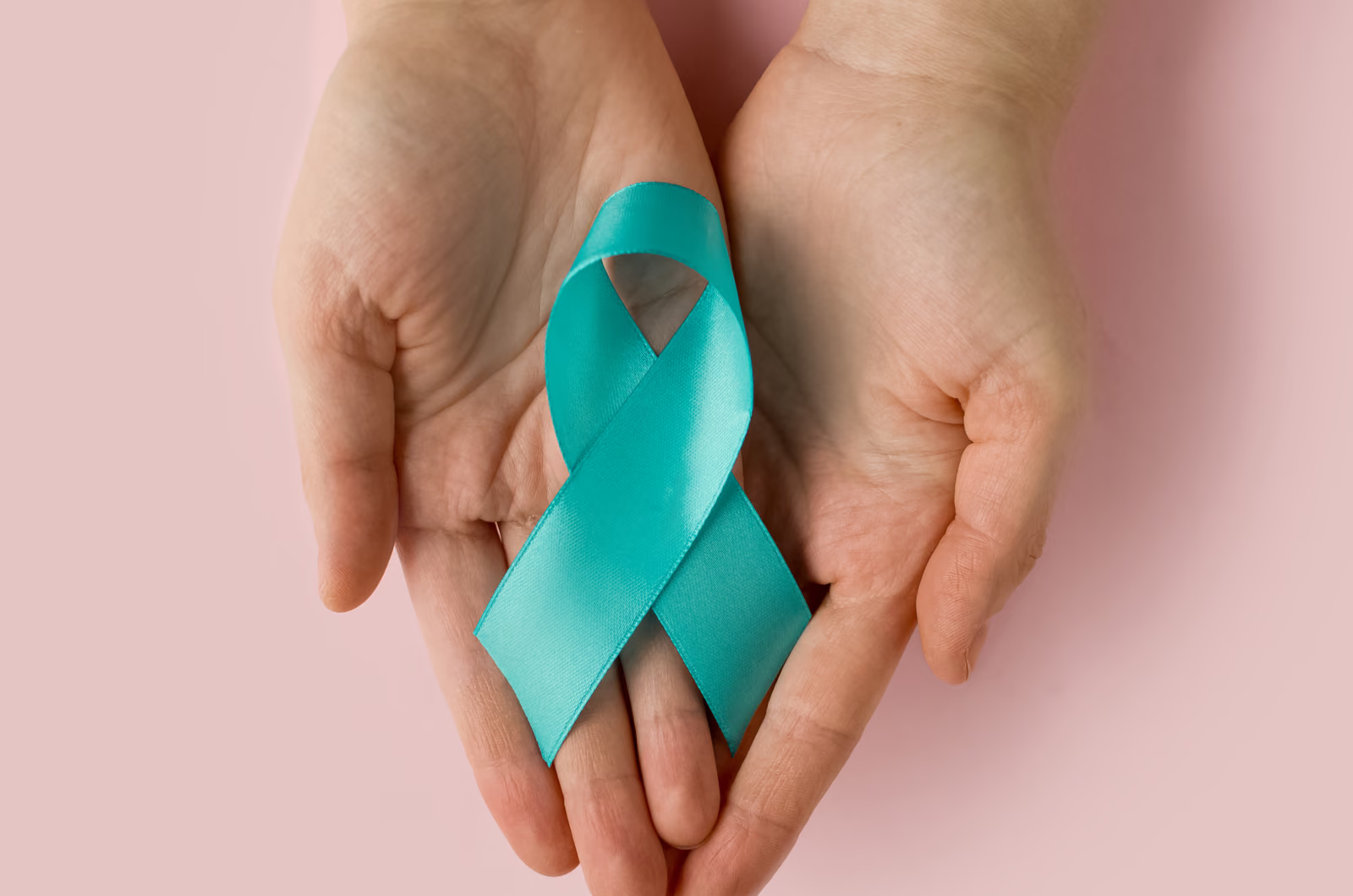
CERVAG: how the vaginal microbiome affects HPV infection and cervical cancer
The CERVAG assay on cervical scrapes will identify only women in need for medical treatment
Cervical cancer (CC) is an important health problem that can be prevented by screening. The tests currently used for screening (HPV tests and PAP tests) are far from perfect because they lack specificity; Of the 10% HPV positive women, less than 0.5% is at risk, resulting in > 40% unnecessarily referrals for further examination, leading to worries for healthy women and associated pressure on the health system. In the CERVAG project, Radboudumc and Predica Diagnostics will develop the CERVAG test to identify those women who actually need to be referred for colposcopy.
In the Netherlands in 2002 330,000 of 720,000 invited women responded to a screening invitation. Of the approximately 36,000 positive tests, only 3,000 needed treatment for a precancer, whereas thousands of healthy women were referred to gynecology clinics, undergoing unnecessary medical examination often with a biopsy. This low specificity comes at a cost of >21 million per year on unnecessary healthcare, and may even lead to a negative annotation to screening. A more reliable test may increase participation in population-based screening for CC, an important factor in eradicating CC.
HrHPV infection is thus necessary but not sufficient for the development of CC. Specific bacterial gene products, found in bacterial vaginosis (BV) increase the incidence of HPV-induced cervical (pre)cancers. The CERVAG test includes bacterial gene expression with hrHPV-gene activity and hrHPV-induced human gene products to distinguish between non-dangerous HPV infections and dangerous HPV infections. Implementing CERVAG-test as a triage test into the national screening program could save the Dutch healthcare system over 20 million euros yearly.
The CERVAG project will deliver a test that can as such be performed as a service for fee test from Predica Diagnostics. Customers are screening organizations/gynecologists/ general practitioners who wish to determine the need for treatment or determine the efficacy of treatment.
The public summary consists of 250 to max. 300 words. The summary is intended for a broad audience with a secondary education language level. In short, the public summary describes the who, what, where, when, why and how of the project. Focus on the core message of the project instead of elaborating on explanations and background information.
Other projects
In each PPP project, research institutions, businesses and healthcare organisations work together on a specific health challenge. Browse the full project overview.


Bekijk de programma’s
Binnen onze programma’s werken bedrijven, kennisinstellingen en regionale partners samen aan innovaties die bijdragen aan betere gezondheid en zorg.
Bekijk de partnerschappen
Strategische publiek-private partnerschappen (PPP's) zijn meerjarige samenwerkingen tussen bedrijven, kennisinstellingen en andere partijen.
Hoe kunnen we je helpen?
Heb je een vraag of wil je meer weten over Health Holland? We brengen je graag in contact met de juiste mensen, kennis en mogelijkheden om gezondheidsinnovatie te versnellen.
We have received your message
We will contact you within 3 to 4 working days. If your question is urgent, please contact us directly. Below is the contact option that best matches your subject.
Start again
Something went wrong while sending the form. Please try again.