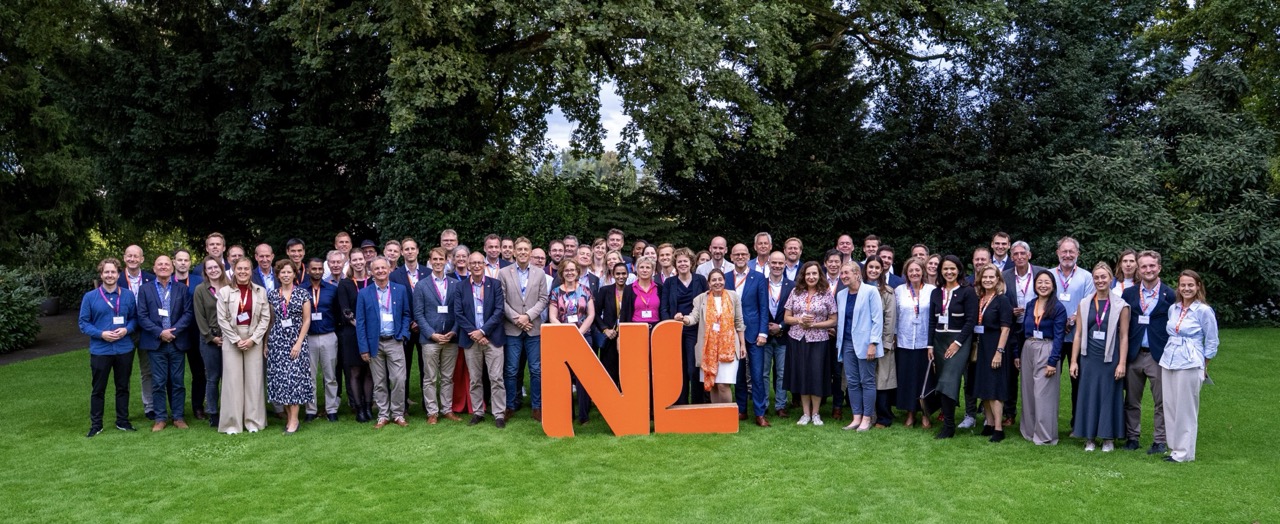
Unlocking the potential of Organ-on-a-Chip for biomedical innovation
Memorandum of Understanding between the Netherlands and Massachusetts.
Health Holland, Ministry of Economic Affairs, Ministry of Foreign Affairs, Netherlands Enterprise Agency (RVO), Embassy of the Kingdom of the Netherlands in Switzerland, and partners from the Dutch Life Sciences and Health sector.
This Strategic Multi-Year Market (SMM) approach between the Netherlands and Switzerland aims to accelerate the implementation and international adoption of Organ-on-a-Chip technology. By connecting research institutions, innovative companies, societal organizations, and government bodies in both countries, the programme facilitates collaboration between Dutch innovators and Swiss companies and end users. This supports the translation of advanced Organ-on-a-Chip models into applications within biomedical research and drug development. Through this partnership, Dutch and Swiss stakeholders are accelerating the development of human-predictive, human-centric health innovations while jointly advancing solutions to shared global healthcare challenges.
Both the Netherlandsand Switzerland are among Europe's most research-intensive and innovation-driven economies. The pharmaceutical and biomedical sectors face growing pressure to accelerate R&D, reduce costs, and move towards animal-free research, which increases the need for new, human-predictive modelsystems. Advanced in vitro technologies such as Organ-on-a-Chip (OoC)-based models can help meet this need by replicating essential human organ and tissue functions in controlled micro environments, enabling safer, more accurate, andmore efficient drug discovery and testing processes.
As European leaders inbiomolecular and cell technologies, Switzerland and the Netherlands are well positioned to shape the future of OoC innovation. These technologies speed up biomedical progress and contribute to better patient outcomes, more sustainableuse of resources, and lower development costs. By working together, partners in both countries can strengthen collaboration, connect expertise, and build an international ecosystem for OoC-based models that makes tomorrow's drug development more human-predictive and more effective.
Dutch pioneering in Organ-on-a-Chip
The Netherlands is a recognised global leader in biomedical models, with world-class expertise in stem cell biology, organoid development, and OoC integration. Dutch excellence in stem cell biology and organoid creation provides the biological foundation essential for effective OoC systems. These fields form a priority in the Dutch innovation agenda. Beyond research excellence, the Netherlands also has astrong industrial presence, with numerous life sciences and high-tech companies actively advancing Organ-on-a-Chip applications. Long-term public investmentand coordinated national initiatives support this ambition and encourage Dutch partners to look outward and build strong international collaborations. Public-private consortia and National Growth Fund projects, including NXTGENHightech, the Institute for human organ and Disease Model Technologies (hDMT), the Ombion Centre for Animal-Free Biomedical Translation(Ombion), and the Bio/Microsystems Centre (B/MSC), form a lively ecosystem for these technologies. This ecosystem makes it easier to move from pioneering research to practical applications that are ready to be explored with international partners.
Dutch organisations contribute actively to international standards and qualification approaches for OoC through initiatives such as the Horizon 2020 project ORCHID, theCEN-CENELEC Organ-on-a-Chip Roadmap, and the NEN Expert Group, as well as ongoing engagement with regulatory bodies. Additionally, Dutch OoC companies are already working directly with regulators to shape future pre-clinical assessment approaches for IND filing. This work supports wider acceptance and integration of OoC in industry and regulation.
Switzerland is a natural partner for the Netherlands in this area, with its strong pharmaceutical, biotech, and microtechnology sectors and direct links to global value chains. The Swiss life sciences ecosystem offers direct access to pharmaceutical and biotech end users advancing the adoption of human-relevant R&D models. Through the SMM approach, OoC developers can connect with Swisspharma and other end users and jointly explore how these new models can be implemented, standardised, and used more broadly in real-world settings.
Collaborating for global impact
The collaboration between the Netherlands and Switzerland builds on shared strengths and a common interest in future-proof healthcare innovation. Partners from both countries are laying the groundwork for joint R&D projects, qualification frameworks, and cross-border cooperation that can help strengthen the international OoC ecosystem. The SMM approach creates opportunities for knowledge exchange and practical collaboration.
This work is supportedby the Memorandum of Understanding on cooperation in science, research, technology, innovation, and education, signed in December 2024 between theNetherlands and Switzerland. The agreement underlines a shared ambition toinnovate together and provides a stable platform for new initiatives in OoC andrelated fields.
Where knowledge exchange meets opportunity
The Netherlands has a strong quadruple-helix ecosystem where government, knowledge institutions, industry, and societal partners work side by side. In the OoC field, this meanstechnology development, standardisation, and future implementation are aligned toward practical use and international collaboration. In line with this quadruple-helix approach, the SMM is carried out by the Netherlands Ministry ofEconomic Affairs, the Ministry of Foreign Affairs, the Netherlands Enterprise Agency (RVO), the Embassy of the Kingdom of the Netherlands in Switzerland, and Health Holland, together with partners from the Dutch life sciences and health sector.
At the same time, the global OoC community is still working toward widely shared standards and validation methods. A common framework for the design, use, and validation of OoC systems is still emerging. Companies sometimes face uncertainty when adopting these models. Dutch initiatives with NXTGEN Hightech Biomed, NEN, CEN-CENELEC and Ombion, plus dialogue with regulators, offer a strong startingpoint to develop these frameworks together. This benefits both Dutch and Swiss organizations and their international partners.
The SMM focuses on the Swiss pharmaceutical sector, where companies work closely with customers and can be important partners in co-developing and testing new models. For Dutch developers, this creates a direct line to end users who can help shape solutionsfor real-world needs in drug discovery and safety testing, while contributing to the broader applicability of OoC solutions.
Shaping the future together
By bringing together their complementary ecosystems, Switzerland and the Netherlands can play a leading role in the international development of advanced in vitro models. This collaboration can make drug development more efficient and reliable, support the move toward animal-free and human-predictive testing strategies, and contributeto more sustainable, patient-centred, and effective healthcare innovation.
Let’s work together to advance Organ-on-a-Chip for healthier lives.
Connect
Are you developing or manufacturing innovative therapies or human-based model systems, such as Organ-on-a-Chip or organoids? Are you a researcher, entrepreneur, clinician, investor, or policy maker looking to connect with Swiss and Dutch experts, exchange knowledge, and explore opportunities for collaboration? Then we invite you to join our OoC platform.
Register for the platform!
Verbreed je netwerk
Bekijk de bijeenkomsten, missies en matchmakingsessies voor kennisuitwisseling, samenwerkingspartners en een nieuw netwerk.