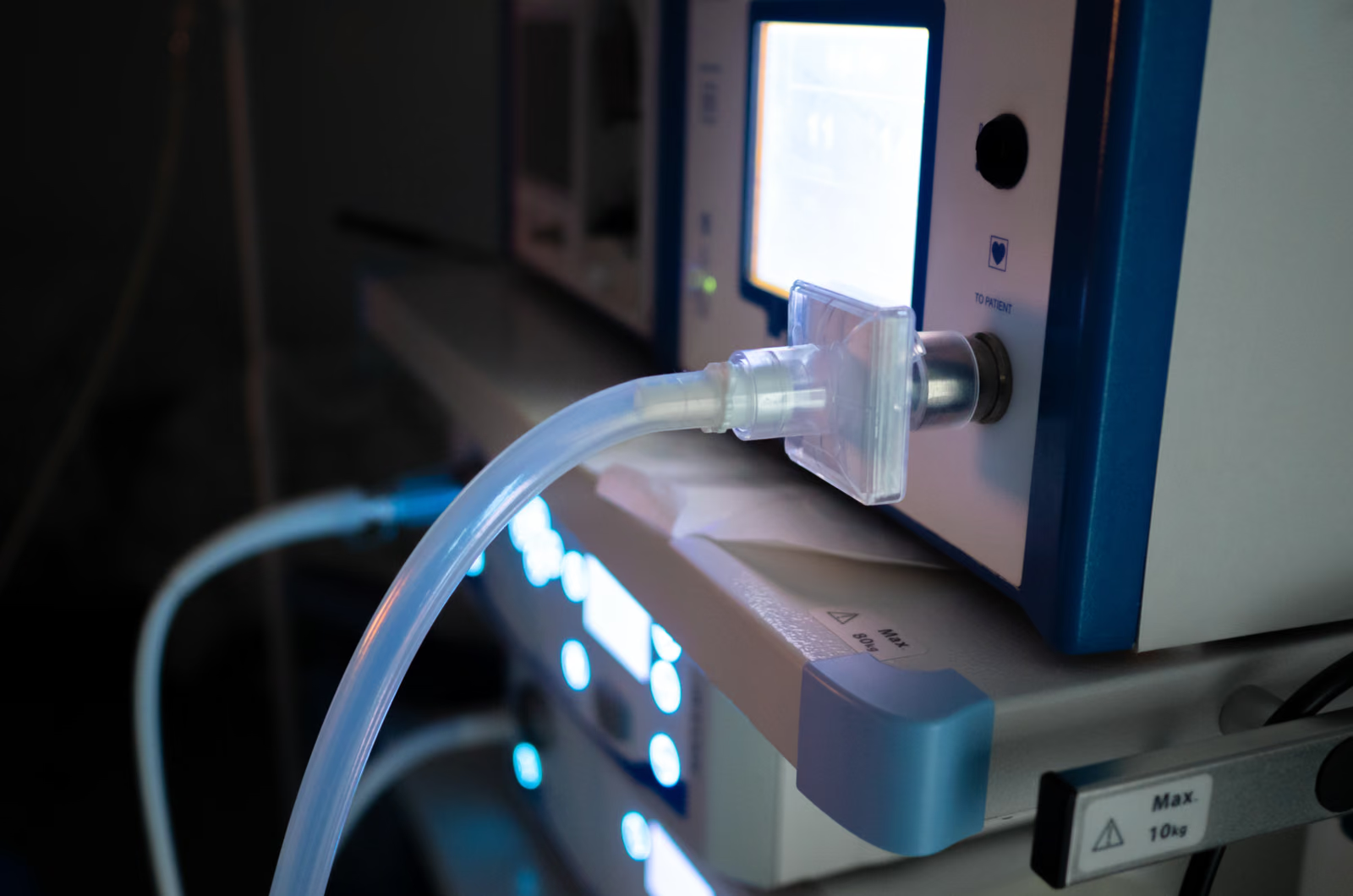
Bringing the Turbine-Based Insufflator to the Clinic: Improving Surgical Performance and Outcome through Enhanced Ventilation and Personalized Insufflation Pressure
Optimizing surgical conditions with a turbine-based insufflator
Erasmus MC and Politecnico di Milano, together with Spatium Medical and IDE Group, have established a public-private partnership to develop a turbine-based insufflator that improves surgical performance and outcomes by improving ventilation, personalizing insufflation pressure, and efficiently removing smoke created by electrosurgery.
Minimal access surgery is a growing field, with more than 10 million procedures performed globally each year. However, current insufflation devices can cause postoperative pain, difficult management of mechanical ventilation during anaesthesia, and prolonged hospital stays. The development of a turbine-based insufflator addresses these challenges and has the potential to reduce overall healthcare costs.
The project aims to develop the turbine-based insufflator by further investigating and developing the features that benefit patients and surgical outcomes the most. This will be done through animal studies and in-vitro models, leading to the development of a clinical prototype to test safety and efficacy in the first trial in humans. Additionally, an advanced biomechanical in-vitro model will be developed to design, build, and test the system for removing fumes. This model could reduce the need for preclinical studies.
The deliverables of the project include a clinical prototype of the turbine-based insufflator and an advanced biomechanical in-vitro model. If the project is finished, the expected result is a dataset that can help design a turbine-based insufflator that improves surgical performance and outcomes, reduces postoperative pain, shortens hospital stays, and reduces overall healthcare costs.
Andere projecten
In elk PPS-project werken kennisinstellingen, bedrijven en zorgpartijen samen aan een concrete gezondheidsvraag. Bekijk het volledige projectoverzicht.
Bekijk de programma’s
Binnen onze programma’s werken bedrijven, kennisinstellingen en regionale partners samen aan innovaties die bijdragen aan betere gezondheid en zorg.
Bekijk de partnerschappen
Strategische publiek-private partnerschappen (PPP's) zijn meerjarige samenwerkingen tussen bedrijven, kennisinstellingen en andere partijen.
Hoe kunnen we je helpen?
Heb je een vraag of wil je meer weten over Health Holland? We brengen je graag in contact met de juiste mensen, kennis en mogelijkheden om gezondheidsinnovatie te versnellen.
We hebben uw bericht ontvangen
We nemen binnen 3 tot 4 werkdagen contact met je op. Is je vraag dringend? Neem dan gerust direct contact met ons op. Hieronder zie je de contactoptie die het beste past bij je onderwerp.
Opnieuw beginnen
Er ging iets mis bij het versturen van het formulier. Probeer het opnieuw.