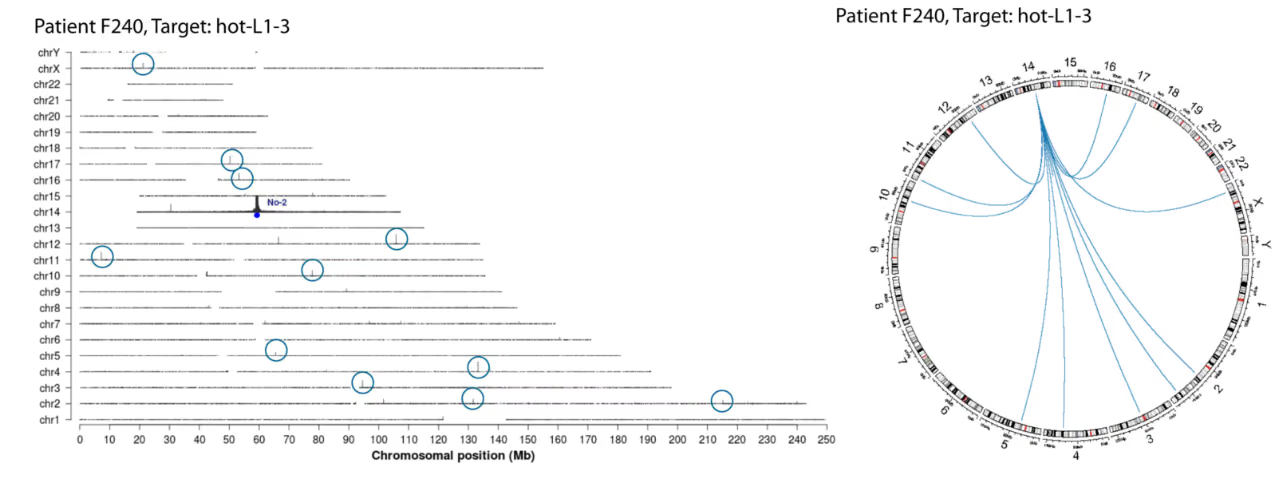
Target:SVs - Targeted detection and functional characterisation of chromosomal breakpoint structural variants in colorectal cancer: advancing towards biomarker assay development
Develop assays detecting DNA structural variants, characterise functional consequences in organoids, translate into cancer biomarkers
Cancer is a life-threatening disease. The biological and clinical impact of structural variants (SVs), caused by DNA chromosomal rearrangements or transposable elements, in cancer cells is largely unknown as technologies to detect them are lacking. Cergentis BV developed a technology for detecting SVs in cancer biopsies. The VU provided bioinformatics expertise, to determine the frequency and biological impact of SVs. NKI provided colorectal cancer biology and biomarker expertise, to determine functional impact of SVs in in vitro models and to explore how these markers can be used to improve patient care.
Improving decisions who to treat (prognosis), how to treat (prediction) and when to treat (monitoring) is urgently needed. We hypothesized that genes that are frequently affected by chromosomal breakpoint SVs are:
- Biologically relevant, requiring investigation of their role in tumorigenesis.
- Clinically relevant, requiring investigation whether/how they can be applied as prognostic, predictive and/or monitoring biomarker.
The ‘Target:SVs’ project aimed to optimize Cergentis’ methodology for detecting SVs and to characterize the functional impact of SVs in colorectal cancer pathogenesis by applying machine learning approaches and by applying wet-lab approaches to investigate their role when disrupting gene function. We explored translation of SVs in specific genes into prognostic and predictive tumor tissue biomarkers, and designed SV-based liquid biopsy assays as cancer-specific treatment response monitoring biomarkers.
We succeeded to detect tumor-specific chromosomal breakpoint SVs in the far majority of colorectal cancers, evaluated the impact of some of these SVs on DNA damage repair and sensitivity to chemo/radiotherapy and provided proof of concept of SV biomarker clinical applicability by translating SVs into liquid biopsy droplet digital PCR assays. Our methodology enables further investigation of the role of SVs in tumorigenesis using retrospective and prospectively collected cohorts of patients, for clinical application as prognostic, predictive and/or response monitoring biomarkers.
Andere projecten
In elk PPS-project werken kennisinstellingen, bedrijven en zorgpartijen samen aan een concrete gezondheidsvraag. Bekijk het volledige projectoverzicht.


Bekijk de programma’s
Binnen onze programma’s werken bedrijven, kennisinstellingen en regionale partners samen aan innovaties die bijdragen aan betere gezondheid en zorg.
Bekijk de partnerschappen
Strategische publiek-private partnerschappen (PPP's) zijn meerjarige samenwerkingen tussen bedrijven, kennisinstellingen en andere partijen.
Hoe kunnen we je helpen?
Heb je een vraag of wil je meer weten over Health Holland? We brengen je graag in contact met de juiste mensen, kennis en mogelijkheden om gezondheidsinnovatie te versnellen.
We hebben uw bericht ontvangen
We nemen binnen 3 tot 4 werkdagen contact met je op. Is je vraag dringend? Neem dan gerust direct contact met ons op. Hieronder zie je de contactoptie die het beste past bij je onderwerp.
Opnieuw beginnen
Er ging iets mis bij het versturen van het formulier. Probeer het opnieuw.