
A garment-integrated artificial intelligence-based sensor system for early detection of stress in people with impaired cognition
Developing a garment-integrated sensor system for stress detection in people with intellectual disabilities and dementia
A new partnership of research organisations, knowledge institutes, a private partner and healthcare organisations has been formed to develop a garment-integrated sensor system for early stress detection in people with intellectual disabilities and dementia.
Healthcare costs for people with intellectual disabilities and dementia are rapidly increasing. With the anticipated growth of long-term care clients and decline in labour force, it will be difficult to maintain the quality level of care and support. People with intellectual disabilities or dementia are vulnerable to stress and may have limited verbal abilities. Their caregivers face the daily challenge to identify and regulate their clients’ stress and emotional state, based on non-verbal cues. A delay in stress recognition can result in challenging behaviour, such as aggression. Challenging behaviour has negative consequences for quality of life, makes client care and support difficult, and the burden on caregivers results in higher-than-average work-place absenteeism and staff turnover.
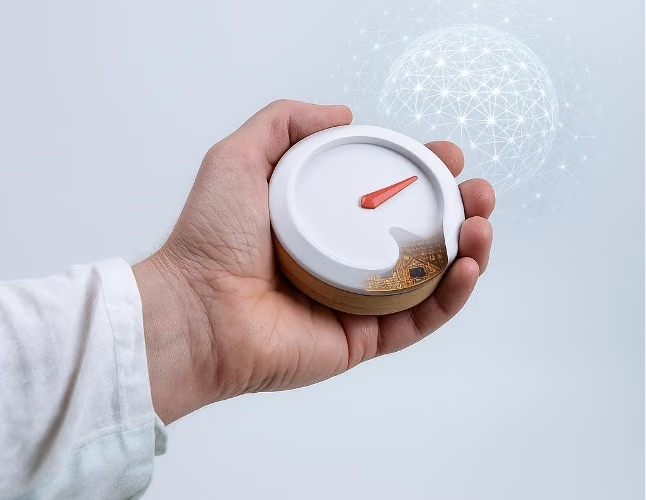
The project develops a prototype device that can determine the build-up of stress in a person based on physiology measurements and behavioural models. The device makes it possible to identify the early signs of stress build-up in people with intellectual disabilities and dementia and warns the caregiver before stress levels reach their critical point. The device thereby enables the caregiver to respond to the needs of the client quicker and better. This may prevent escalation of the situation, thereby reducing the amount of care needed.
Family caregivers, healthcare professionals and people with intellectual disabilities and dementia were involved in the development of the device to ensure acceptability and its implementation in practice. The prototype device consists of a garment-integrated sensor module. It offers the freedom to carry the device in any textile embodiment to make it easy to use, to increase the acceptability and to limit the impact on the client.
Andere projecten
In elk PPS-project werken kennisinstellingen, bedrijven en zorgpartijen samen aan een concrete gezondheidsvraag. Bekijk het volledige projectoverzicht.
Bekijk de programma’s
Binnen onze programma’s werken bedrijven, kennisinstellingen en regionale partners samen aan innovaties die bijdragen aan betere gezondheid en zorg.
Bekijk de partnerschappen
Strategische publiek-private partnerschappen (PPP's) zijn meerjarige samenwerkingen tussen bedrijven, kennisinstellingen en andere partijen.
Hoe kunnen we je helpen?
Heb je een vraag of wil je meer weten over Health Holland? We brengen je graag in contact met de juiste mensen, kennis en mogelijkheden om gezondheidsinnovatie te versnellen.
We hebben uw bericht ontvangen
We nemen binnen 3 tot 4 werkdagen contact met je op. Is je vraag dringend? Neem dan gerust direct contact met ons op. Hieronder zie je de contactoptie die het beste past bij je onderwerp.
Opnieuw beginnen
Er ging iets mis bij het versturen van het formulier. Probeer het opnieuw.