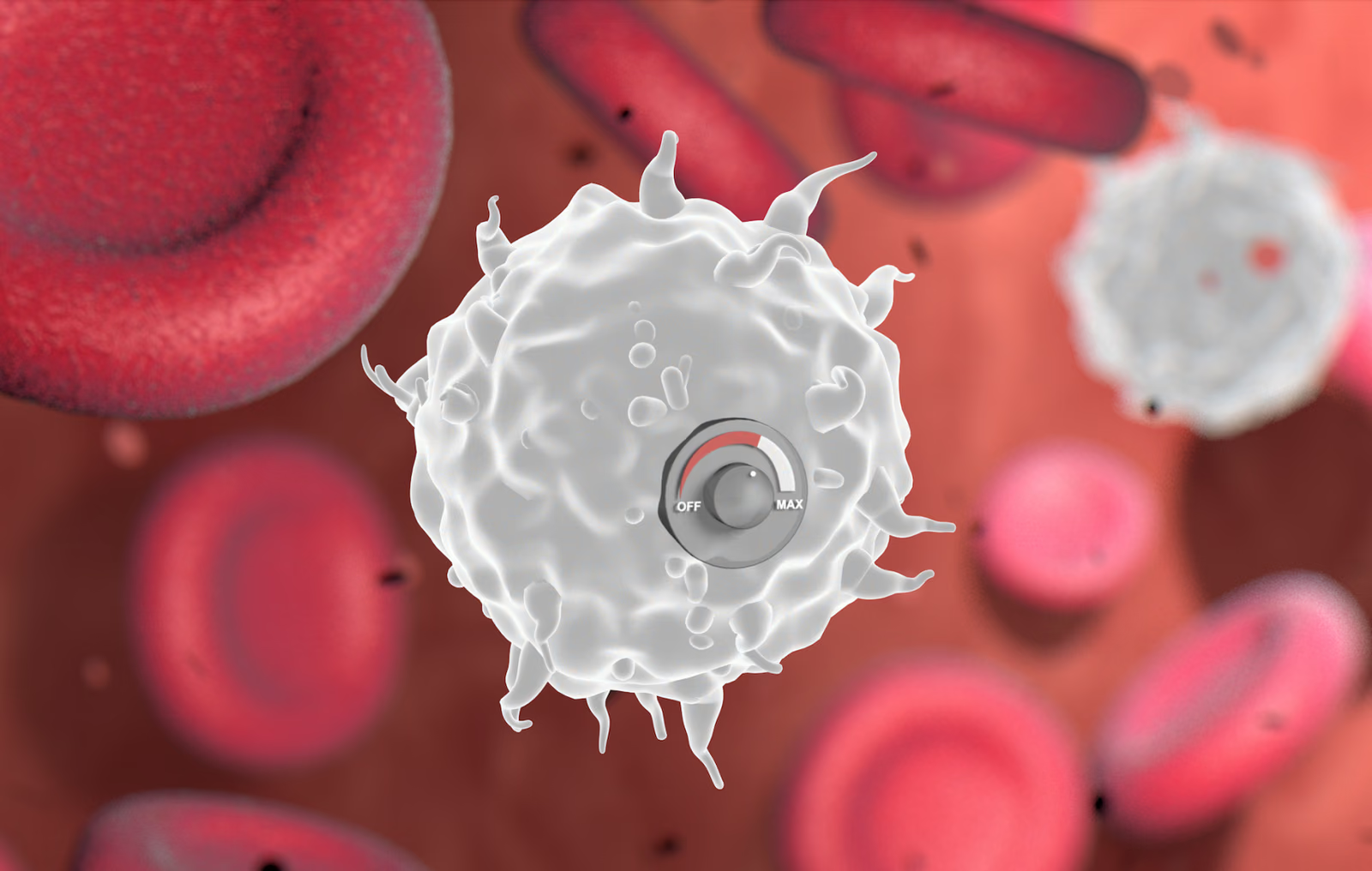
Remotely controlled T cell therapies for cancer, RemoTe
Development of next generation cell therapies armored to controllably induce local inflammation to increase anti-tumor activity
Adoptive T cell therapies have shown substantial activity in a number of human malignancies. Specifically, chimeric antigen receptor (CAR) T cell therapy has shown profound clinical activity in hematological malignancies, leading to a number of drug approvals. Furthermore, in melanoma, the clinical activity of tumor- infiltrating lymphocyte (TIL) has been well established. However, the impact of T cell receptor (TCR)-T cell, CAR-T cell and TIL therapy in other solid malignancies is thus far modest. The central thesis of this project was that next generation adoptive T cell therapies should not merely involve the infusion of tumor-reactive T cells, but that such T cell products should be endowed with the capacity to induce intratumoral inflammation in a precisely controlled manner to thereby increase anti-tumor activity. In this project, researchers from the Netherlands
Cancer Institute collaborated with researchers from the biotech company Cell Control to use their RheoBrick®- en SynFinger®-platforms to generate ‘remotely controllable immune cells’ for the treatment of cancer. Local production of inflammatory cytokines such as IL-12 can drive tumor control. However, systemic administration of these cytokines is precluded by severe toxicities. With the remote cell control technology developed by Cell Control, we engineered cell therapies that secrete potent payloads such as IL-12 in the tumor microenvironment (TME), in a strictly antigen-dependent and small molecule-controlled manner, allowing precisely regulated local inflammation, while preventing systemic effects.
The project has made substantial progress towards its goal of using the RheoBrick switch to regulate CAR-T cell cargo production, both in vitro and in preclinical in vivo models. The findings so far support the hypothesis that this system allows precise control of cargo production, and may lead to improved tumor control. Future steps will include optimizing the treatment protocols and conducting further in vivo studies to refine the balance between efficacy and safety.
Andere projecten
In elk PPS-project werken kennisinstellingen, bedrijven en zorgpartijen samen aan een concrete gezondheidsvraag. Bekijk het volledige projectoverzicht.

Bekijk de programma’s
Binnen onze programma’s werken bedrijven, kennisinstellingen en regionale partners samen aan innovaties die bijdragen aan betere gezondheid en zorg.
Bekijk de partnerschappen
Strategische publiek-private partnerschappen (PPP's) zijn meerjarige samenwerkingen tussen bedrijven, kennisinstellingen en andere partijen.
Hoe kunnen we je helpen?
Heb je een vraag of wil je meer weten over Health Holland? We brengen je graag in contact met de juiste mensen, kennis en mogelijkheden om gezondheidsinnovatie te versnellen.
We hebben uw bericht ontvangen
We nemen binnen 3 tot 4 werkdagen contact met je op. Is je vraag dringend? Neem dan gerust direct contact met ons op. Hieronder zie je de contactoptie die het beste past bij je onderwerp.
Opnieuw beginnen
Er ging iets mis bij het versturen van het formulier. Probeer het opnieuw.