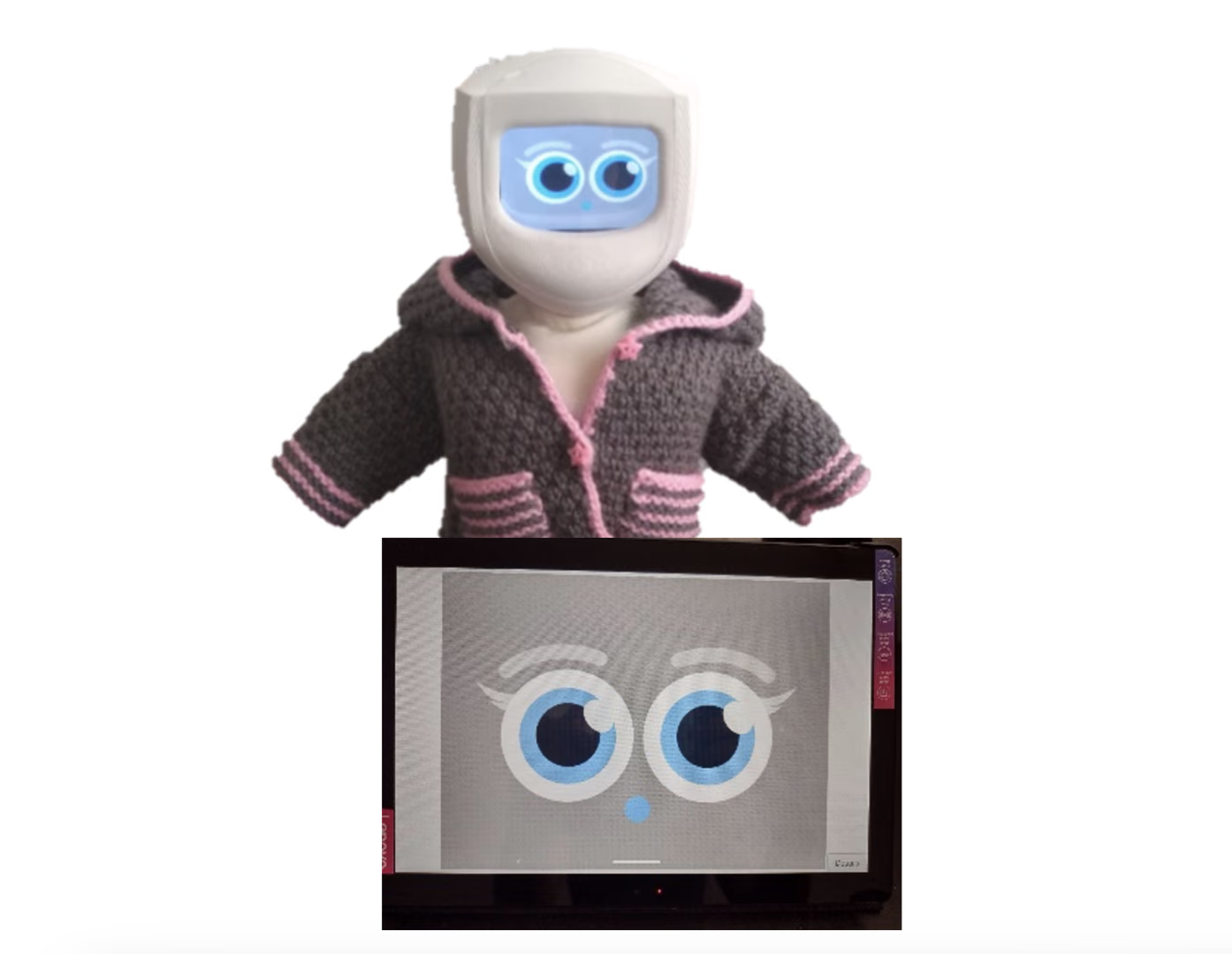
An effect study of robotic companionship on physiological and psychological measures of health and well-being among senior citizens: Alice 2.0
Can we demonstrate a decrease in loneliness of senior citizens through bonding to robots?
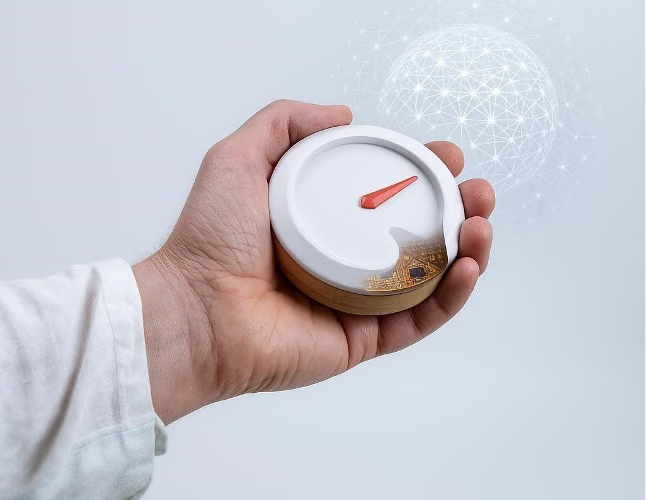
VU Amsterdam and Deloitte collaborated in developing a stylized social robot, named Alice 2.0, equipped with functionalities to keep elderly company through small talk, reading the news, making jokes, puzzling together, singing songs, etc. Social isolation and loneliness bring significant negative consequences on individuals’ longevity, health, and well-being, particularly for senior citizens worldwide (20–34% report to feel lonely; WHO, 2021). Ageing is increasing whereas availability of caretakers is decreasing, both professional and otherwise.
To test effectiveness in alleviating loneliness, robot Alice was compared with a tablet equipped with the same functionalities in three interaction sessions. Whereas no significant differences in loneliness measures were found, neither between devices nor between start and end of study, a potential crossover interaction in loneliness was observed with the robot leading to an improvement in loneliness.
Results regarding well-being, quality-of-life, and health were not significantly different between devices, or before and after all sessions. However, sample sizes were limited and questionnaires likely too global (i.e., remaining stable over time, less sensitive to short-term interventions).
Results from short-scale measures of stress and health satisfaction before and after each individual session showed significantly decreased stress after each session and over all sessions. Hormonal measures were difficult to obtain for the elderly (i.e., bad quality saliva). Nevertheless, results suggest a reduction in cortisol after each session but not significant. Oxytocin levels responded to the interaction with Alice but varied over the course of sessions and depended on participants’ stress level. The underlying mechanisms in the Theory of Affective Bonding were significantly higher for the robot than for the tablet, underscoring the importance of physical embodiment in social interaction.
Overall, results support that such ‘technological’ social interaction can mitigate stress and provide social-emotional support to the elderly, despite methodological limitations (e.g., limited power, unreliable hormonal measures). Further validation is needed. The benefits of social robots might become evident only after longer periods of frequent interactions and with more sophisticated robot technology.
Andere projecten
In elk PPS-project werken kennisinstellingen, bedrijven en zorgpartijen samen aan een concrete gezondheidsvraag. Bekijk het volledige projectoverzicht.

Bekijk de programma’s
Binnen onze programma’s werken bedrijven, kennisinstellingen en regionale partners samen aan innovaties die bijdragen aan betere gezondheid en zorg.
Bekijk de partnerschappen
Strategische publiek-private partnerschappen (PPP's) zijn meerjarige samenwerkingen tussen bedrijven, kennisinstellingen en andere partijen.
Hoe kunnen we je helpen?
Heb je een vraag of wil je meer weten over Health Holland? We brengen je graag in contact met de juiste mensen, kennis en mogelijkheden om gezondheidsinnovatie te versnellen.
We hebben uw bericht ontvangen
We nemen binnen 3 tot 4 werkdagen contact met je op. Is je vraag dringend? Neem dan gerust direct contact met ons op. Hieronder zie je de contactoptie die het beste past bij je onderwerp.
Opnieuw beginnen
Er ging iets mis bij het versturen van het formulier. Probeer het opnieuw.