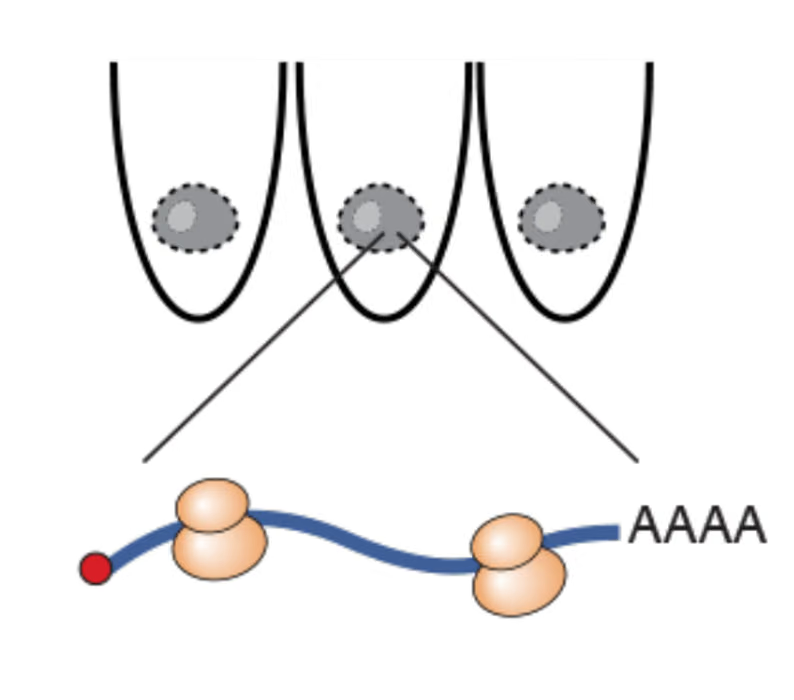
Development of a robust method to simultaneously detect ribosome profiles and transfer RNAs in individual fixed cells
Development of a novel method to determine the location of ribosomes along transcripts in single fixed cells
In recent years novel single-cell sequencing methods have allowed an in-depth analysis of the diversity of cell types and states in a wide range of organisms. Due to the continuous optimization of experimental and computational methods by many research groups, it is now possible to sequence the transcriptomes of thousands to millions of individual cells. Albeit an exciting development, transcription only covers the first step in the central dogma. The second step, the process of translation, is currently much harder to explore in single cells. Despite recent progress in detecting proteins by mass spectrometry with single-cell resolution it remains a major challenge to measure translation in individual cells. Building upon existing ribosome profiling protocols our laboratory recently majorly increased the sensitivity of these assays allowing ribosome profiling in single cells Integrated with a machine learning approach, this method achieves single-codon resolution in individual cells.
The major goal of this proposal is to further improve scRibo-seq to include a freezing and/or fixation step. Currently it is necessary to perform the scRibo-seq protocol immediately after sorting life cells, which severely hinders the processing of clinical material or material from non-local collaborating laboratories for which there is a delay between the harvesting of cells and the start of the scRibo-seq protocol. We will explore a range of different fixation protocols to study if these procedures are compatible with scRibo-seq. Next, we will use these protocols to simultaneously detect ribosome profiles and the abundance of transfer RNAs in single cells.
This project brought together academic researchers and an innovative biotechnology company in a public-private partnership aimed at making advanced cell analysis more accessible. Within this collaboration, we developed and tested new laboratory methods that made it possible to study how proteins are produced in individual cells after those cells had been preserved. The partnership focused on overcoming practical limitations of existing techniques and explored ways to broaden their use beyond highly specialized research environments.
Protein production is a fundamental process in all living cells and plays a key role in health, disease, and normal body functioning. Disruptions in this process are involved in many common conditions, including cancer and age-related diseases. However, many valuable biological samples, such as patient biopsies, are preserved rather than freshly collected, limiting their use in advanced analyses. At the same time, cutting-edge cell technologies are often expensive and restricted to a small number of laboratories. Innovation was therefore needed to make these techniques more flexible, scalable, and relevant for medical research and future healthcare applications.
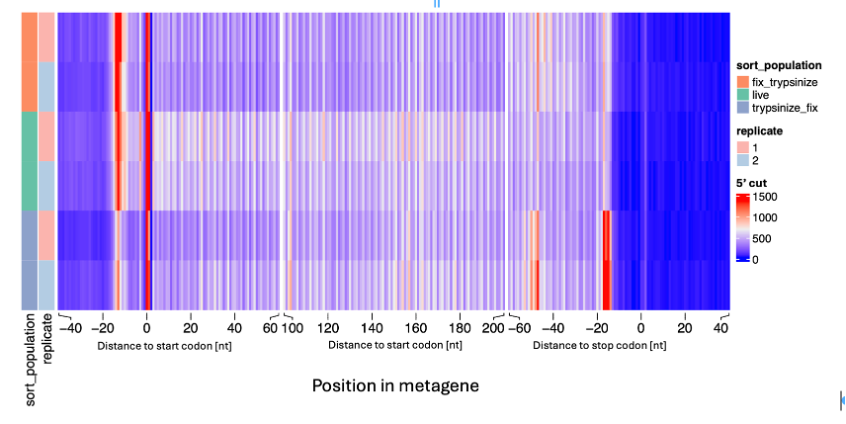
The project addressed this challenge by adapting protein-production measurements so they could be reliably performed on preserved cells. Different preservation strategies were systematically tested and compared to fresh cells to ensure that the results remained accurate and reproducible. By carefully validating the approach, the project demonstrated that key biological information could be retained even after cells were fixed, stored, and handled under conditions compatible with transport and long-term storage.
The results showed that preserved cells yielded data of comparable quality to fresh cells, confirming that preservation did not compromise the measurement of protein production. In addition, the project successfully demonstrated that protein production and transfer RNA levels could be measured together in the same preserved individual cells. These findings significantly expanded the practical applicability of single-cell protein analysis and laid the groundwork for future use in biomedical and clinical research.
Andere projecten
In elk PPS-project werken kennisinstellingen, bedrijven en zorgpartijen samen aan een concrete gezondheidsvraag. Bekijk het volledige projectoverzicht.

Bekijk de programma’s
Binnen onze programma’s werken bedrijven, kennisinstellingen en regionale partners samen aan innovaties die bijdragen aan betere gezondheid en zorg.
Bekijk de partnerschappen
Strategische publiek-private partnerschappen (PPP's) zijn meerjarige samenwerkingen tussen bedrijven, kennisinstellingen en andere partijen.
Hoe kunnen we je helpen?
Heb je een vraag of wil je meer weten over Health Holland? We brengen je graag in contact met de juiste mensen, kennis en mogelijkheden om gezondheidsinnovatie te versnellen.
We hebben uw bericht ontvangen
We nemen binnen 3 tot 4 werkdagen contact met je op. Is je vraag dringend? Neem dan gerust direct contact met ons op. Hieronder zie je de contactoptie die het beste past bij je onderwerp.
Opnieuw beginnen
Er ging iets mis bij het versturen van het formulier. Probeer het opnieuw.