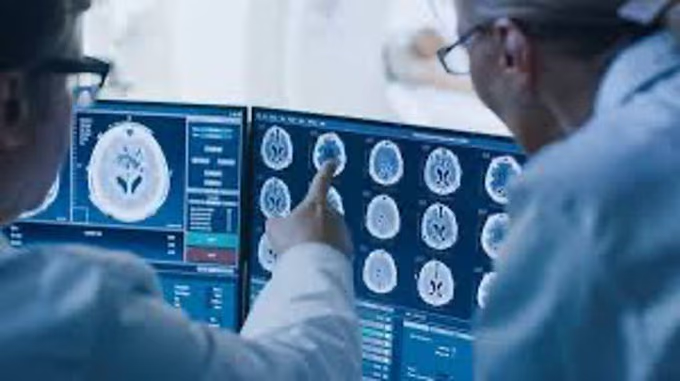
IGNITION: InteGratiNg ctDNA and Imaging data To ImprOve screeNing for lung cancer
This project integrates imaging, molecular and clinical data in a classifier to optimize lung cancer screening
Early detection of lung cancer through low-dose CT (LDCT) scan-based screening can lead to a significant decrease in mortality as shown by the NELSON and NLST trials. However, strategies to improve selection of participants for LDCT, number of inconclusive nodules and false positive results, potentially resulting in overdiagnoses, have be to established prior to routine implementation. There is an unmet need for biomarkers to improve the efficiency of lung cancer screening (LCS) and to reduce the current clinical burden. Circulating biomarkers such as tumor DNA (ctDNA) can reduce the burden of LCS in 1) prescreening for high-risk individuals and 2) as additional biomarker in case of indeterminate or positive calls. Biomarkers are often considered as stand-alone tests but integration of different sources of information (for example imaging, blood-based, clinical information) are known to increase performance over single sources and is likely to have a significant impact on specific challenges of LCS.
LDCT scans and blood samples are collected in parallel for 9,000 participants of the 4-In-The-Lung-Run (4ITLR) trial. The LDCT scans are analyzed by the Department of Radiology at the NKI and iDNA using AI-driven algorithms. The ctDNA is evaluated using sWGS by DELFI Diagnostics. Combined with the clinical data, all data points will be integrated to facilitate the development and validation of a multimodal classifier.
The multimodal classifier will be aimed at a) increasing the PPV of positive and indeterminate LDCT scans, and b) pre-select high-risk individuals. This will improve the performance of LCS and thereby facilitate the implementation in the clinical routine, which can augment the survival probability of lung cancer patients drastically.
The aim of this project is to integrate imaging, molecular and clinical data in a classifier to optimize LCS.
Andere projecten
In elk PPS-project werken kennisinstellingen, bedrijven en zorgpartijen samen aan een concrete gezondheidsvraag. Bekijk het volledige projectoverzicht.


Bekijk de programma’s
Binnen onze programma’s werken bedrijven, kennisinstellingen en regionale partners samen aan innovaties die bijdragen aan betere gezondheid en zorg.
Bekijk de partnerschappen
Strategische publiek-private partnerschappen (PPP's) zijn meerjarige samenwerkingen tussen bedrijven, kennisinstellingen en andere partijen.
Hoe kunnen we je helpen?
Heb je een vraag of wil je meer weten over Health Holland? We brengen je graag in contact met de juiste mensen, kennis en mogelijkheden om gezondheidsinnovatie te versnellen.
We hebben uw bericht ontvangen
We nemen binnen 3 tot 4 werkdagen contact met je op. Is je vraag dringend? Neem dan gerust direct contact met ons op. Hieronder zie je de contactoptie die het beste past bij je onderwerp.
Opnieuw beginnen
Er ging iets mis bij het versturen van het formulier. Probeer het opnieuw.