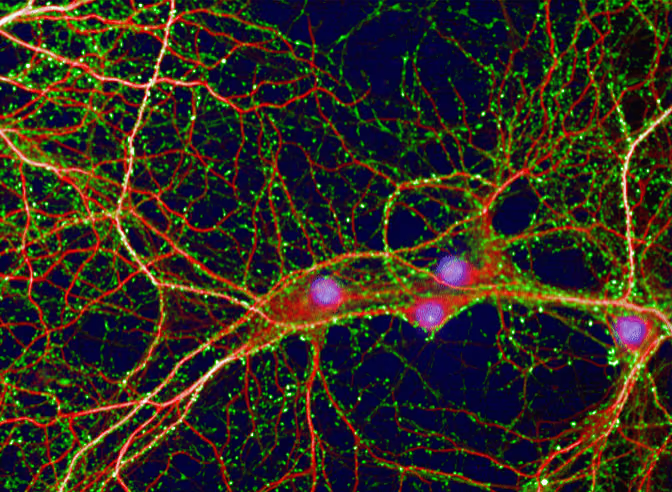
High-content assays for human neurons: a proof-of-concept study into neuronal network impairments in frontotemporal dementia.
Automated microscopy identifies alterations in neuronal connectivity of human neurons linked to frontotemporal dementia
Dementia is increasingly a socio-economic problem for which no effective treatment exists yet. New scientific insights show that the early cognitive problems that arise in dementia are mainly due to subtle changes in the way nerve cells communicate with each other and work together in so-called nerve networks. Effective disadvantage should therefore focus primarily on these early changes in nerve networks.
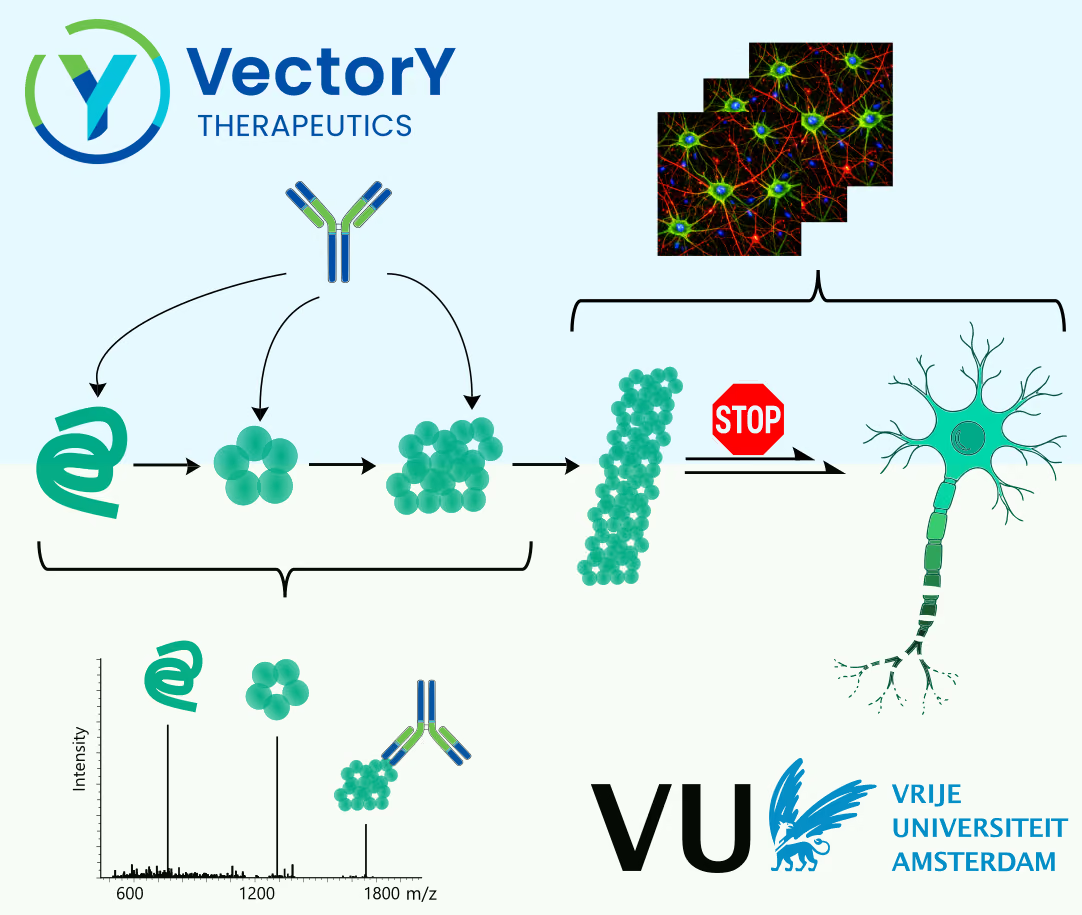
In this project, an assay was developed based on human nerve cells that can be used to measure morphological and functional changes in nerve networks in an automated way. To validate the assay, a cell model for frontotemporal dementia (FTD) was developed. In the assay, these cells show decreases in nerve cell survival and in the number of synaptic connections between nerve cells. With this cell model in hand, and with the developed assay to accurately measure changes in nerve network connectivity, it is now possible to screen for substances that can restore FTD-related changes in nerve networks.
Andere projecten
In elk PPS-project werken kennisinstellingen, bedrijven en zorgpartijen samen aan een concrete gezondheidsvraag. Bekijk het volledige projectoverzicht.
Bekijk de programma’s
Binnen onze programma’s werken bedrijven, kennisinstellingen en regionale partners samen aan innovaties die bijdragen aan betere gezondheid en zorg.
Bekijk de partnerschappen
Strategische publiek-private partnerschappen (PPP's) zijn meerjarige samenwerkingen tussen bedrijven, kennisinstellingen en andere partijen.
Hoe kunnen we je helpen?
Heb je een vraag of wil je meer weten over Health Holland? We brengen je graag in contact met de juiste mensen, kennis en mogelijkheden om gezondheidsinnovatie te versnellen.
We hebben uw bericht ontvangen
We nemen binnen 3 tot 4 werkdagen contact met je op. Is je vraag dringend? Neem dan gerust direct contact met ons op. Hieronder zie je de contactoptie die het beste past bij je onderwerp.
Opnieuw beginnen
Er ging iets mis bij het versturen van het formulier. Probeer het opnieuw.