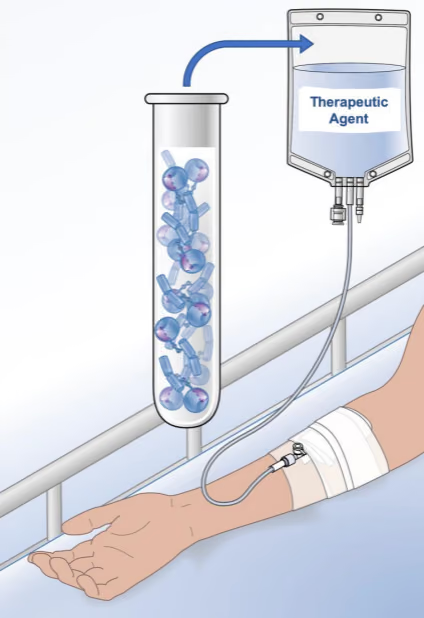
Engineering procoagulant variants of blood coagulation factor X for therapeutic purposes
Engineering variants of blood coagulation factor X for the prevention and treatment of bleeding
In this public-private consortium, the Leiden University Medical Center and VarmX B.V. joined forces to engineer novel variants of blood coagulation factor X that are resistant to direct oral anticoagulants and have maintained normal functionality in clotting, with the overall goal of restoring blood coagulation in individuals treated with factor Xa-inhibiting anticoagulants.
Thrombosis, an ‘unwanted’ blood clot, is the leading cause of mortality and morbidity in the western world, and the direct oral anticoagulants that target blood coagulation factor Xa are among the most commonly used drugs to prevent or treat thrombosis. Efficacious reversal of the anticoagulant effect of these drugs is a prerequisite for safe drug usage, which is underscored by the fact that the risk of major bleeding inherent to anticoagulant treatment is 1–3% per year, with one-in-five cases being fatal. While a reversal agent has been approved for the current generation of factor Xa-inhibiting anticoagulant drugs, given its practical limitations and limited indication there is a need for the development of specific reversal agents capable of overcoming the inhibitory effect of the direct factor Xa inhibitors.
The consortium developed a comprehensive computational and experimental pipeline to predict and assess the functional activity, inhibitor resistance, and molecular interactions of factor X. The integrated workflow combined in silico protein variant modelling with wet-lab validation, providing detailed insights into factor X’s structure–function relationships. Selective introductions of targeted amino acid substitutions in the functional regions of factor X led to the creation of novel factor X variants that resist inhibition by synthetic anticoagulants while preserving catalytic function toward the natural substrate. These modifications allow the engineered variants to bypass drug binding without compromising physiological activity. Beyond their therapeutic potential for restoring haemostasis in patients on direct oral anticoagulants who experience bleeding or require emergency surgery, the knowledge gained from this work also informs broader understanding of substrate selectivity and catalysis in other chymotrypsin-like serine proteases.
Andere projecten
In elk PPS-project werken kennisinstellingen, bedrijven en zorgpartijen samen aan een concrete gezondheidsvraag. Bekijk het volledige projectoverzicht.
Bekijk de programma’s
Binnen onze programma’s werken bedrijven, kennisinstellingen en regionale partners samen aan innovaties die bijdragen aan betere gezondheid en zorg.
Bekijk de partnerschappen
Strategische publiek-private partnerschappen (PPP's) zijn meerjarige samenwerkingen tussen bedrijven, kennisinstellingen en andere partijen.
Hoe kunnen we je helpen?
Heb je een vraag of wil je meer weten over Health Holland? We brengen je graag in contact met de juiste mensen, kennis en mogelijkheden om gezondheidsinnovatie te versnellen.
We hebben uw bericht ontvangen
We nemen binnen 3 tot 4 werkdagen contact met je op. Is je vraag dringend? Neem dan gerust direct contact met ons op. Hieronder zie je de contactoptie die het beste past bij je onderwerp.
Opnieuw beginnen
Er ging iets mis bij het versturen van het formulier. Probeer het opnieuw.