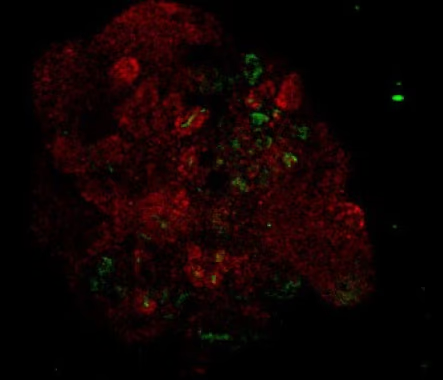
An hiPSC-based fluorescent reporter imaging platform for drug discovery to combat polycystic kidney disease, KIDNEY3D
Development of CRISPR-based stem cell reporters for 3D organoid models of polycystic kidney disease for imaging-based drug screening
Polycystic kidney disease is a progressive deadly genetic disease. Current treatment is limited to renal dialysis until a transplant patient becomes available. There is a need for improved therapeutic interventions that can delay or stop the disease progression. Identification of novel medicines requires in vitro test systems that mimic the disease to screen for candidate drugs for polycystic kidney disease. The objective of the project was to develop fluorescent protein reporter cell lines that can be integrated in high throughput imaging-based drug screening approaches. We started a collaboration between Leiden University and OcellO B.V. (currently CrownBiosciences B.V.); the latter would be able to service the test systems for drug discovery.
The disease progression of polycystic disease is associated with changes in the cell biology of renal cells. This is characterized by specific genes that are upregulated during the disease progression. Conceptually, we are aiming to use gene expression as a marker of the extent of the progression of the disease. Within the project we have used existing gene expression data from patients and animal models of polycystic kidney disease to identify genes that are highly expressed when the disease has extensively progressed. Such genes would be excellent markers for identifying drugs that can suppress disease progression. Stem cell technology allows the development of kidney organoids. We have used induced-pluripotent stem cells and have integrated fluorescent markers in these cells to tag our genes of interest so that we could follow under the microscope in stem cell-derived kidney organoids the expression of polycystic kidney disease progression markers.
The project has identified relevant genes using bioinformatics analysis. Subsequently, CRISPR gene editing technology was used to successfully establish functional fluorescent reporter lines that can be used for imaging-based drug screening.
Andere projecten
In elk PPS-project werken kennisinstellingen, bedrijven en zorgpartijen samen aan een concrete gezondheidsvraag. Bekijk het volledige projectoverzicht.

Bekijk de programma’s
Binnen onze programma’s werken bedrijven, kennisinstellingen en regionale partners samen aan innovaties die bijdragen aan betere gezondheid en zorg.
Bekijk de partnerschappen
Strategische publiek-private partnerschappen (PPP's) zijn meerjarige samenwerkingen tussen bedrijven, kennisinstellingen en andere partijen.
Hoe kunnen we je helpen?
Heb je een vraag of wil je meer weten over Health Holland? We brengen je graag in contact met de juiste mensen, kennis en mogelijkheden om gezondheidsinnovatie te versnellen.
We hebben uw bericht ontvangen
We nemen binnen 3 tot 4 werkdagen contact met je op. Is je vraag dringend? Neem dan gerust direct contact met ons op. Hieronder zie je de contactoptie die het beste past bij je onderwerp.
Opnieuw beginnen
Er ging iets mis bij het versturen van het formulier. Probeer het opnieuw.