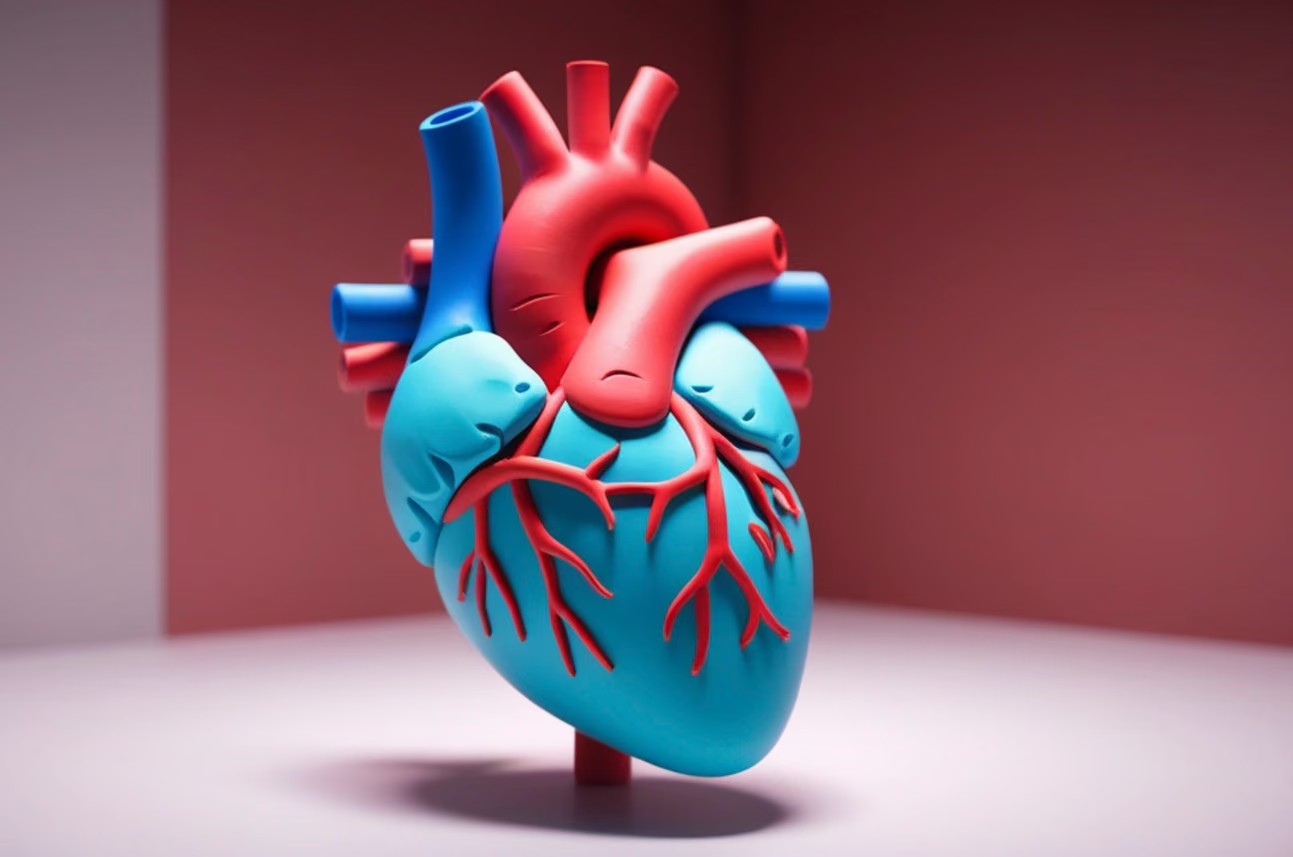
Enriching digital twins of the human heart with real ion channels
A biological-digital twin enabling faster, safer prediction of genetic heart rhythm disorders and drug responses
Electrical impulses are essential for the heart to beat properly. Mutations in ion channel genes can disrupt these impulses, leading to life-threatening arrhythmias or sudden cardiac arrest. However, not every mutation is harmful, and with the rapid rise in genetic testing, clinicians face an increasing challenge: how to predict which mutations are dangerous, and which treatment will work best for each patient.
Current laboratory techniques, such as manual patch clamp electrophysiology, can answer these questions but are extremely time-consuming—often taking a team of experts a full year to study a single mutation. There is a pressing need for faster, scalable methods.
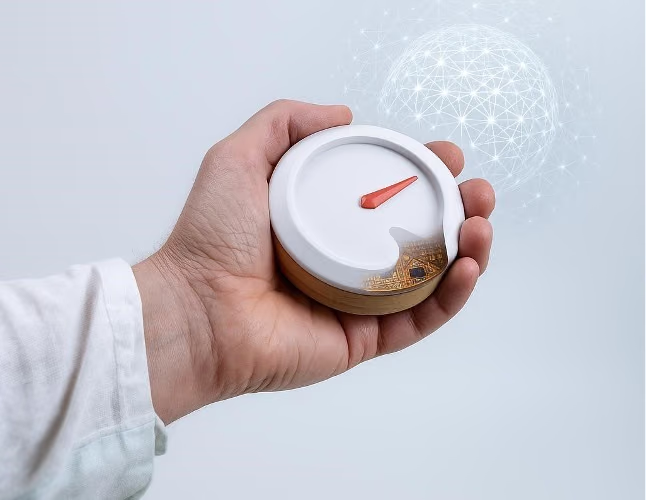
In this project, a new collaboration between De Boer, Nanion, and Elements will advance a breakthrough approach: the Excitable Biological-Digital Twin (ExBDT). This innovative technology connects living heart cells expressing ion channels to a real-time computer simulation of a human cardiac action potential. Using Nanion’s automated 384-cell patch clamp system and Elements’ high-speed electronics, biological and digital signals are linked in a closed feedback loop, creating a hybrid model that mimics the human heart’s electrical behavior with unprecedented accuracy.
The project will refine and validate this system, demonstrating its predictive value for patient-specific mutations. Deliverables include proof-of-concept experiments confirming correlation with clinical phenotypes, refined hardware and software integration, and publication of findings in peer-reviewed journals.
By combining biological realism with computational speed, ExBDT can greatly accelerate the evaluation of cardiac ion channel mutations and drug responses. This innovation could shorten diagnostic timelines from months to days, paving the way for truly personalized treatment of inherited heart rhythm disorders.
More information about Nanion Technologies
Andere projecten
In elk PPS-project werken kennisinstellingen, bedrijven en zorgpartijen samen aan een concrete gezondheidsvraag. Bekijk het volledige projectoverzicht.
Bekijk de programma’s
Binnen onze programma’s werken bedrijven, kennisinstellingen en regionale partners samen aan innovaties die bijdragen aan betere gezondheid en zorg.
Bekijk de partnerschappen
Strategische publiek-private partnerschappen (PPP's) zijn meerjarige samenwerkingen tussen bedrijven, kennisinstellingen en andere partijen.
Hoe kunnen we je helpen?
Heb je een vraag of wil je meer weten over Health Holland? We brengen je graag in contact met de juiste mensen, kennis en mogelijkheden om gezondheidsinnovatie te versnellen.
We hebben uw bericht ontvangen
We nemen binnen 3 tot 4 werkdagen contact met je op. Is je vraag dringend? Neem dan gerust direct contact met ons op. Hieronder zie je de contactoptie die het beste past bij je onderwerp.
Opnieuw beginnen
Er ging iets mis bij het versturen van het formulier. Probeer het opnieuw.