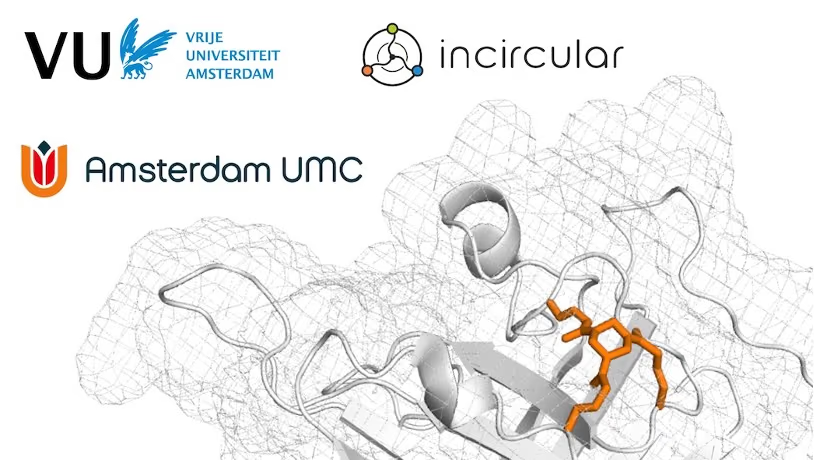
Immune control with Stabilized Galectins
The oligomerization and stability profiles of galectins are modulated to tailor their immunoregulatory effects
Academic groups from the Vrije Universiteit Amsterdam and the Amsterdam Universitair Medische Centra team-up with the start-up company Incircular to develop novel protein designs that allow the control of therapeutically relevant aspects of the immune system. To achieve this, specific proteins (galectins) are modulated to tailor their immunoregulatory effects.
Diseases associated with immune dysfunction, such as diabetes, inflammatory bowel disease, rheumatoid arthritis and cancer, put a heavy burden on our society, and in many cases, effective therapies are missing. Rheumatoid arthritis, for example, affects 1% of the European population, which accounts for more than 150.000 cases in the Netherlands alone. The consortium focuses on the development of novel immunoregulatory strategies with therapeutic potential.
We pursue the chemical engineering of immunoregulatory proteins of the galectin family aiming to identify galectin variants with activity profiles that support their therapeutic use. We will generate stabilized proteins for biochemical and functional testing, taking advantage of Incurcular’s proprietary INCYPRO technology. INCYPRO is a structure-guided protein engineering approach that allows the stabilization and modulation of protein and protein complex structures. This provides new therapeutic avenues for immune-related diseases.
The overall aim is to identify the galectin variants with therapeutic potential for the treatment of rheumatoid arthritis. In particular, the connection between protein stability, binding selectivity and dimerization properties will be in the focus with INCYPRO providing an ideal platform to modulate these parameters. The project will therefore initially deliver proteins with new topologies, which will then be characterized in biophysical and cell-based assays. This will allow the identification of galectin candidates with therapeutic potential.
Andere projecten
In elk PPS-project werken kennisinstellingen, bedrijven en zorgpartijen samen aan een concrete gezondheidsvraag. Bekijk het volledige projectoverzicht.

Bekijk de programma’s
Binnen onze programma’s werken bedrijven, kennisinstellingen en regionale partners samen aan innovaties die bijdragen aan betere gezondheid en zorg.
Bekijk de partnerschappen
Strategische publiek-private partnerschappen (PPP's) zijn meerjarige samenwerkingen tussen bedrijven, kennisinstellingen en andere partijen.
Hoe kunnen we je helpen?
Heb je een vraag of wil je meer weten over Health Holland? We brengen je graag in contact met de juiste mensen, kennis en mogelijkheden om gezondheidsinnovatie te versnellen.
We hebben uw bericht ontvangen
We nemen binnen 3 tot 4 werkdagen contact met je op. Is je vraag dringend? Neem dan gerust direct contact met ons op. Hieronder zie je de contactoptie die het beste past bij je onderwerp.
Opnieuw beginnen
Er ging iets mis bij het versturen van het formulier. Probeer het opnieuw.