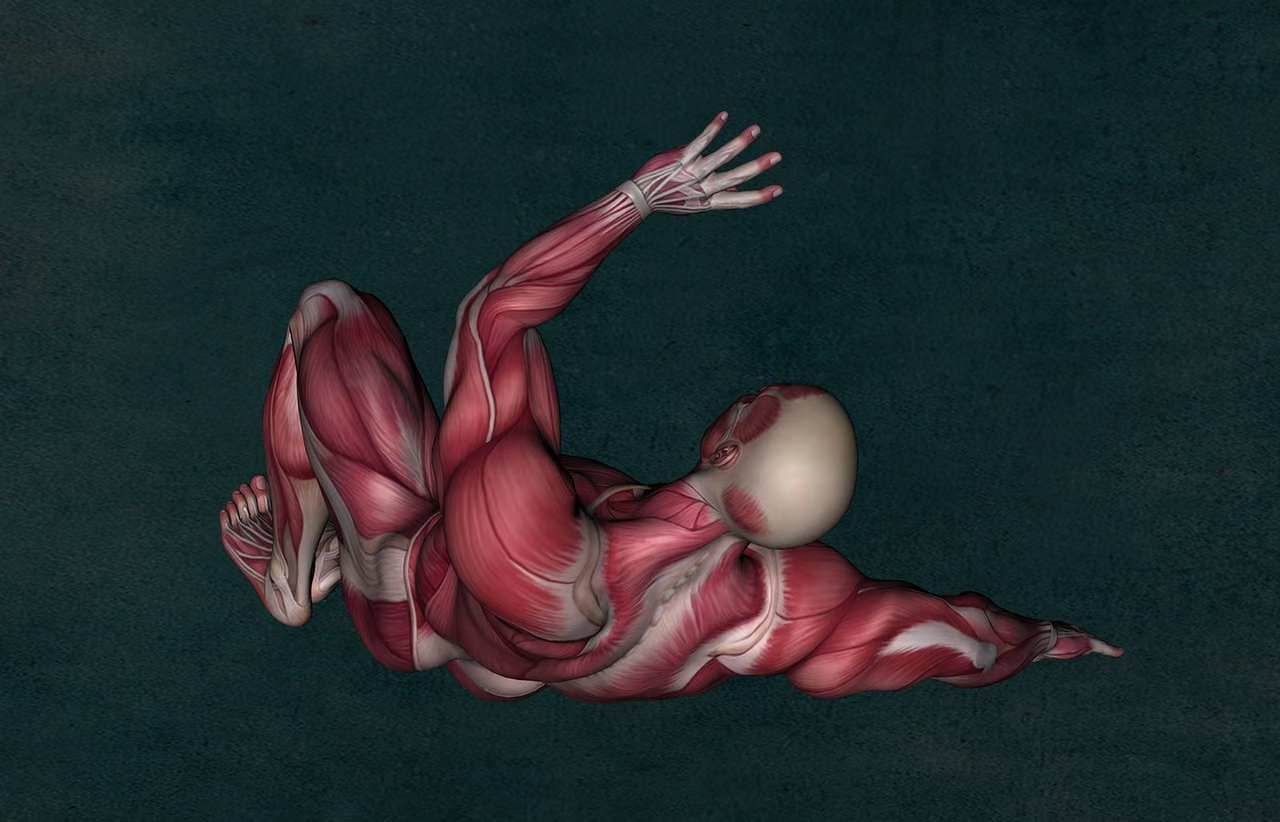
Collagen ingestion to stimulate connective tissue protein synthesis rates in vivo in human muscle CONSTRUCT (COllagen iNgeSTion foR mUscle Connective Tissue)
Will the combined ingestion of whey plus collagen protein stimulate both myofibrillar and collagen protein synthesis rates in skeletal muscle tissue?
In this collaborative project between Maastricht University Medical Centre+ (MUMC+) and Gelita AG, determined the optimal ratio between whey and collagen protein that should be ingested during recovery from exercise to provide ample essential amino acids without compromising post-prandial plasma glycine and proline availability. Second, the optimal ratio of whey and collagen protein drink is used to determine post-prandial myofibrillar and collagen tissue protein synthesis rates in vivo in muscle at rest and during recovery from a single resistance type exercise session in healthy, young men.
This project contributes to the knowledge on the impact of food ingredients on muscle mass and metabolism in young adults. The novel information generated through the current projects enables true translation of findings that the combined ingestion of whey and collagen protein stimulate myofibrillar and collagen protein synthesis rates, both considered to be critical to muscle reconditioning. This work will impact the view on nutrition to support post-exercise muscle remodeling and may change the guidelines on sports nutrition to support post-exercise recovery. Furthermore, it may provide new leads towards new nutritional concepts in terms of prevention; i.e., prevention of functional decline and loss of independence through maintenance of skeletal muscle strength and function with aging, thereby supporting ‘healthy aging’ of our society. Additionally, translation towards clinically compromised and/or institutionalized populations (i.e., supporting muscle rehabilitation within a clinical setting), represents another important application of the combined ingestion of whey plus collagen.
Deliverables
1. definition of an optimal ratio of whey and collagen protein that should be ingested during post-exercise recovery to provide ample essential amino acids without compromising post-prandial plasma glycine and proline availability in vivo in humans.
2. Evidence to show that whey plus collagen protein ingestion increases both myofibrillar and collagen tissue protein synthesis rates in muscle tissue at rest and during recovery from exercise in vivo in humans.
Results
Study 1 shows that the ingestion of 5 grams of collagen with 25 grams of whey protein provide the most favorable plasma amino acids availability to (hypothetically) support both myofibrillar as well as connective tissue protein synthesis rates at rest and during post-exercise recovery.
Study 2 shows that the ingesting a 5 grams collagen with 25 grams of whey protein drink stimulates both connective tissue as myofibrillar protein synthesis rates at rest. Furthermore, it increases myofibrillar, but not muscle connective protein synthesis rates during recovery from resistance exercise in young men
1. definition of an optimal ratio of whey and collagen protein that should be ingested during post-exercise recovery to provide ample essential amino acids without compromising post-prandial plasma glycine and proline availability in vivo in humans.
2. Evidence to show that whey plus collagen protein ingestion increases both myofibrillar and collagen tissue protein synthesis rates in muscle tissue at rest and during recovery from exercise in vivo in humans.
Andere projecten
In elk PPS-project werken kennisinstellingen, bedrijven en zorgpartijen samen aan een concrete gezondheidsvraag. Bekijk het volledige projectoverzicht.
Bekijk de programma’s
Binnen onze programma’s werken bedrijven, kennisinstellingen en regionale partners samen aan innovaties die bijdragen aan betere gezondheid en zorg.
Bekijk de partnerschappen
Strategische publiek-private partnerschappen (PPP's) zijn meerjarige samenwerkingen tussen bedrijven, kennisinstellingen en andere partijen.
Hoe kunnen we je helpen?
Heb je een vraag of wil je meer weten over Health Holland? We brengen je graag in contact met de juiste mensen, kennis en mogelijkheden om gezondheidsinnovatie te versnellen.
We hebben uw bericht ontvangen
We nemen binnen 3 tot 4 werkdagen contact met je op. Is je vraag dringend? Neem dan gerust direct contact met ons op. Hieronder zie je de contactoptie die het beste past bij je onderwerp.
Opnieuw beginnen
Er ging iets mis bij het versturen van het formulier. Probeer het opnieuw.