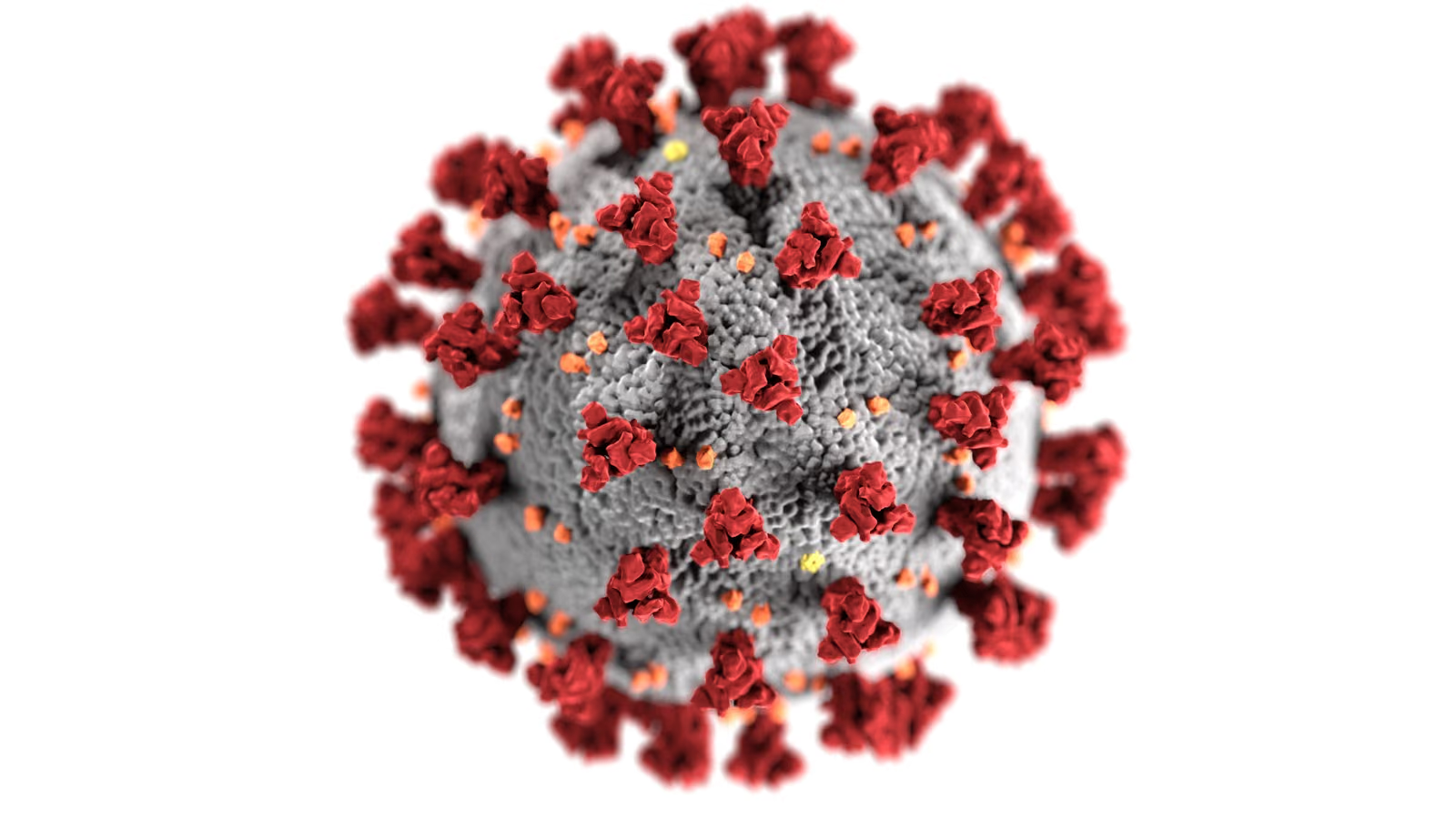
Aerosols and viral transmission, practical interventions by ventilation and air cleaning: the CLAIRE project
CLAIRE - essential knowledge on airborne transmission for current and future pandemic threats
Addressing existing knowledge gaps on the actual impact of both fixed ventilation systems and mobile air cleaning technologies on risk reduction of aerogenic transmission of SARS-CoV-2 and other viruses is vital. As other preventive measures are scaled down, ventilation and/or air cleaning systems and technologies may become the main line of defence relied upon to control infections.
The multidisciplinary project CLAIRE assesses the efficacy of ventilation and air cleaning systems in a real-life context, by characterising their properties (air exchange, clean air delivery rate, air flow pattern) under different combinations of implementation contexts and intervention scenarios, while quantifying airborne (infectious) SARS-CoV-2. Feasibility and acceptability of these interventions will be studied in two different contexts: 1) elementary schools and 2) facilities for care of aged individuals.
The project recognises and deals with interdependencies between ventilation systems and air cleaning technologies. It is organised into two distinct but interlinked work streams. Work stream one starts with experimental research to refine our understanding of the performance of ventilation systems. Work stream two runs largely in parallel, but focuses on air cleaning by mobile units, aiming to develop improved insight as well as assessment and validation technologies using experimental deployment of a variety of solutions from different suppliers. Both work streams incorporate air sampling for the collection and quantification of airborne (infectious) SARS-CoV-2 virus and other (mostly viral) pathogens, to move beyond the state of the art in risk assessment modelling under different intervention scenarios.
The improved knowledge base created will greatly expand options for accurate ex-ante and ex-post evaluation of the acceptability and feasibility of different intervention scenarios based on ventilation and air cleaning. This public-private partnership is also essential in order to prepare Dutch society, not only for future waves of SARS-CoV-2 variants, but also for future pandemics.
Andere projecten
In elk PPS-project werken kennisinstellingen, bedrijven en zorgpartijen samen aan een concrete gezondheidsvraag. Bekijk het volledige projectoverzicht.
Bekijk de programma’s
Binnen onze programma’s werken bedrijven, kennisinstellingen en regionale partners samen aan innovaties die bijdragen aan betere gezondheid en zorg.
Bekijk de partnerschappen
Strategische publiek-private partnerschappen (PPP's) zijn meerjarige samenwerkingen tussen bedrijven, kennisinstellingen en andere partijen.
Hoe kunnen we je helpen?
Heb je een vraag of wil je meer weten over Health Holland? We brengen je graag in contact met de juiste mensen, kennis en mogelijkheden om gezondheidsinnovatie te versnellen.
We hebben uw bericht ontvangen
We nemen binnen 3 tot 4 werkdagen contact met je op. Is je vraag dringend? Neem dan gerust direct contact met ons op. Hieronder zie je de contactoptie die het beste past bij je onderwerp.
Opnieuw beginnen
Er ging iets mis bij het versturen van het formulier. Probeer het opnieuw.