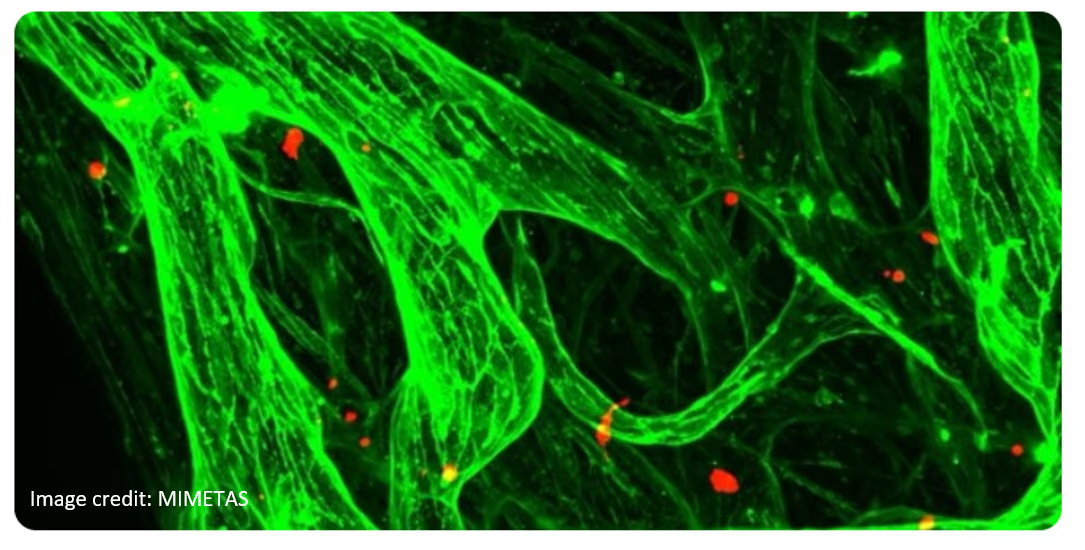
Bile Research And molecular Visualization in HEpatocytes
Visualizing cross membrane trafficking of Bile acids into hepatocytes
Objective We aimed to visualize and quantify BA uptake in mouse liver tissue and hepatocytes treated with specific engineered oligonucleotides (EONs) that induce A-to-G RNA editing, generating a dysfunctional NTCP protein variant. We hypothesized that EON-mediated NTCP modulation will reduce BA uptake in hepatocytes, hence provide a functional measure of RNA editing efficiency.
Design In-vivo models (humanized liver mice model (Transcure BioServices)) were treated with specific EON’s and a permeation enhancer to evaluate the uptake of BA’s. Molecular imaging techniques, like MALDI-MSI and immunohistochemistry (IHC) showed spatial distribution of BA’s in liver sections. Lipidomic analysis identified markers associated with liver structures such as bile ducts, parenchyma, and connective tissue, helping to assess off-target effects of NTCP editing.
Relevance Through the development and application of cutting-edge MSI techniques and procedures, we created a robust methodology to evaluate e.g. BA presence in liver tissues and hepatocytes and ‘quantify’ their amounts. The findings supported the development of novel RNA-based treatments for liver diseases associated with BA dysregulation. Next, the outcome of this study improved the understanding of EON-based RNA editing as a therapeutic strategy for modulating hepatic BA transport, through EON initiated NTCP modifications.
Bile acids (BAs) are crucial for a healthy liver and a healthy life. When BA levels are disrupted, it can lead to liver problems. Increasing bile acid uptake in certain liver cells by manipulating a protein called NTCP can cause severe liver disease. Controlling this NTCP protein might help prevent BA-related liver damage. A new technology called mass spectrometry imaging (MSI) can now show how BAs are distributed in liver tissue, making it easier to study their movement and buildup. In an experiment, humanized mice were treated with a substance that helps other molecules enter cells and a specific 'Editable Oligo-Nucleotide'. This treatment seemed to lower BA levels, but more testing is needed to confirm these results.
Andere projecten
In elk PPS-project werken kennisinstellingen, bedrijven en zorgpartijen samen aan een concrete gezondheidsvraag. Bekijk het volledige projectoverzicht.
Bekijk de programma’s
Binnen onze programma’s werken bedrijven, kennisinstellingen en regionale partners samen aan innovaties die bijdragen aan betere gezondheid en zorg.
Bekijk de partnerschappen
Strategische publiek-private partnerschappen (PPP's) zijn meerjarige samenwerkingen tussen bedrijven, kennisinstellingen en andere partijen.
Hoe kunnen we je helpen?
Heb je een vraag of wil je meer weten over Health Holland? We brengen je graag in contact met de juiste mensen, kennis en mogelijkheden om gezondheidsinnovatie te versnellen.
We hebben uw bericht ontvangen
We nemen binnen 3 tot 4 werkdagen contact met je op. Is je vraag dringend? Neem dan gerust direct contact met ons op. Hieronder zie je de contactoptie die het beste past bij je onderwerp.
Opnieuw beginnen
Er ging iets mis bij het versturen van het formulier. Probeer het opnieuw.