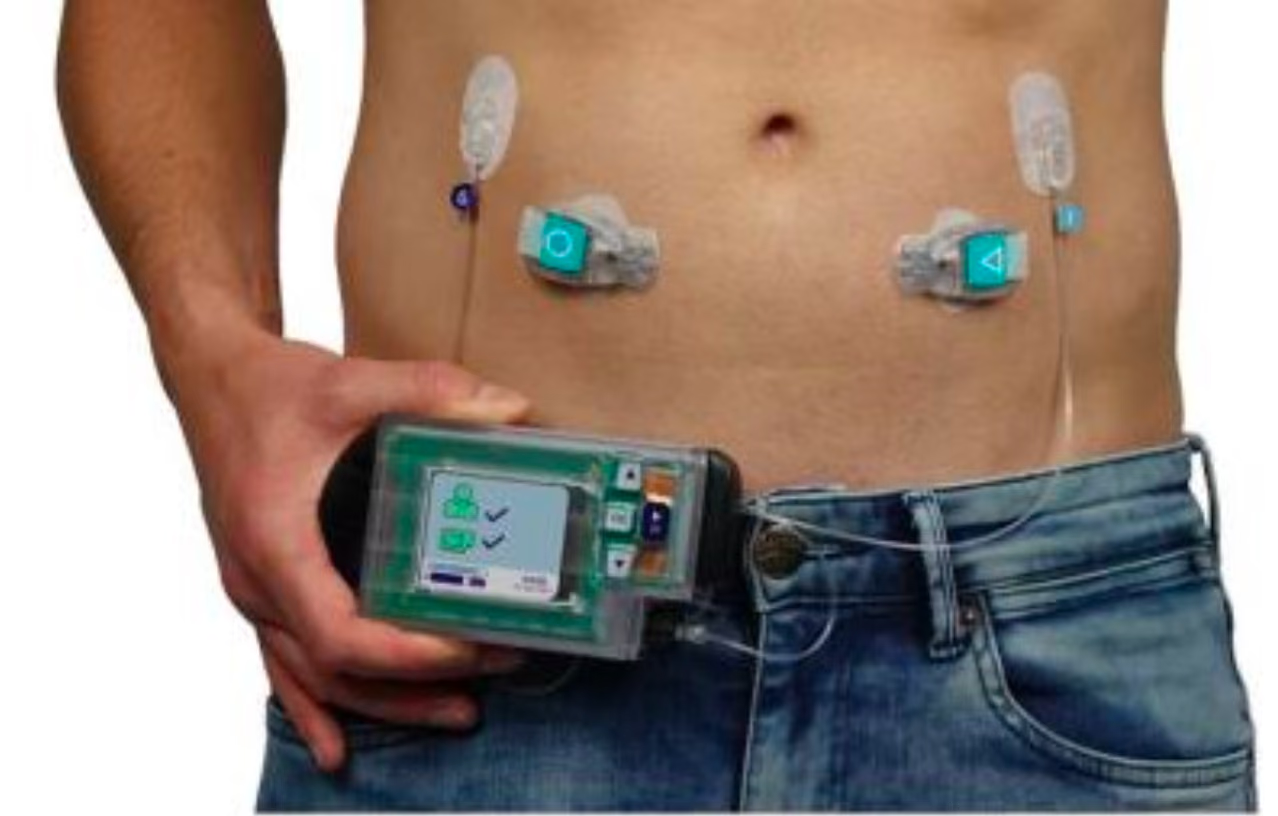
Glucose control through a bihormonal artificial pancreas in patients after total pancreatectomy (PANORAMA): randomized controlled crossover trial
Patients after total pancreatectomy treated with a bihormonal artificial pancreas compared with conventional diabetes treatment
In recent years total pancreatectomy is increasingly performed in selected patients due to the increasing use of preoperative chemotherapy, making more patients operable. After total pancreatectomy, all patients develop insulin dependent diabetes mellitus (IDDM). Glucose control in these patients is challenging due to the complete absence of both pancreatic insulin and glucagon secretion, and most patients report decreased quality of life due to fear of hypoglycemic events and the need for continuous glucose monitoring.
The CE marked bihormonal artificial pancreas (BIHAP) provides continuous fully automatic glucose monitoring and administration of insulin and glucagon using a self-learning algorithm. In a recent pilot study (APPEL5+, NL.8871) the BIHAP was being compared to current diabetes treatment in 10 patients after total pancreatectomy. This trial demonstrated that treatment with BIHAP was safe and improved time spent in euglycemia significantly during one week treatment (78.30%, [IQR 71.05%-82.61%] vs. 57.38% [IQR 52.38%-81.35%], p=0.03). Now, larger randomized studies with a longer treatment period are necessary to confirm safety and efficacy of BIHAP for the treatment of diabetes in patients after total pancreatectomy, with sufficient attention for long-term glycemic control (HbA1c) and patient-reported outcomes.
The PANORAMA trial, a randomized cross-over trial, evaluated the efficacy of the BIHAP system in 20 patients after total pancreatectomy during a 3-month treatment period. This was compared to a 3-month treatment period with current diabetes care. The trial was completed successfully, without any severe adverse related to the BIHAP. HbA1c improved significantly after BIHAP treatment, but formal analyses are needed to confirm superior glycemic regulation (time in range) with the BIHAP system compared to current diabetes care. Nonetheless, partial funding for a follow-up trial is already obtained and internationally there has been significant interest from high- volume centers expressing their interest in participating in the second trial.
Andere projecten
In elk PPS-project werken kennisinstellingen, bedrijven en zorgpartijen samen aan een concrete gezondheidsvraag. Bekijk het volledige projectoverzicht.
Bekijk de programma’s
Binnen onze programma’s werken bedrijven, kennisinstellingen en regionale partners samen aan innovaties die bijdragen aan betere gezondheid en zorg.
Bekijk de partnerschappen
Strategische publiek-private partnerschappen (PPP's) zijn meerjarige samenwerkingen tussen bedrijven, kennisinstellingen en andere partijen.
Hoe kunnen we je helpen?
Heb je een vraag of wil je meer weten over Health Holland? We brengen je graag in contact met de juiste mensen, kennis en mogelijkheden om gezondheidsinnovatie te versnellen.
We hebben uw bericht ontvangen
We nemen binnen 3 tot 4 werkdagen contact met je op. Is je vraag dringend? Neem dan gerust direct contact met ons op. Hieronder zie je de contactoptie die het beste past bij je onderwerp.
Opnieuw beginnen
Er ging iets mis bij het versturen van het formulier. Probeer het opnieuw.