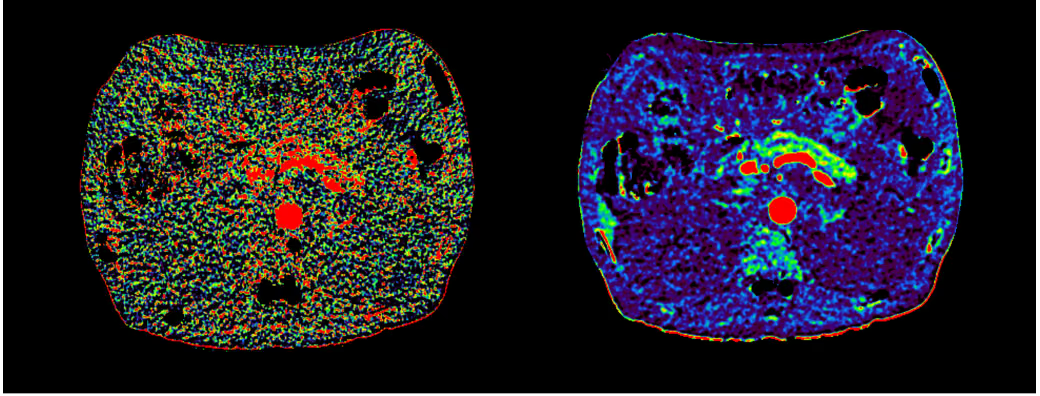
FILTER - Functional Imaging with Low dose cT pERfusion
New filtering methods for functional CT perfusion imaging
Computed tomography perfusion (CTP) images can provide information on the status and the workings of organs and lesions. For example, a tumor that is actually reacting to chemotherapy, and is therefore dying, might not shrink. This tumor would appear the same in a standard CT image, while the CTP image would show its response. However, CTP images are either too low quality to be useful, or too much radiation needs to be used. Therefore, CTP is used for a very limited number of clinical problems.
In Europe alone, every year almost four million people are diagnosed with cancer, while more than half a million people experience a stroke. Clearly, the introduction of CTP to be better able to diagnose, and plan and monitor the treatment of patients would have a significant impact on the health of the population.
In this project, we further developed, characterized, and optimized special software that allows for the use of a lot less radiation for CTP imaging but still results in high quality, and accurate, images. In addition to improving this software, called the 4D similarity filter, the largest step forward in this project was the specification of the best way to use this filter for specific CTP images, such as for diagnosing brain stroke and metastasis in the liver. As a result, we can now obtain better images faster. Speed of imaging is especially important for brain imaging, where it is crucial to diagnose stroke quickly so that brain function can be saved.
The partnership between the Radboud University Medical Center and Canon Medical, who has licensed the use of the 4D similarity filter in their CT systems, allows for the introduction of these developments in the short term after completion of this project and further clinical validation of its results.
Andere projecten
In elk PPS-project werken kennisinstellingen, bedrijven en zorgpartijen samen aan een concrete gezondheidsvraag. Bekijk het volledige projectoverzicht.
Bekijk de programma’s
Binnen onze programma’s werken bedrijven, kennisinstellingen en regionale partners samen aan innovaties die bijdragen aan betere gezondheid en zorg.
Bekijk de partnerschappen
Strategische publiek-private partnerschappen (PPP's) zijn meerjarige samenwerkingen tussen bedrijven, kennisinstellingen en andere partijen.
Hoe kunnen we je helpen?
Heb je een vraag of wil je meer weten over Health Holland? We brengen je graag in contact met de juiste mensen, kennis en mogelijkheden om gezondheidsinnovatie te versnellen.
We hebben uw bericht ontvangen
We nemen binnen 3 tot 4 werkdagen contact met je op. Is je vraag dringend? Neem dan gerust direct contact met ons op. Hieronder zie je de contactoptie die het beste past bij je onderwerp.
Opnieuw beginnen
Er ging iets mis bij het versturen van het formulier. Probeer het opnieuw.