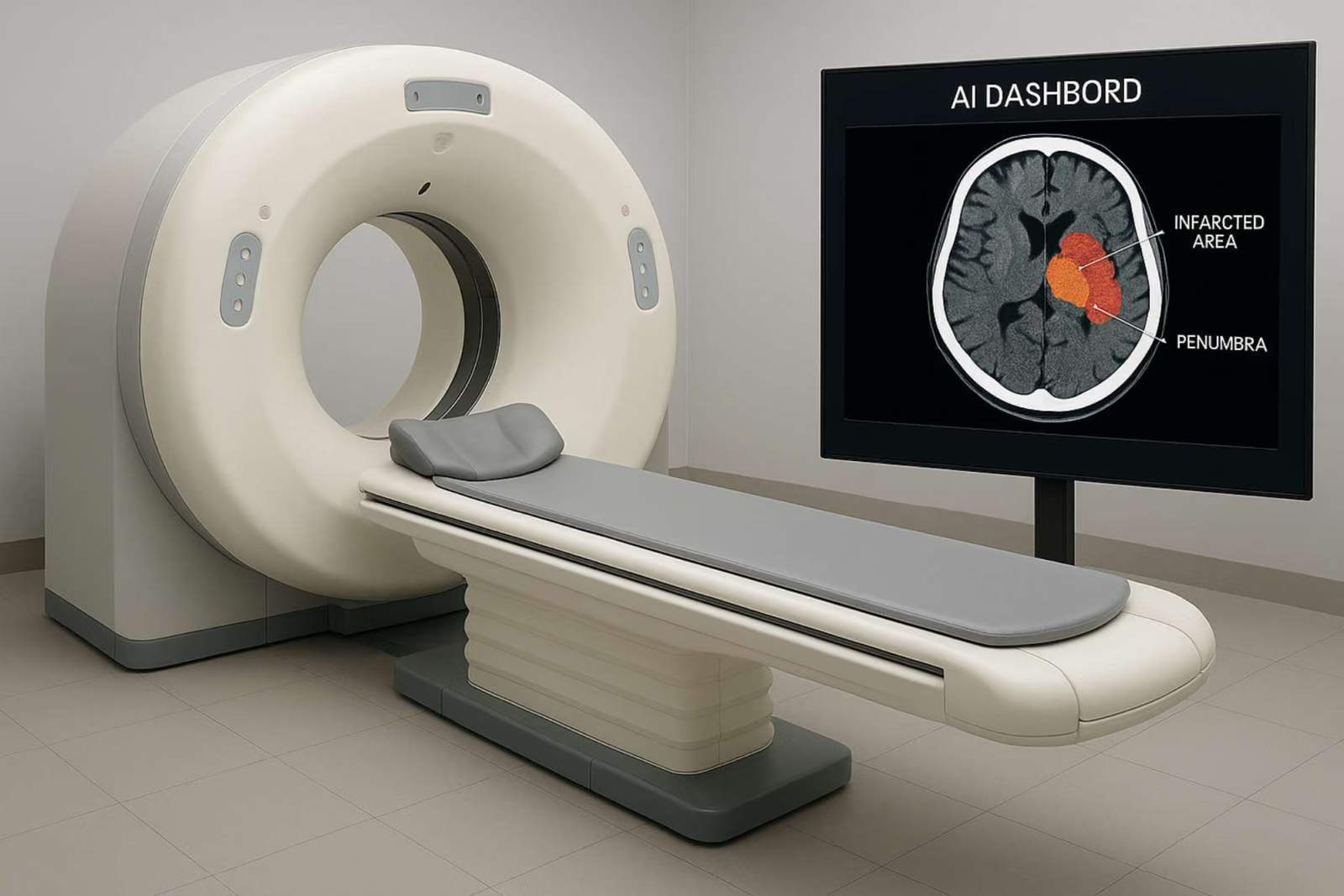
Artificial intelligence for rapid baseline infarct and clot detection in acute ischemic stroke using standard CT imaging (AIRBORNE)
AI-driven analysis of standard CT scans accelerates and improves stroke care for more patients
The AIRBORNE project is a collaboration between Amsterdam UMC and health technology company Nico.lab, forming a strong public-private partnership. Together, they have developed artificial intelligence (AI) tools that help doctors quickly and accurately detect brain damage and blood clots in stroke patients using standard CT scans. This innovation aims to make high-quality stroke diagnosis available in all hospitals, not just specialised centres, and to improve patient outcomes by speeding up treatment decisions.
Stroke is the leading cause of disability among adults, with around 40,000 people in the Netherlands suffering a stroke each year. When a major blood vessel in the brain becomes blocked, it can lead to serious and lasting problems, or even death. Since 2015, a treatment called endovascular thrombectomy has greatly improved recovery for patients, but only if they are diagnosed and treated quickly—ideally within six hours. Many hospitals, however, lack the advanced imaging needed for rapid diagnosis, meaning patients often have to be transferred to other hospitals, which causes delays and can reduce the chance of a good recovery.
To address this challenge, the AIRBORNE project developed AI software that can analyse standard CT scans, which are available in every hospital, to detect stroke-related brain damage and blood clots. The system was trained using thousands of patient cases from national studies, ensuring it works well in real-life situations. Doctors receive fast results from the AI, helping them decide more quickly on the best treatment. This approach reduces the need for patient transfers, allows more people to be treated close to home, and supports equal access to high-quality stroke care.
The project has developed advanced AI tools that accurately and clearly detect signs of stroke in brain scans, providing doctors with fast and interpretable results. It has integrated multiple types of brain imaging and clinical data to enhance stroke assessment and improve predictions about patient outcomes. Additionally, these tools have been validated on thousands of real patient cases, demonstrating their reliability and effectiveness in clinical settings.
Andere projecten
In elk PPS-project werken kennisinstellingen, bedrijven en zorgpartijen samen aan een concrete gezondheidsvraag. Bekijk het volledige projectoverzicht.
Bekijk de programma’s
Binnen onze programma’s werken bedrijven, kennisinstellingen en regionale partners samen aan innovaties die bijdragen aan betere gezondheid en zorg.
Bekijk de partnerschappen
Strategische publiek-private partnerschappen (PPP's) zijn meerjarige samenwerkingen tussen bedrijven, kennisinstellingen en andere partijen.
Hoe kunnen we je helpen?
Heb je een vraag of wil je meer weten over Health Holland? We brengen je graag in contact met de juiste mensen, kennis en mogelijkheden om gezondheidsinnovatie te versnellen.
We hebben uw bericht ontvangen
We nemen binnen 3 tot 4 werkdagen contact met je op. Is je vraag dringend? Neem dan gerust direct contact met ons op. Hieronder zie je de contactoptie die het beste past bij je onderwerp.
Opnieuw beginnen
Er ging iets mis bij het versturen van het formulier. Probeer het opnieuw.