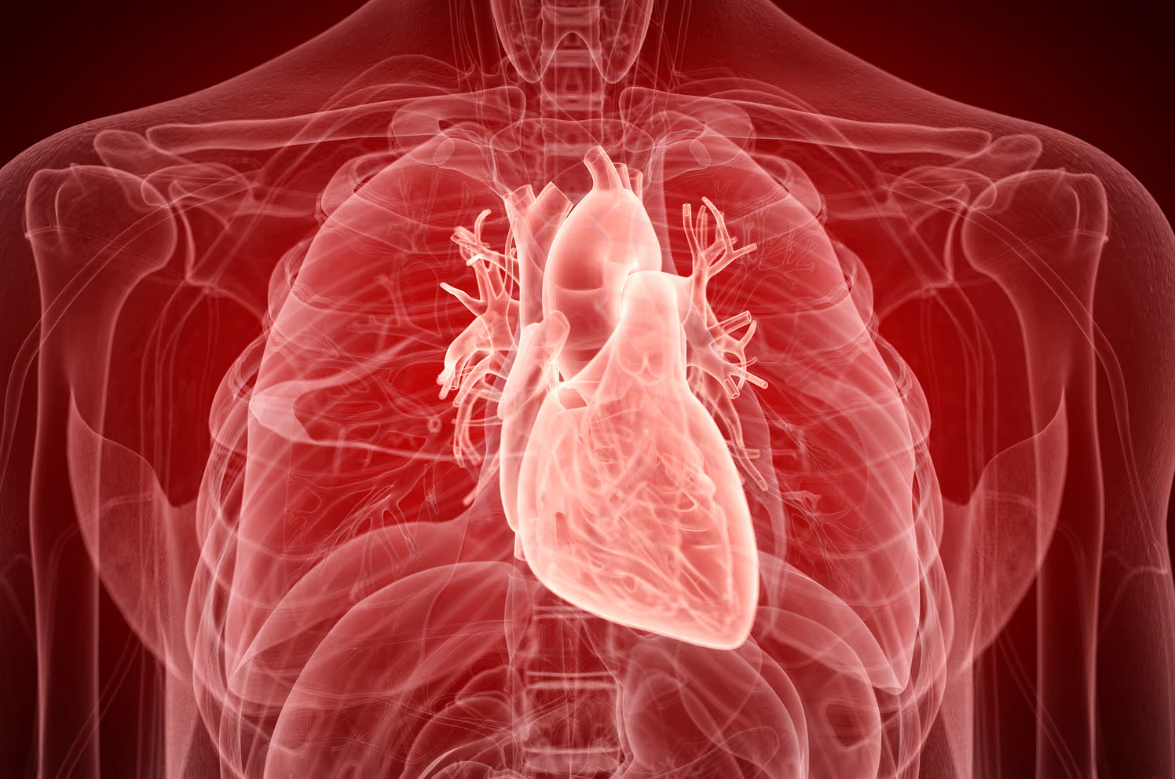
Advancing genetic messenger therapy to regenerate damaged heart muscle (AVIATOR)
We develop a new gene therapy that helps damaged hearts regrow healthy, working muscle
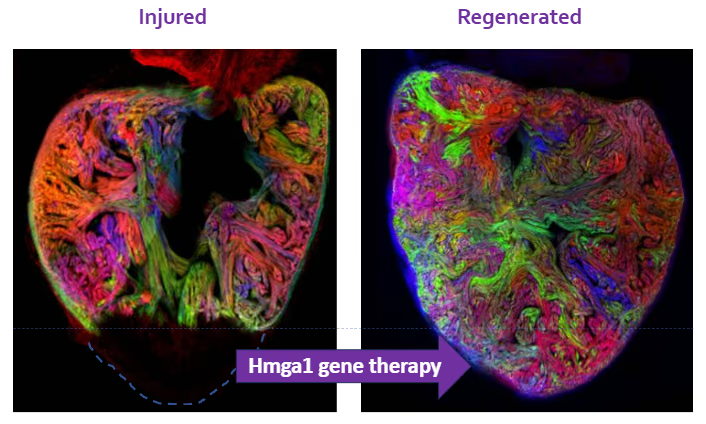
When someone has a severe heart attack, part of the heart muscle dies and is replaced by scar tissue. The heart then has to work harder with less healthy muscle, which can lead to heart failure. In the AVIATOR project, universities and companies work closely together to develop a new gene therapy that helps the heart repair itself, bringing this promising treatment an important step closer to patients.
Heart failure is a major and growing problem. Worldwide, more than 126 million people live with heart failure, many of them after a heart attack caused by a lack of oxygen to the heart. In Europe alone, this affects an estimated 10 to 15 million people. Symptoms like fatigue and shortness of breath are often vague and appear late, so the disease is sometimes recognised only when the heart is already severely damaged. Current treatments mainly relieve symptoms and slow down further decline, but they do not restore lost heart muscle.
This project aims to change that. The researchers are developing a therapy based on genetic messengers that tell heart cells to grow and repair damaged tissue. They test this step by step: first with computer models, then in the laboratory with human heart cells grown from stem cells, then in living slices of human heart tissue, and finally in a carefully controlled pig model that closely resembles the human heart. Throughout, the team uses smart models to minimise the number of animals needed.
The project will deliver a well-tested gene therapy concept, detailed knowledge about its effect and safety, and practical methods to produce the therapy on a larger scale. Together with biotechnology company Summa Biotech and patient representatives, the partners also work on clear information and public dialogue, so that society is prepared for this new form of treatment.
Andere projecten
In elk PPS-project werken kennisinstellingen, bedrijven en zorgpartijen samen aan een concrete gezondheidsvraag. Bekijk het volledige projectoverzicht.


Bekijk de programma’s
Binnen onze programma’s werken bedrijven, kennisinstellingen en regionale partners samen aan innovaties die bijdragen aan betere gezondheid en zorg.
Bekijk de partnerschappen
Strategische publiek-private partnerschappen (PPP's) zijn meerjarige samenwerkingen tussen bedrijven, kennisinstellingen en andere partijen.
Hoe kunnen we je helpen?
Heb je een vraag of wil je meer weten over Health Holland? We brengen je graag in contact met de juiste mensen, kennis en mogelijkheden om gezondheidsinnovatie te versnellen.
We hebben uw bericht ontvangen
We nemen binnen 3 tot 4 werkdagen contact met je op. Is je vraag dringend? Neem dan gerust direct contact met ons op. Hieronder zie je de contactoptie die het beste past bij je onderwerp.
Opnieuw beginnen
Er ging iets mis bij het versturen van het formulier. Probeer het opnieuw.